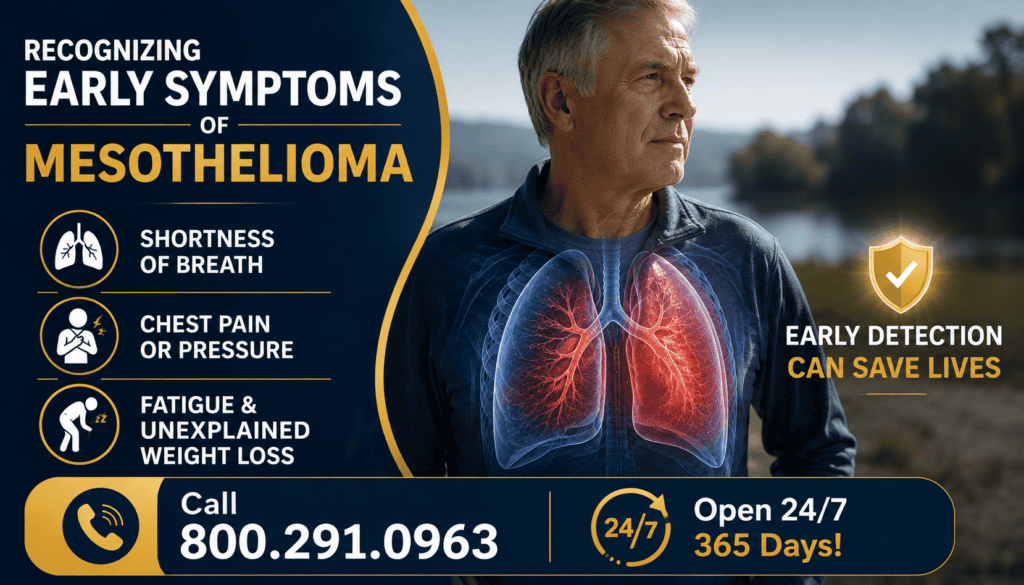
🩺 Recognizing Early Symptoms of Mesothelioma
Mesothelioma develops slowly over decades, but recognizing early symptoms can lead to faster diagnosis and better treatment outcomes.
Many early signs—such as mild chest pain, fatigue, or shortness of breath—are easy to overlook or confuse with common illnesses.
📞 If you’ve ever been exposed to asbestos and notice these symptoms, call 800.291.0963 today for guidance and medical resources.
🎯 Step 1: Why Early Detection Matters
Mesothelioma symptoms often appear 20–50 years after asbestos exposure, meaning most patients are diagnosed in later stages.
However, when caught early, treatment can be more effective, less invasive, and offer longer survival.
Early detection helps doctors:
-
Confirm the disease before it spreads.
-
Identify the mesothelioma type and stage.
-
Offer surgery or targeted therapy sooner.
-
Improve overall quality of life and outcomes.
💡 The sooner mesothelioma is found, the more treatment options become available.
🫁 Step 2: Common Early Symptoms
Early warning signs vary depending on whether mesothelioma affects the lungs (pleural) or abdomen (peritoneal), but many begin subtly.
General Early Symptoms:
-
🩺 Chest or abdominal discomfort
-
😮💨 Shortness of breath or wheezing
-
😴 Persistent fatigue
-
⚖️ Unexplained weight loss
-
🤕 Pain in the back, ribs, or side
-
😷 Chronic dry cough
Pleural Mesothelioma (lungs):
-
Chest pain or tightness
-
Fluid buildup around the lungs (pleural effusion)
-
Trouble breathing deeply
Peritoneal Mesothelioma (abdomen):
-
Bloating or swelling
-
Abdominal pain or tenderness
-
Digestive changes or loss of appetite
🧠 Even mild or intermittent symptoms deserve evaluation—especially if you’ve worked around asbestos.
🩻 Step 3: How Doctors Evaluate Symptoms
If you show early signs of mesothelioma, doctors will start with non-invasive imaging and lab tests, including:
-
💻 CT Scan: Identifies fluid buildup and abnormal tissue.
-
🧬 Blood Tests: Checks for biomarkers like mesothelin (SMRP) and fibulin-3.
-
🩺 X-Rays: Detects lung or abdominal abnormalities.
-
🧫 Biopsy: Confirms diagnosis if imaging shows suspicious areas.
💡 Mesothelioma is often misdiagnosed as pneumonia or lung cancer—ask your doctor to check for asbestos-related causes.
⚠️ Step 4: Why Symptoms Are Often Missed
Because mesothelioma develops slowly, its early signs are often mistaken for less serious conditions like:
-
Bronchitis or pneumonia
-
Asthma or COPD
-
Aging-related fatigue or shortness of breath
-
Acid reflux or digestive disorders
🧩 Many patients only receive a mesothelioma diagnosis after months of unexplained symptoms—early medical testing can change that.
💬 Step 5: What to Tell Your Doctor
Be specific when discussing symptoms with your doctor.
Provide a detailed history of your asbestos exposure and work background.
Tell your doctor if you:
-
Worked in construction, shipyards, factories, or power plants.
-
Served in the military (especially Navy or Coast Guard).
-
Lived in older buildings with asbestos insulation or flooring.
-
Handled materials like brake pads, gaskets, or insulation.
🧾 Sharing your exposure history helps doctors order the right tests and referrals early.
💊 Step 6: Early Treatment Improves Survival
If diagnosed early, patients may qualify for:
-
🩺 Curative surgery to remove localized tumors.
-
💉 Chemotherapy or immunotherapy to target early-stage cells.
-
🧬 Clinical trials offering next-generation therapies.
-
🩻 Radiation therapy for localized pain and tumor control.
📈 Combining early detection with specialized care can extend survival by years.
📞 Where to Get Help
If you suspect asbestos exposure or early symptoms of mesothelioma, professional help is available.
Our advocates can connect you with mesothelioma doctors, testing centers, and treatment programs nationwide.
👉 Call 800.291.0963 today for guidance on your next steps.
🧾 Summary
Early mesothelioma symptoms often mimic minor conditions, but they should never be ignored—especially for anyone exposed to asbestos.
Recognizing chest pain, shortness of breath, or fatigue early can lead to faster diagnosis and better treatment outcomes.
Don’t wait for symptoms to worsen—act early and get checked today.
📞 Call 800.291.0963 now to speak with a mesothelioma specialist.