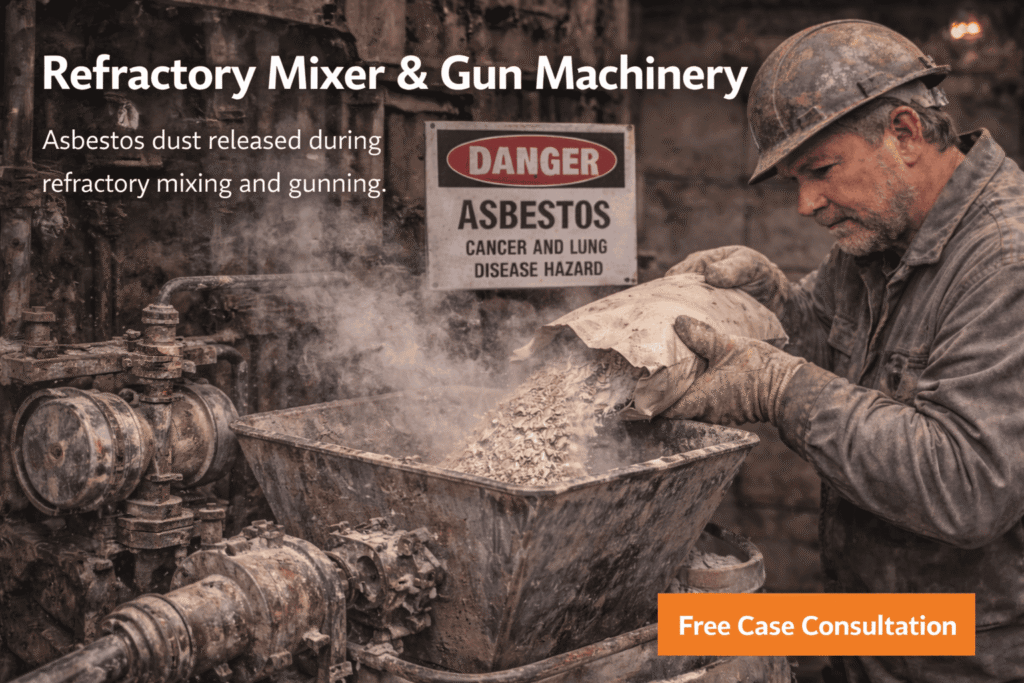
🧱 Refractory Mixer & Gun Machinery Mesothelioma Lawsuit
For much of the 20th century, refractory mixer and gun machinery relied heavily on asbestos-containing materials to withstand extreme heat and abrasion during furnace, kiln, and incinerator construction and repair. These machines were widely used in steel mills, foundries, power plants, refineries, glass plants, cement facilities, shipyards, and military installations, where asbestos was valued for its durability and heat resistance.
Manufacturers incorporated asbestos into refractory dry mixes, wet mixes, sprayable linings, gunning materials, hose liners, seals, gaskets, and wear components. At the time, asbestos was considered essential for refractory strength and longevity. Workers were rarely warned about health risks, and respiratory protection was often minimal or absent during mixing and application.
During refractory mixing, gunning, spraying, patching, relining, and cleanup, asbestos-containing materials were frequently disturbed. Dry refractory materials created heavy dust clouds, and compressed-air gunning propelled asbestos fibers directly into the breathing zone. Many workers unknowingly inhaled these fibers repeatedly—often in enclosed furnace areas and industrial bays with poor ventilation.
Decades later, asbestos exposure from refractory mixer and gun machinery has been directly linked to mesothelioma, asbestos-related lung cancer, and asbestosis, leading many affected individuals and families to pursue legal action through an
👉 Asbestos Exposure Machinery Lawsuit.
This page explains how refractory mixer and gun machinery asbestos exposure leads to mesothelioma and what legal options may be available.
👉 View the complete list of machinery with asbestos exposure
⚙️ Refractory Mixer & Gun Machinery Linked to Asbestos Exposure
Refractory mixing and gunning systems included multiple components that historically contained asbestos. Exposure did not require direct handling of finished asbestos products—mixing and spraying alone created significant airborne exposure.
🧱 Refractory Mixer & Gun Machinery Asbestos Exposure
Refractory mixers and guns released asbestos fibers during dry-mix handling, gunning operations, and cleanup activities.
🧪 Dry Refractory Mix & Bag Handling Asbestos Exposure
Asbestos dust became airborne when dry refractory bags were opened, poured, and mixed.
🔫 Gunning Hose, Nozzle & Spray Assembly Asbestos Exposure
Compressed-air gunning propelled asbestos fibers directly into workers’ breathing zones.
🛠️ Cleanup, Tear-Out & Patch Repair Asbestos Exposure
Residual asbestos dust was released during cleanup, sweeping, and furnace patching work.
👷 Workers Commonly Exposed to Refractory Mixer & Gun Asbestos
Refractory mixer and gun asbestos exposure affected workers across heavy-industry and construction environments—often repeatedly over long careers.
Commonly affected occupations include:
-
Refractory installers and gunning crews
-
Furnace repair and relining workers
-
Foundry and steel mill laborers
-
Power plant and refinery maintenance workers
-
Industrial construction workers
-
Cleanup and demolition crews
-
Military Veterans Mesothelioma Lawsuit claimants
Exposure commonly occurred in furnace interiors, boiler houses, industrial bays, and shutdown work zones, where airborne asbestos dust remained suspended long after work stopped.
🦠 Diseases Linked to Refractory Mixer & Gun Machinery Asbestos Exposure
Asbestos-related diseases typically develop 20 to 50 years after exposure, meaning many individuals are diagnosed long after their refractory work ended.
🦠 Mesothelioma
A rare and aggressive cancer affecting the lining of the lungs or abdomen. Refractory workers are among the highest-risk occupational groups.
🫁 Asbestos-Related Lung Cancer
Lung cancer caused by prolonged inhalation of asbestos fibers released during refractory mixing and spraying.
🫁 Asbestosis
A chronic lung disease marked by scarring, reduced lung capacity, and long-term breathing impairment caused by asbestos exposure.
🧪 Why Refractory Mixer & Gun Machinery Exposure Was Especially Dangerous
Refractory operations created extreme asbestos exposure conditions:
-
Dry materials generated heavy airborne dust
-
Gunning equipment aerosolized fibers under pressure
-
Work occurred inches from workers’ faces
-
Enclosed furnace spaces trapped airborne fibers
-
Cleanup re-released settled asbestos repeatedly
Because asbestos fibers are microscopic, workers often had no visible warning that exposure levels were extremely high.
⚖️ Legal Options for Refractory Mixer & Gun Machinery Exposure
Individuals diagnosed after working around refractory mixer and gun machinery may be eligible for compensation.
⚖️ Mesothelioma Lawsuits
Claims against manufacturers of asbestos-containing refractory materials, mixers, and gunning equipment.
🏦 Asbestos Trust Fund Claims
Compensation from trust funds created by bankrupt refractory and industrial material manufacturers.
🎖️ Veterans’ Asbestos Claims
Veterans exposed while performing refractory work on ships, bases, or military furnaces may qualify for VA benefits and additional legal compensation.
❓ Frequently Asked Questions About Refractory Mixer & Gun Asbestos Exposure
1️⃣ Can refractory mixer and gun machinery cause mesothelioma?
Yes. Refractory mixing and gunning created some of the highest airborne asbestos exposures in industry.
2️⃣ Do I qualify if my exposure happened decades ago?
Yes. Mesothelioma commonly develops 20–50 years after exposure.
3️⃣ What if I only mixed or cleaned up materials?
Even cleanup and bag handling caused dangerous asbestos exposure.
4️⃣ Can I file both a lawsuit and a trust fund claim?
Yes. Many refractory workers qualify for multiple compensation sources.
5️⃣ Will I have to go to court?
Most cases settle without trial.
📞 Legal Help for Refractory Mixer & Gun Machinery Asbestos Exposure
If you or a loved one worked around refractory mixer or gun machinery and were later diagnosed with mesothelioma or an asbestos-related lung disease, you may be entitled to significant financial compensation.
📞 Call 800-291-0963 for a free, confidential case review.
⚖️ How a Mesothelioma Lawyer Can Help You Get Compensation
An experienced asbestos lawyer can:
-
🔍 Trace exposure using refractory work histories and shutdown records
-
🏦 Identify all compensation sources
-
⚖️ Handle filings and negotiations
-
💰 Maximize recovery for medical bills and family security
📞 Call 800-291-0963 today for a free case review.