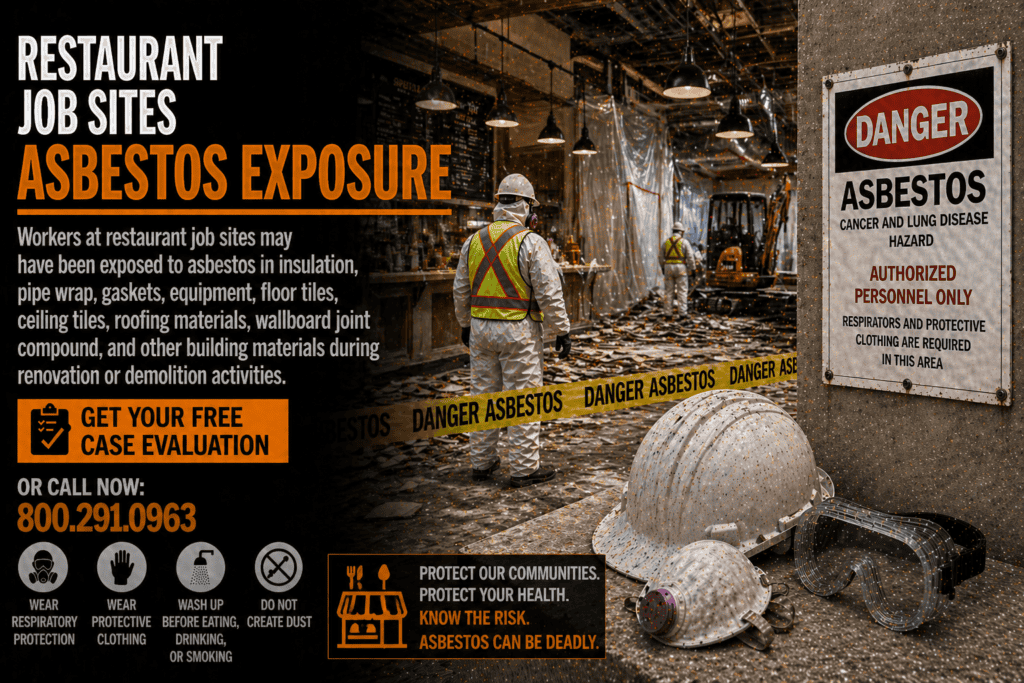
🍽️ Restaurants Asbestos Exposure
Restaurants built before the 1980s often contained asbestos in floor tiles, ceiling panels, fireproof insulation, and cooking equipment. These materials were used for fire resistance, heat insulation, and durability—but over time, they crumbled or degraded, releasing toxic asbestos fibers into the air.
Exposure occurred during kitchen equipment maintenance, remodeling, tile removal, and even routine cleaning. Workers inhaled fibers while repairing ovens, sweeping floors, or replacing damaged ceiling tiles—often without knowing the risk.
Years later, many former cooks, custodians, and restaurant staff are diagnosed with:
• Mesothelioma
• Asbestos-related lung cancer
• Asbestosis
🍽️ Restaurant Job Sites – What You’ll Learn From This Page:
🔥 Asbestos was used in commercial kitchen insulation, floor tiles, ceiling panels, and around ovens or heating appliances.
🛠️ Workers were exposed during equipment upgrades, floor repair, or fire restoration efforts.
👨🍳 Cooks, servers, dishwashers, and cleaning crews unknowingly inhaled fibers disturbed during daily work or maintenance.
🌬️ Aging ceiling materials and kitchen heat accelerated asbestos degradation and fiber release.
💰 Restaurant employees with asbestos illnesses may qualify for trust funds or legal claims.
Estimated Number of People Exposed to Asbestos in U.S. Restaurants
| Exposure Category | Estimated Number of People Exposed |
|---|---|
| Occupational Exposure (kitchen staff, janitors, technicians) | Over 600,000 workers exposed |
| Secondary Exposure (managers, hosts, waitstaff) | Estimated 300,000 exposed |
| Environmental Exposure (patrons, delivery staff) | Around 500,000 people exposed |
👉 Total Estimated Exposure:
Over 1.4 million people were exposed in restaurant buildings.
📊 Facts About Restaurant Workers and Asbestos
• Tens of thousands of U.S. restaurants built before 1980 used asbestos-containing materials.
• Asbestos Exposure: High in kitchens, basements, mechanical areas, and ceiling systems.
• Asbestos-Related Disease Risk: Elevated for cooks, maintenance crews, janitors, and remodelers.
• Insulation around stoves, boilers, and pipes often contained asbestos and degraded over time.
• Similar Occupations: Line cooks, HVAC techs, dishwashers, contractors, electricians, kitchen managers
🏗️ History of Asbestos Use in Restaurants
Fire safety was a top concern in restaurant kitchens, leading builders to use asbestos for its heat resistance. Floor tiles, oven insulation, ceiling boards, and pipe wraps were common asbestos products found in dining rooms, prep areas, and kitchens.
As these materials wore down or were disturbed during maintenance, they released harmful fibers. Many workers were unaware of the dangers and worked without masks or ventilation.
⚠️ Mesothelioma Risk for Restaurant Workers
Restaurant staff often encountered asbestos in tight kitchens and mechanical rooms:
• Oven repairs released fibers from old insulation linings.
• Tile cracks and replacement stirred up asbestos dust in dining and prep areas.
• Cleaning crews swept debris from deteriorating ceiling materials.
Symptoms of asbestos exposure may not appear until decades later—making early jobs especially dangerous.
🧪 Asbestos Products Found in Restaurants
🧱 Vinyl Floor Tiles and Adhesives
Common in kitchens and dining areas; fibers released as tiles cracked or adhesives aged.
🔥 Oven and Stove Insulation
Lined older equipment to prevent heat loss; fibers released during repair or cleaning.
🧰 Pipe Wraps and Lagging
Insulated hot water and steam lines under floors or behind walls.
🧱 Ceiling Panels and Tiles
Used for soundproofing and fire protection; fibers released during access or renovation.
🚪 Boiler and Hot Water Tank Insulation
Found in basements or back rooms; exposure during maintenance.
🧯 Fireproof Wall Panels
Lined cooking areas and walls near grills or fryers.
🧴 Sealants and Mastics
Used around sinks, ovens, and HVAC units; sanding or aging released particles.
🔌 Electrical Panel and Wiring Insulation
Contained asbestos for fire resistance; disturbed during system upgrades.
🛢 Refrigeration and Freezer Systems
Some used asbestos boards or linings in early models.
🔧 Exhaust and Ventilation Ducts
Wrapped in asbestos tape or cloth; exposure during cleaning or installation.
👷 How Restaurant Workers Were Exposed
Many jobs in restaurant environments involved regular contact with hidden asbestos sources:
👨🍳 Cooks and Chefs
Used ovens, fryers, and stoves lined with asbestos; exposure occurred during cleaning or repair.
🧹 Custodians and Cleaners
Swept and mopped near broken tiles or degrading ceiling boards.
🛠 Maintenance Workers
Repaired plumbing, equipment, and walls containing asbestos.
⚡ Electricians
Installed or rewired panels surrounded by asbestos insulation.
🌡 HVAC and Mechanical Techs
Worked in ceiling spaces and ductwork wrapped in asbestos tape.
🪵 Contractors and Remodelers
Removed tiles, drywall, and kitchen equipment in older restaurants.
🚪 Dishwashers and Prep Workers
Worked near hot water lines or oven insulation that shed fibers.
🎛 Kitchen Managers
Managed crews in confined kitchens with aging asbestos-containing fixtures.
🪜 Painters and Decorators
Sanded walls and ceilings that contained asbestos joint compound.
📦 Food Storage Room Staff
Handled inventory in back rooms with old insulation and flooring.
🏛 Types of Restaurants With Asbestos Exposure
🏙 Urban Chain Restaurants
Often built mid-century with asbestos tile and ductwork; high exposure during upgrades.
🏚 Historic Diners and Cafés
Used cement panels, oven insulation, and vinyl floors containing asbestos.
🛣 Roadside Restaurants and Truck Stops
Built with quick-assembly asbestos-containing siding and ceiling tiles.
🏢 Restaurants in Hotels or Malls
Shared HVAC and boiler systems with asbestos-wrapped ducts and pipes.
🏠 Mom-and-Pop Eateries
Small buildings with aging insulation and wall panels from earlier decades.
🎭 Restaurants in Theaters or Venues
Backrooms and kitchens shared asbestos-lined spaces with performance areas.
🧯 Commercial Kitchens and Catering Facilities
Large ovens, steamers, and boilers lined with asbestos insulation.
🧪 Restaurants in Converted Spaces
Former homes or industrial buildings often retained asbestos ceiling or pipe materials.
❓ Common Questions About Restaurant Asbestos Claims
Can restaurant cooks and staff file claims?
Yes — any worker exposed to asbestos who developed illness may be eligible.
Do I need proof of the product used?
No — attorneys use building records and appliance logs to identify asbestos sources.
Can I file if I worked part-time or long ago?
Yes — many cases involve exposure from decades ago.
Can families file on behalf of a loved one?
Yes — surviving relatives can file wrongful death or trust fund claims.
What kind of compensation is available?
Settlements and trust payouts may cover six figures in medical and loss damages.
⚖️ How a Mesothelioma Attorney Can Help Restaurant Workers
Experienced asbestos attorneys can help you:
• Identify exposure from kitchen equipment, insulation, or building materials
• Collect job and medical records for filing
• File lawsuits and asbestos trust fund claims
• Meet strict legal deadlines
• Represent families in wrongful death cases
• Work on a contingency basis — no fees unless you win
📞 Free Legal Help for Restaurant Workers & Families
If you or a loved one worked in a restaurant and were later diagnosed with mesothelioma, asbestosis, or asbestos-related cancer—you may be entitled to significant compensation.
Whether you worked in the kitchen, maintained appliances, or managed the facility, legal support is available.
Call Now: 800.291.0963
• Free case review
• No fees unless you win
• Lawsuit & trust filing support
• Help available for families, cooks, custodians, and contractors
Or request help online 24/7