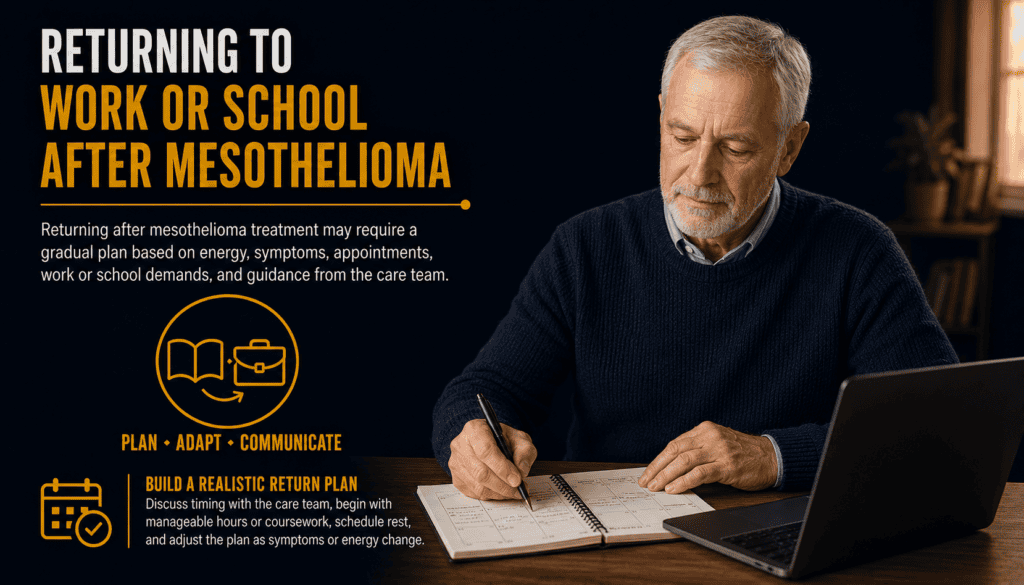
💼 Returning to Work or School After Mesothelioma
Recovering from mesothelioma often means re-learning balance — physically, emotionally, and professionally. Whether you’re returning to work, school, or a volunteer role, taking gradual, well-planned steps can help you regain confidence and stability.
This guide helps you understand your legal rights, workplace or classroom accommodations, and energy-management strategies so you can safely return to your daily routines with strength and peace of mind.
📞 Need help planning your return or understanding your rights? Call 800.291.0963 for free guidance from a Mesothelioma Help Center advocate today.
🌿 Step 1: Recognize That Recovery Takes Time
Every patient’s path to recovery is different. Returning to work or school doesn’t mean “back to normal” overnight — it means finding a new rhythm that honors both your health and your goals.
What to expect:
-
🕰️ You may need a gradual return schedule (half-days or alternating weeks).
-
💪 Fatigue and shortness of breath can persist for months after treatment.
-
🩵 Emotional readiness is as important as physical readiness.
-
🌤️ Flexibility and communication are key to long-term success.
Goal:
To return with self-compassion, focusing on progress, not perfection.
⚖️ Step 2: Know Your Legal Rights and Protections
U.S. laws protect individuals with serious health conditions like mesothelioma from discrimination in the workplace and education systems.
Key protections include:
-
🏛️ Americans with Disabilities Act (ADA): Requires employers and schools to provide reasonable accommodations.
-
🧾 Family and Medical Leave Act (FMLA): Allows eligible employees up to 12 weeks of unpaid, job-protected leave.
-
🎓 Section 504 of the Rehabilitation Act: Ensures equal access and accommodations in schools.
-
💼 Social Security Disability Benefits (SSDI): May provide partial income during recovery.
-
⚖️ Workers’ Compensation: If your exposure was job-related, you may qualify for benefits.
Pro Tip:
Ask your HR department or student services office about written policies for medical accommodations — they are legally required to assist you.
🧩 Step 3: Request Reasonable Workplace or School Accommodations
Accommodations are not “special treatment” — they’re support measures that enable you to perform effectively while managing ongoing symptoms.
Examples of common accommodations:
-
🕰️ Flexible or reduced hours.
-
🪑 Ergonomic seating or rest breaks.
-
🧘 Work-from-home or remote study options.
-
🩵 Modified workloads or extended deadlines.
-
🚗 Reserved parking near entrances.
-
🕯️ Air purifiers or mask allowances for breathing comfort.
Goal:
To create an environment that supports productivity without compromising health.
💬 Step 4: Communicate With Employers, Teachers, or Supervisors
Clear communication prevents misunderstandings and builds trust. Your health information is confidential, but sharing what’s necessary helps your team support you better.
Tips for effective communication:
-
💬 Schedule a private meeting to discuss return plans.
-
📋 Provide a doctor’s note explaining work restrictions if needed.
-
🧠 Focus on your capabilities — not limitations.
-
🕊️ Keep updates brief but honest about your energy or health.
-
🤝 Express gratitude for flexibility and understanding.
Goal:
To foster mutual respect and understanding through honest dialogue.
🧠 Step 5: Manage Fatigue and Energy Levels
Energy management is crucial when returning to work or study after treatment. Overexertion can delay recovery, so pacing yourself ensures sustained strength.
Practical energy-saving strategies:
-
⏰ Schedule demanding tasks during your highest energy times.
-
🛋️ Take short breaks throughout the day — even 10 minutes helps.
-
🧃 Stay hydrated and eat small, nutritious meals.
-
🧘 Incorporate light stretching or breathing exercises at intervals.
-
🕊️ Rest immediately if you feel dizzy or short of breath.
Pro Tip:
Use the “20-20-20 Rule” — every 20 minutes, pause for 20 seconds and look 20 feet away to reset both mind and body.
🌼 Step 6: Balance Mental and Emotional Wellness
Returning to daily routines can stir complex emotions — excitement, fear, even guilt. Taking care of your emotional well-being helps you stay grounded through transition.
Ways to protect your mental health:
-
💬 Talk openly with a counselor or oncology therapist.
-
🧘 Practice mindfulness or prayer before and after work.
-
📖 Keep a gratitude journal to track small daily wins.
-
🎶 Listen to uplifting music during commutes or breaks.
-
💞 Join a cancer survivor or caregiver support group.
Goal:
To maintain emotional stability while adjusting to new routines.
🏠 Step 7: Set Up a Supportive Home Routine
Balancing home responsibilities with work or school requires structure and rest. Simplifying daily tasks keeps energy focused where it matters most.
Home organization tips:
-
🕰️ Plan meals or use delivery services during treatment recovery.
-
🧺 Divide chores into smaller, manageable tasks.
-
🩵 Use planners or apps to track appointments, medications, and deadlines.
-
🛏️ Prioritize 7–9 hours of quality sleep each night.
-
🌿 Keep your home environment clean, calm, and well-lit.
Goal:
To sustain your body and mind with structure and peace.
💡 Step 8: Consider Gradual Reintegration
Many survivors benefit from a phased return rather than jumping back full-time. Gradual reintegration allows your body to adapt safely.
Ideas for a phased return:
-
🕊️ Start with part-time hours or alternate-day schedules.
-
🧠 Prioritize light or administrative work before physical tasks.
-
🩵 Rebuild stamina with mild daily exercise and fresh air.
-
📅 Track symptoms to identify ideal workload balance.
-
💬 Reevaluate progress weekly with your supervisor or counselor.
Pro Tip:
Healing is not linear — allow flexibility for both progress and rest.
🌈 Step 9: Celebrate Progress and Purpose
Returning to work or school is a victory. Each milestone — the first week back, the first full day completed — reflects courage, determination, and grace.
Ways to celebrate small wins:
-
💐 Treat yourself to something special after a successful week.
-
🕊️ Reflect on how far you’ve come since diagnosis.
-
💬 Share your journey with others for encouragement.
-
🎶 Create a playlist or vision board for motivation.
-
🙏 Thank God for renewed purpose and opportunity.
Goal:
To acknowledge healing as both a physical and spiritual journey — one step at a time.
🤝 Where to Get Help
Our advocates can connect you with employment rights experts, vocational rehabilitation programs, and survivor support services to make your return to work or school safe and successful.
📞 Call 800.291.0963 to speak with a Mesothelioma Help Center advocate today.
🧭 Summary
Returning to work or school after mesothelioma requires patience, flexibility, and support. By understanding your rights, seeking accommodations, and managing energy wisely, you can confidently re-enter daily routines while honoring your healing process.
You are not alone — encouragement, balance, and legal support are only one call away.
800.291.0963