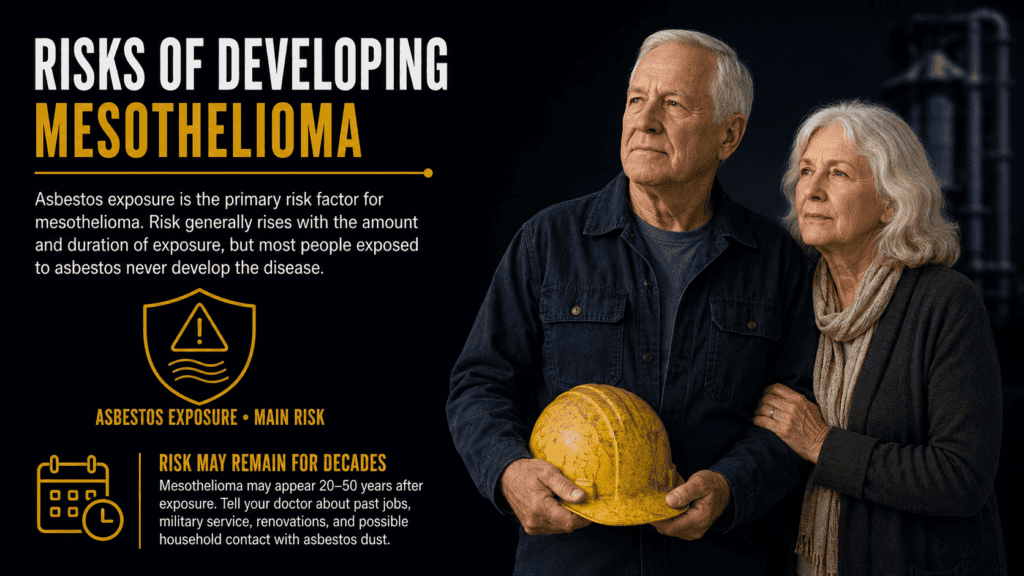
⚠️ What Are the Risks of Developing Mesothelioma?
Understanding Who Is Most Vulnerable to This Asbestos-Linked Cancer
Mesothelioma is primarily caused by exposure to asbestos fibers, but not everyone exposed develops the disease. Risk depends on duration, intensity, and type of asbestos, along with genetic and lifestyle factors. Even brief or secondary exposure can lead to mesothelioma decades later. Recognizing these risk factors can help with early detection and prevention.
Source: American Cancer Society, CDC
🧱 Major Risk Factor: Asbestos Exposure
Asbestos is a naturally occurring mineral once used in thousands of construction and industrial products. It becomes dangerous when disturbed, releasing microscopic fibers that can be inhaled or ingested.
Key risk categories:
-
Occupational Exposure – Construction, shipyards, power plants, factories, military bases
-
Military Exposure – Especially U.S. Navy veterans working in confined, asbestos-filled spaces
-
Secondary Exposure – Family members exposed via contaminated work clothing or hair
-
Environmental Exposure – Living near mines, factories, or demolition sites
-
Product-Based Exposure – Using or handling asbestos-containing materials (e.g., brakes, insulation)
🧬 Other Contributing Risk Factors
Although asbestos is the main cause, several other elements may influence mesothelioma risk:
-
Genetics – Some individuals carry mutations (like BAP1) that increase susceptibility
-
Radiation – Rare cases linked to prior chest or abdominal radiation therapy
-
SV40 Virus – Simian virus exposure (from contaminated polio vaccines in 1950s–60s) is under investigation
-
Smoking – Does not cause mesothelioma directly but worsens lung function and outcomes
Risk can vary depending on exposure levels, biological response, and immune system activity.
📍 Who Is Most at Risk?
Mesothelioma typically affects:
-
Men aged 60+ – Due to occupational exposure during industrial boom
-
Veterans – Especially from the Navy, Army, and Air Force
-
Tradespeople – Electricians, pipefitters, machinists, boiler workers, construction workers
-
Factory workers – Exposed to asbestos in cement, textiles, insulation
-
Caregivers and family members – Through household exposure
Latency periods can be 20–50 years, making it difficult to trace until symptoms appear.
🧪 Monitoring and Prevention
People at risk should:
-
Inform their doctors about past asbestos exposure
-
Get regular checkups and imaging (e.g., low-dose CT scans if warranted)
-
Avoid further exposure through old buildings, insulation, or products
-
Consider blood tests or biomarker screening if symptoms arise
-
Use protective gear in any environment where asbestos may still be present
Early detection offers a better chance of effective treatment.
👨⚖️ How a Mesothelioma Lawyer Can Help
An experienced mesothelioma attorney can:
-
Identify exposure sources across your work and living history
-
File claims with asbestos trust funds or employers
-
Secure VA benefits for veterans affected by military exposure
-
Assist family members who experienced secondary exposure
-
Charge no fee unless compensation is awarded
Legal help ensures your risk exposure is properly documented and compensated.
📞 Free Legal Help for High-Risk Asbestos Exposure
If you or a loved one faced asbestos exposure—whether at work, home, or in the military—legal support may provide compensation for testing, treatment, and long-term care.
Call Now: 800.291.0963
• No upfront fees
• No cost unless your case succeeds
• Full exposure research & job site investigation
• Help for workers, families, and veterans
Or request help online 24/7