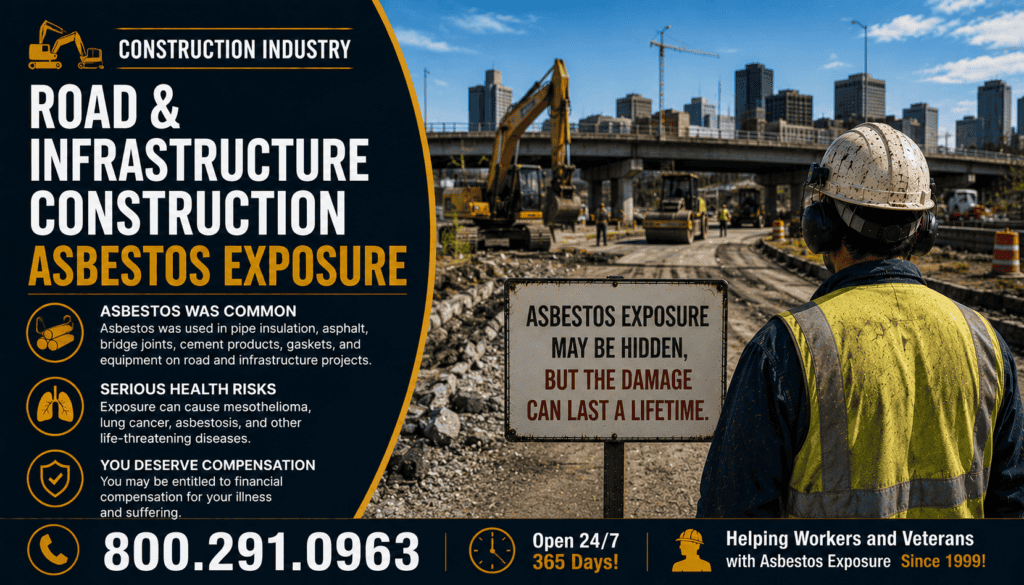
🛣️ Road & Infrastructure Construction Asbestos Exposure
Road and infrastructure construction exposed workers to asbestos through cement pipes, bridge materials, asphalt products, utility systems, and excavation work that disturbed asbestos-containing materials buried underground or embedded in public works projects.
For much of the 20th century, asbestos was considered essential for durability, load resistance, fire protection, and weather tolerance in infrastructure projects. As a result, asbestos was widely used in roads, bridges, tunnels, water systems, sewer lines, and public utilities across the United States.
Construction crews, maintenance workers, and repair teams were frequently exposed when cutting, drilling, removing, or repairing asbestos-containing infrastructure—often without any awareness that asbestos was present.
🧱 Why Asbestos Was Used in Road & Infrastructure Projects
Infrastructure systems were designed to last decades under harsh conditions.
Asbestos was favored because it:
-
🧱 Strengthened concrete and cement products
-
🌧️ Resisted moisture, corrosion, and freeze–thaw cycles
-
🔥 Withstood heat and friction
-
🚧 Reinforced pipes, culverts, and structural components
-
💲 Reduced long-term maintenance costs
-
⚙️ Improved durability under heavy loads
Its use became standard across public works construction.
🏗️ Asbestos-Containing Materials Used in Infrastructure Construction
Many asbestos materials were buried or concealed, making exposure unexpected.
🧰 Common asbestos materials included:
-
🧱 Asbestos cement (AC) water and sewer pipes
-
🌉 Bridge deck coatings and expansion joints
-
🛣️ Asphalt and road base additives
-
🧱 Concrete reinforcement materials
-
🧱 Pipe insulation and wraps
-
🧱 Gaskets and seals in pumping stations
-
🧱 Utility vault fireproofing
-
🧱 Electrical conduit and duct insulation
Once disturbed, these materials released airborne asbestos fibers.
👷 How Asbestos Exposure Occurred During Infrastructure Work
Exposure occurred during routine construction and repair tasks.
High-risk activities included:
-
🚜 Excavation and trenching
-
🪚 Cutting asbestos cement pipes
-
🔨 Jackhammering pavement and concrete
-
🧰 Repairing bridges and overpasses
-
🚧 Utility line installation and replacement
-
🧹 Cleanup of debris and dust
-
🌬️ Dry cutting or grinding without wet controls
Fibers often became airborne in open outdoor environments, spreading widely.
🧑🏭 Workers Most at Risk in Road & Infrastructure Construction
Infrastructure projects exposed many job roles.
High-risk workers include:
-
🛣️ Road construction laborers
-
🚜 Heavy equipment operators
-
🧱 Concrete and cement workers
-
🔧 Utility and pipeline crews
-
⚡ Electrical and communications workers
-
🧹 Cleanup and maintenance crews
-
👷 Supervisors and foremen
-
🚚 Truck drivers hauling debris
Nearby residents and pedestrians were sometimes exposed as well.
🏙️ Infrastructure Projects Commonly Linked to Asbestos Exposure
Asbestos exposure occurred during work on:
-
🛣️ Highways and roadways
-
🌉 Bridges and overpasses
-
🚰 Water distribution systems
-
🚽 Sewer and wastewater lines
-
⚡ Electrical and utility corridors
-
🚇 Tunnels and transit systems
-
🏙️ Municipal and public works projects
Many systems remain in service today, still containing asbestos.
🫁 Diseases Linked to Infrastructure-Related Asbestos Exposure
Asbestos diseases often appear decades after exposure.
Common diagnoses include:
-
Mesothelioma
-
Asbestos-related lung cancer
-
Asbestosis
-
Pleural plaques and pleural thickening
Workers with long careers in public works often experienced repeated, cumulative exposure.
⚠️ Why Infrastructure Asbestos Exposure Was Often Ignored
Exposure persisted because:
-
❌ Asbestos was buried or hidden
-
❌ Outdoor work was assumed “safe”
-
❌ No warning labels existed
-
❌ Regulations lagged behind usage
-
❌ Emergency repairs bypassed controls
Many workers learned of exposure only after diagnosis.
⚖️ Legal Options for Road & Infrastructure Asbestos Victims
Victims may qualify for:
-
⚖️ Asbestos personal injury lawsuits
-
🏦 Asbestos trust fund claims
-
⚰️ Wrongful death lawsuits (for families)
-
🇺🇸 VA benefits (for veterans on federal projects)
Claims are typically filed against manufacturers of asbestos cement, pipe, and construction products, not municipalities.
🧑⚖️ How a Lawyer Can Help With Infrastructure Asbestos Claims
An experienced asbestos lawyer can:
-
🔍 Identify asbestos materials used in infrastructure systems
-
📂 Reconstruct job-site and project histories
-
🏭 Match exposure to product manufacturers
-
🏦 File multiple asbestos trust fund claims
-
⚖️ File lawsuits in favorable jurisdictions
-
⏱️ Protect statute of limitations deadlines
-
🤝 Manage large-scale, multi-project exposure cases
Infrastructure cases often involve long-term, repeated exposure, increasing claim value.
❓ Frequently Asked Questions (FAQs)
❓ I worked outdoors—can asbestos still affect me?
Yes. Cutting and grinding asbestos cement releases airborne fibers outdoors.
❓ What if the project was government-funded?
Claims are filed against manufacturers, not government agencies.
❓ Are buried asbestos pipes still dangerous?
Yes. Disturbing or cutting them releases fibers.
❓ Can public works employees file claims?
Yes. Employment type does not affect eligibility.
❓ Can families file claims after death?
Yes. Wrongful death and trust fund claims may still be available.
📞 Get Help for Road & Infrastructure Asbestos Exposure
If you worked on roads, bridges, utilities, or infrastructure projects and were later diagnosed with mesothelioma or another asbestos-related disease, compensation may still be available—even decades later.
📌 You May Qualify For:
-
Asbestos lawsuits
-
Multiple asbestos trust fund claims
-
Wrongful death compensation
-
VA benefits (if applicable)
📞 Call 800-291-0963 for a free, confidential infrastructure asbestos exposure review
⏱️ No upfront costs • Nationwide representation • Deadline-protected claims
Public works built the nation—hidden asbestos shouldn’t destroy your future.