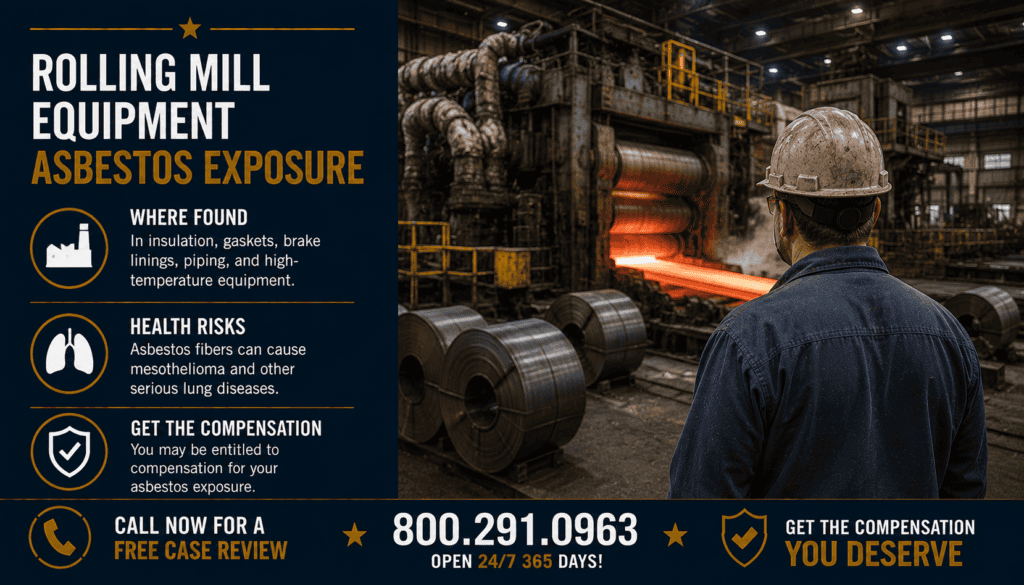
🔄 Rolling Mill Equipment Asbestos Exposure
Rolling mill equipment exposed steelworkers to asbestos fibers for decades. Rolling mills shaped, flattened, and finished steel products using massive rollers, bearings, motors, brakes, and hydraulic systems that generated intense heat and friction. To control heat, prevent fires, and protect machinery, asbestos-containing materials were widely used throughout rolling mill equipment.
During maintenance, repairs, and equipment overhauls, asbestos insulation, pads, gaskets, and packing materials were frequently disturbed—releasing fibers into the air. Many rolling mill operators, millwrights, mechanics, and maintenance workers later developed mesothelioma or asbestos-related lung cancer linked to this exposure.
🔥 Why Asbestos Was Used in Rolling Mill Equipment
Rolling mills operated under extreme mechanical stress and heat. Asbestos was used because it provided:
-
Heat resistance around hot rollers and bearings
-
Fire protection near friction surfaces
-
Thermal insulation for motors and housings
-
Durability under vibration and pressure
-
Resistance to wear in continuous operations
Asbestos materials were installed during construction and repeatedly disturbed over years of routine servicing and upgrades.
⚙️ Primary Asbestos Exposure Sources in Rolling Mills
🔄 Rollers, Bearings & Housings
Rolling mill rollers and bearings were surrounded by asbestos-containing:
-
Insulation pads
-
Heat shields
-
Insulation boards
-
Bearing housing insulation
Exposure occurred during:
-
Bearing replacement
-
Roller servicing
-
Equipment teardown and rebuilds
-
Lubrication system repairs
Removing worn insulation released asbestos dust directly into workers’ breathing zones.
🧰 Brakes, Clutches & Friction Components
Rolling mill machinery relied on asbestos-containing:
-
Brake pads and shoes
-
Clutch linings
-
Friction plates
-
Heat-resistant brake linings
Grinding, sanding, or replacing these components released airborne asbestos fibers—especially during emergency repairs and shutdowns.
🔧 Motors, Gearboxes & Drive Systems
Electric motors and drive systems were often insulated with asbestos materials to control heat. Exposure occurred during:
-
Motor repairs
-
Gearbox maintenance
-
Seal and gasket replacement
-
Electrical upgrades
Asbestos dust frequently accumulated on nearby surfaces and was re-aerosolized during daily work.
🔩 Gaskets, Packing & Seals
Rolling mill equipment contained asbestos in:
-
Flange gaskets
-
Valve packing
-
Pump seals
-
Expansion joints
Scraping and removing old gaskets during maintenance released fibers into confined work areas.
👷 Rolling Mill Jobs Most Affected by Asbestos Exposure
High-risk roles included:
-
Rolling mill operators
-
Millwrights
-
Maintenance mechanics
-
Pipefitters and steamfitters
-
Electricians
-
Lubrication technicians
-
Brake and clutch repair workers
-
Cleanup and labor crews
Workers often performed repairs while equipment was still hot, increasing fiber disturbance and inhalation risk.
🌫️ How Asbestos Exposure Occurred in Rolling Mills
Exposure commonly occurred during:
-
Routine maintenance and inspections
-
Emergency repairs and breakdowns
-
Equipment shutdowns and restarts
-
Roller and bearing replacement
-
Brake and clutch servicing
-
Retrofitting older rolling mill lines
Rolling mills were noisy, enclosed, and poorly ventilated—allowing asbestos fibers to linger in the air long after work was completed.
🩺 Health Risks Linked to Rolling Mill Asbestos Exposure
Asbestos fibers can remain in the body for decades. Symptoms often appear 20–50 years after exposure, making diagnosis common long after steelworkers retired.
The most serious asbestos-related illnesses include:
-
Mesothelioma
-
Lung cancer
Mesothelioma is strongly associated with repeated occupational asbestos exposure in heavy industrial environments like rolling mills.
⚠️ Rolling Mill Work & Mesothelioma
Many rolling mill workers were unaware that asbestos was present in brakes, insulation, gaskets, and machinery components. Protective warnings and respirators were rarely provided.
Key facts:
-
Mesothelioma is almost exclusively caused by asbestos
-
Rolling mill equipment contained multiple asbestos sources
-
Secondary exposure affected family members through contaminated clothing
⚖️ Legal Options for Rolling Mill Workers
Steelworkers diagnosed with asbestos-related disease may be eligible for compensation through:
-
Mesothelioma lawsuits against manufacturers and suppliers
-
Asbestos trust fund claims
-
Wrongful death claims filed by surviving family members
Eligibility depends on job history, exposure evidence, diagnosis, and filing deadlines.
👨⚖️ How a Lawyer Can Help With a Steel Mill Powerhouse Asbestos Claim
A lawyer experienced with asbestos cases can do far more than “file paperwork.” Key ways they help include:
-
Worksite & job-history investigation: Mapping where you worked (rolling mill floors, bearing housings, brake systems, drive equipment) and when.
-
Product identification: Identifying insulation, gasket, brake, clutch, valve packing, and equipment brands commonly used in rolling mills.
-
Evidence development: Gathering employment records, union records, coworker statements, and worksite documentation that supports exposure.
-
Medical documentation support: Ensuring pathology reports and diagnostic records are properly collected and presented for claims.
-
Choosing the best compensation path: Lawsuit vs. trust funds (or both), based on available evidence and deadlines.
-
Handling deadlines and filings: Statutes of limitation vary by state and can be unforgiving.
-
Maximizing total recovery: Coordinating multiple claims where allowed, without leaving money on the table.
If you’re dealing with a diagnosis, this support can remove much of the burden from you and your family.
❓ FAQs (Rolling Mill Equipment Asbestos Exposure)
1) Was rolling mill work especially dangerous for asbestos exposure?
Yes. Rolling mills combined heat, friction, insulation, and confined workspaces—creating repeated asbestos disturbance.
2) I worked on bearings and brakes, not insulation. Can I still have a claim?
Possibly. Brakes, clutches, gaskets, and packing materials often contained asbestos, and bystander exposure was common.
3) My exposure happened decades ago. Is it too late?
No. Most claims are based on diagnosis date, not exposure date.
4) Can families file if a rolling mill worker passed away?
Yes. Families may pursue wrongful death claims if asbestos exposure caused the illness.
5) Will my case go to trial?
Not always. Many cases resolve through settlements or trust fund claims.
📞 Free Case Consultation (CTA)
If you or a loved one worked around rolling mill equipment and was diagnosed with mesothelioma or asbestos-related lung cancer, legal options may be available.
Call now for a Free Case Consultation: 800-291-0963
Time limits may apply based on diagnosis date and state jurisdiction.