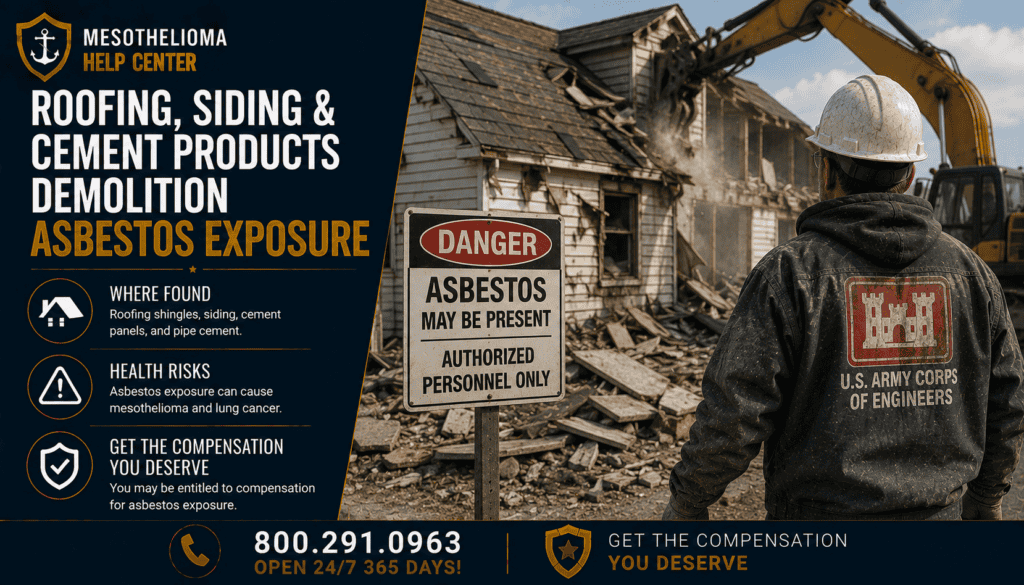
🏠 Roofing, Siding & Cement Products Demolition Asbestos Exposure
Roofing felt, shingles, siding, and cement boards released asbestos during removal—exposing demolition workers, contractors, nearby residents, and surrounding businesses to dangerous airborne fibers.
For decades, asbestos was added to roofing and exterior building products because it improved strength, fire resistance, weather durability, and insulation. Asbestos was mixed into roofing felt, shingles, cement siding, panels, and exterior boards used on homes, apartments, schools, factories, and commercial buildings. When these structures were renovated or demolished, tearing, cutting, prying, and crushing these materials released microscopic asbestos fibers into the air.
Because exterior demolition often occurred in open, windy environments, asbestos dust could travel far beyond the job site.
🧱 Where Asbestos Was Found in Roofing & Exterior Materials
Asbestos was commonly used in:
🏠 Roofing Felt & Underlayment
Asbestos fibers were added to felt layers beneath shingles and roofing systems.
🧱 Shingles & Roofing Tiles
Many asphalt and cement shingles contained asbestos.
🪵 Siding & Wall Panels
Cement siding, shingles, and exterior boards often contained asbestos fibers.
🧱 Cement Boards & Sheets
Fire-resistant boards and exterior cladding included asbestos cement.
🧱 Soffits, Fascia & Trim
Some exterior finishing materials used asbestos blends.
When these materials were broken or cut during demolition, asbestos fibers were released.
⚠️ How Exposure Occurred During Roofing & Siding Demolition
Asbestos exposure happened during:
🔨 Tearing Off Roofing
Shingles and felt were ripped, pried, or scraped from roofs.
🪚 Cutting & Sawing
Saws and grinders cut through asbestos cement boards and siding.
🚜 Crushing & Removal
Heavy equipment crushed exterior walls and roofing systems.
🧹 Debris Handling
Broken shingles and boards were loaded, dumped, and hauled.
🌬️ Wind Spread
Open-air demolition allowed wind to carry fibers into nearby areas.
These actions created invisible clouds of asbestos fibers that lingered in the air and settled on nearby surfaces.
👷 Who Was at Risk
Roofing and exterior demolition exposed:
🛠️ Demolition & Roofing Crews
Handled asbestos materials directly.
⚙️ Contractors & Trades
Carpenters, electricians, and plumbers worked near contaminated areas.
🏗️ Supervisors & Inspectors
Spent long hours around demolition zones.
🏢 Nearby Workers & Businesses
Dust drifted into surrounding buildings.
🏠 Local Residents
Fibers settled on homes, yards, and vehicles.
👨👩👧 Family Members
Workers brought asbestos dust home on clothing and shoes.
🌫️ Why Exterior Asbestos Was Dangerous
-
Work occurred in windy environments
-
Fibers traveled long distances
-
Dust entered nearby buildings
-
Fibers settled and re-aerosolized later
-
Exposure affected workers and communities
🫁 Health Risks from Roofing & Siding Asbestos Exposure
Inhaling asbestos fibers can cause:
🧠 Mesothelioma
Cancer of the lung, abdominal, or heart lining.
🫁 Lung Cancer
Risk greatly increases after asbestos exposure.
🫁 Asbestosis
Permanent lung scarring and breathing difficulty.
🫁 Other Cancers
Including throat, ovarian, and digestive cancers.
Symptoms often appear 20–50 years after exposure.
📋 Common Exposure Scenarios
-
A crew tears off asbestos roofing felt without wet methods.
-
Saws cut asbestos cement siding, releasing dust.
-
Wind carries demolition dust into nearby homes.
-
Broken boards are loaded into trucks, stirring fibers.
-
Family members inhale dust on work clothes.
❓ Frequently Asked Questions (FAQs)
1. Did all roofing materials contain asbestos?
Not all, but many made before the 1980s did.
2. Was cutting cement siding dangerous?
Yes. Cutting released large amounts of asbestos dust.
3. Could neighbors be exposed?
Yes. Wind carried fibers into nearby neighborhoods.
4. Is brief exposure harmful?
Yes. Even short-term exposure can increase disease risk.
5. Is there a safe level of exposure?
No. Any asbestos exposure is dangerous.
⚖️ How a Lawyer Can Help After Roofing Demolition Exposure
If you were exposed during roofing or siding demolition, a lawyer can:
🧾 Investigate Exposure
Identify job sites, dates, and materials.
🏭 Identify Responsible Parties
Manufacturers, contractors, and property owners.
📁 File Claims
Lawsuits, trust fund claims, or wrongful death actions.
💰 Seek Compensation
For medical bills, lost income, and suffering.
👨👩👧 Help Families
File claims for loved ones.
📞 Free Case Evaluation – Get Help Today
If you or a loved one was exposed during demolition of asbestos roofing, siding, or cement products and later developed mesothelioma or another asbestos-related illness, help is available.