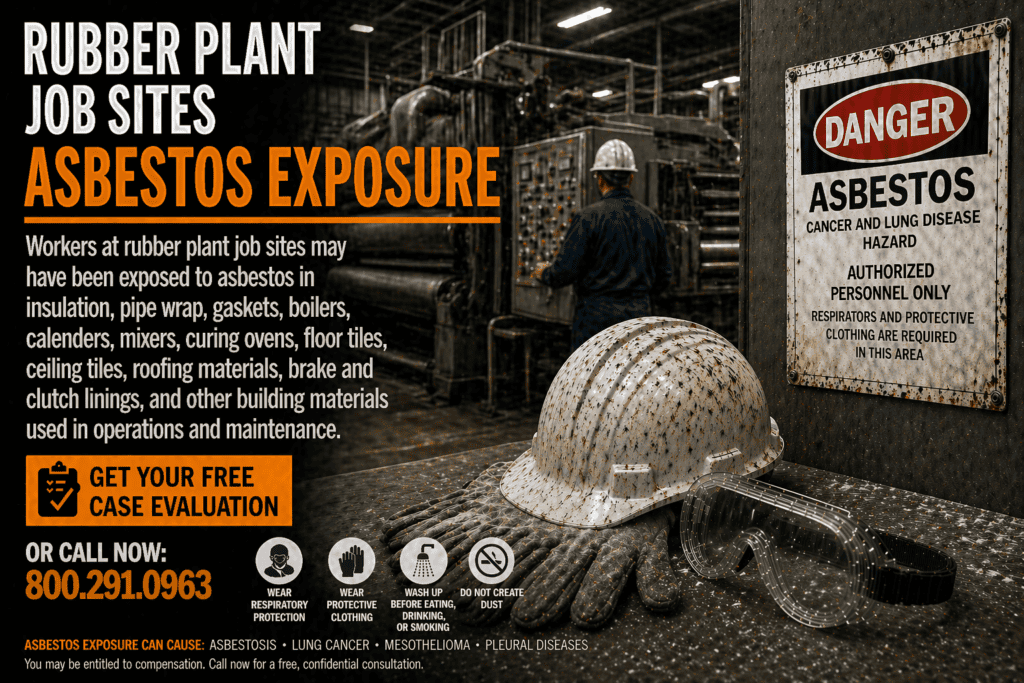
🧪 Rubber Plant Job Sites Asbestos Exposure Lawsuit
Rubber manufacturing facilities frequently used asbestos during the production of high-heat rubber goods, molded components, and industrial seals. Asbestos was added for its heat resistance and durability but posed serious health risks when fibers became airborne.
Workers were often exposed while mixing rubber compounds, operating high-temperature molding machines, or servicing insulation-lined machinery. Maintenance tasks and equipment breakdowns frequently released asbestos dust into the work environment, particularly in enclosed processing areas.
🛢️ Rubber Plant Job Sites – What You’ll Learn From This Page:
🧪 Rubber plants used asbestos to insulate molds, ovens, and heated machinery involved in high-temperature production.
🛠️ Workers were exposed during molding, pressing, and equipment repair, especially in tire, hose, and gasket production.
🌬️ Dust from asbestos insulation was released during maintenance, especially when working on aging machines.
🔥 Protective clothing and heat mats also contained asbestos, compounding exposure risks on the line.
💰 Rubber workers with asbestos-related illness may be eligible for financial compensation.
Read more articles about Rubber Plant Asbestos Exposure.
Number of People Exposed to Asbestos in Rubber Plants in the U.S.
Heat-intensive rubber processing relied on asbestos from the 1940s through the 1980s.
| Exposure Category | Estimated Number of People Exposed |
|---|---|
| Occupational Exposure (Operators, press techs, repair crews) | Approximately 410,000 workers exposed |
| Secondary Exposure (Families exposed via gear) | Estimated 60,000 exposed |
| Environmental Exposure (Molding zones, machine areas) | Around 95,000 people exposed |
👉 Total Estimated Exposure:
Over 565,000 people in the U.S. were exposed at rubber plant job sites.
📊 Facts About Rubber Plant Asbestos Exposure
• Over 200 rubber manufacturing sites operated in the U.S. pre-1980
• Exposure Risk: High for molding operators and compound mixers
• Disease Risk: Elevated risk of mesothelioma, asbestosis, lung cancer
• Similar Occupations: Plastics workers, tire builders, press operators
🏗️ History of Asbestos Use in Rubber Manufacturing
From the 1930s to the 1980s, asbestos was commonly mixed into rubber compounds for fireproofing, pressure resistance, and insulation. It was especially prevalent in the production of hoses, gaskets, and mechanical parts used in automotive and industrial equipment.
Workers faced daily exposure without respiratory protection. As equipment aged or broke down, asbestos-laden dust was released during repairs, cleanup, or compound handling.
🫁 Mesothelioma Risk for Rubber Plant Workers
• Compound mixers worked with raw asbestos in blending areas
• Press machine operators inhaled fibers during high-heat molding
• Maintenance crews encountered crumbling insulation and worn seals
• Janitorial staff swept up asbestos-filled dust from production zones
⚙️ Asbestos Products Found in Rubber Plants
• Molded Rubber Parts – Included asbestos for durability and heat resistance
• Gaskets and Seals – Commonly made with asbestos to endure pressure
• Pipe and Boiler Insulation – Lined plant machinery and utility systems
• Adhesives and Binders – Used in bonding and product shaping
• Thermal Blankets – Protected machines and surfaces during curing
🧰 Who Was Exposed in Rubber Manufacturing Job Sites
Rubber Compound Mixers
Handled raw asbestos while mixing ingredients into rubber bases.
Press Machine Operators
Molded asbestos-filled materials into parts using high-heat machines.
Maintenance Workers
Repaired or replaced aging equipment insulated with asbestos.
Curing and Finishing Crews
Used thermal covers and blankets that shed asbestos fibers.
Supervisors and Inspectors
Worked near mixing and molding stations with airborne fibers.
❓ Common Questions About Asbestos Claims
🏭 Can I file a claim if the plant shut down years ago?
Yes – claims are against product makers, not the plant itself.
🧰 What if I worked there for a short time?
Even brief exposure may qualify for compensation due to health risks.
📋 How do I prove I worked with asbestos?
Legal teams use work history, job roles, and plant data to confirm exposure.
📅 What is the statute of limitations?
Typically 1–3 years after diagnosis. Early action is key.
👨👩👧 Can family members file after a loved one’s death?
Yes – wrongful death claims are often available through asbestos trust funds.
⚖️ Legal Help for Rubber Manufacturing Workers and Families
If you or a loved one worked at a rubber manufacturing plant and developed an asbestos-related disease, legal professionals can:
• Identify likely asbestos sources and responsible manufacturers
• Gather employment records and product documentation
• File trust fund and legal claims on your behalf
• Work on contingency with no upfront fees
📞 Free Legal Support for Asbestos Exposure Victims
📞 Call Now: 800.291.0963
• No legal fees unless you receive compensation
• Free consultation and job exposure review
• Support for workers, contractors, and families nationwide
🌐 Or request help online anytime