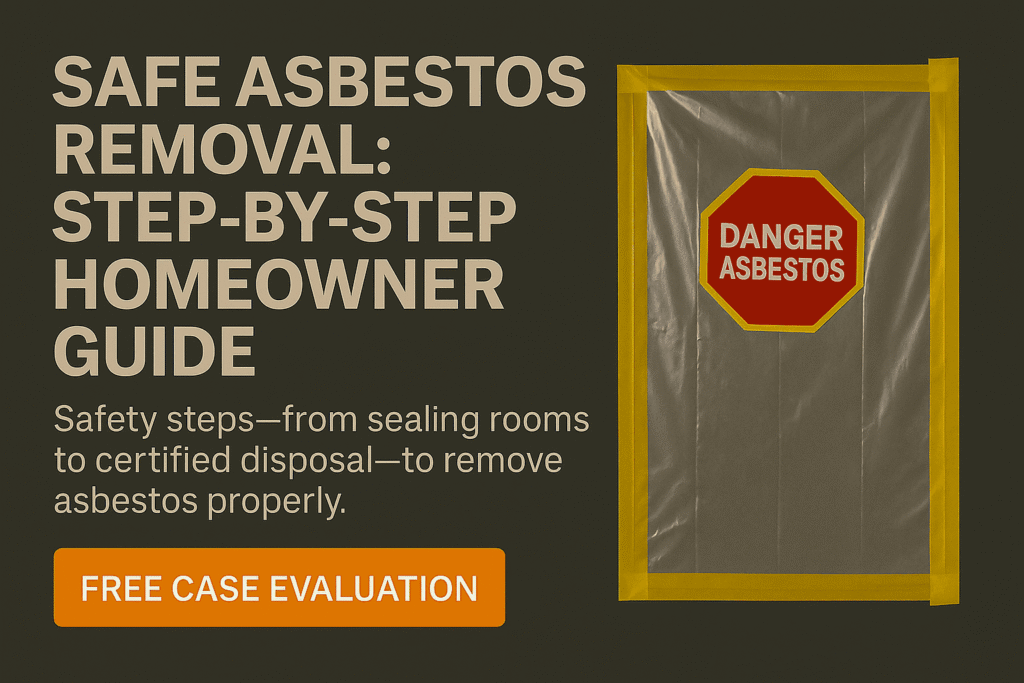
Safe Asbestos Removal: Step-by-Step Homeowner Guide
Asbestos is one of the most dangerous materials still found in millions of American homes. When damaged, disturbed, or improperly removed, it can release microscopic fibers that lodge deep in the lungs and cause life-threatening diseases such as mesothelioma and lung cancer.
While asbestos abatement should almost always be handled by licensed professionals, homeowners benefit from understanding the full process — from sealing the workspace to the certified disposal of asbestos waste. This guide explains every stage of safe removal so you’ll know what to expect and how to protect your family.
If you suspect asbestos in your home or need help finding a certified abatement contractor, call 800.291.0963 for immediate guidance.
🏠 Step 1: Identify Whether Asbestos Is Present
Safe removal begins with proper identification. Many materials in homes built before 1980 may contain asbestos.
📌 Common Asbestos-Containing Materials (ACMs)
-
Popcorn ceilings
-
Vinyl floor tiles and mastic
-
Drywall joint compound
-
Plaster and textured walls
-
HVAC duct insulation
-
Pipe wrap and boiler insulation
-
Cement siding and roofing shingles
-
Backing behind old linoleum
-
Acoustic panels and ceiling tiles
✔ How to Confirm Asbestos
Homeowners should not guess. Testing must be done by a certified asbestos inspector.
Testing includes:
-
Visual inspection
-
Safe sample collection
-
Laboratory analysis using PLM or TEM
Never attempt to cut, scrape, or disturb suspicious material to “check” it — this can release dangerous fibers.
🚧 Step 2: Determine Whether Removal Is Necessary
Not all asbestos needs removal. Sometimes encapsulation or enclosure is safer and far less expensive.
✔ Removal Is Necessary If:
-
ACMs are damaged, crumbling, or water-logged
-
Renovation work will disturb the material
-
It has become friable (easily crumbled by hand)
-
ACMs pose a danger to children or elderly family members
-
Local building codes require removal
✔ Encapsulation May Be Allowed If:
-
Material is intact
-
It can be safely sealed
-
No construction will disturb it
A certified inspector will recommend the safest option.
🧰 Step 3: Hire a Licensed Asbestos Abatement Contractor
DIY asbestos removal is illegal in many areas and extremely dangerous without professional training.
📌 Why Professionals Are Required
Certified contractors follow strict EPA, OSHA, and state regulations involving:
-
Full containment procedures
-
Negative-air machines
-
HEPA-filtered vacuums
-
Specialized respirators
-
Proper waste handling
-
Occupational safety training
What to Look For in a Contractor
-
State license and certification
-
Proof of insurance
-
Written abatement plan
-
Clear pricing and scope of work
-
References or reviews
-
Compliance with local regulations
Professionals protect you, your family, and your property.
🚪 Step 4: Prepare the Work Area Before Removal
Preparation prevents asbestos fibers from spreading throughout the home.
✔ Essential Preparation Steps
-
Remove all furniture and belongings
-
Seal vents, registers, and HVAC openings
-
Close and lock all windows
-
Turn off HVAC systems
-
Place 6-mil plastic sheeting on floors and walls
-
Create containment barriers using poly sheeting and tape
-
Build a decontamination chamber for workers
Icons
🔒 Seal Off the Area
💨 Turn Off Airflow
🚫 Block Access to Others
Only trained personnel should enter the containment zone.
😷 Step 5: Safety Gear Required for Removal
Professional crews use personal protective equipment (PPE) to prevent inhalation and contamination.
✔ Required PPE
-
Full-face or half-mask respirators with P100 filters
-
Disposable Tyvek suits
-
Gloves and boot covers
-
Safety goggles
-
Hard hats (if structural work is involved)
📌 Contamination Prevention
Workers must:
-
Change suits frequently
-
Enter and exit through the decontamination chamber
-
Use HEPA vacuums before leaving the area
No one should enter the site without full PPE.
🧹 Step 6: Asbestos Removal Procedures (How Professionals Do It)
Once containment is secure, licensed contractors begin controlled removal.
✔ Standard Removal Methods
-
Wetting the material to prevent fiber release
-
Carefully prying or cutting ACMs without breaking
-
Using specialized hand tools instead of power tools
-
Double-bagging ACMs in 6-mil plastic bags
-
Using HEPA vacuums at every stage
-
Constantly monitoring air quality
Friable vs. Non-Friable Removal
-
Friable material (crumbles easily) requires stricter controls
-
Non-friable material (like floor tiles) may require heat, solvents, or full removal
The goal is to prevent fiber release at every step.
🗑️ Step 7: Proper Bagging, Labeling & Disposal
Improper asbestos disposal is illegal and dangerous.
✔ Certified Disposal Requirements
-
ACMs must be soaked before bagging
-
Waste must be placed in certified asbestos bags
-
Bags must be labeled with OSHA-required warnings
-
All bags placed inside sealed, rigid containers
-
Transported in licensed hazardous-waste vehicles
-
Disposed of only at licensed asbestos landfills
🚫 Never Dispose of Asbestos By:
-
Placing it in household trash
-
Dumping it outside
-
Burning it
-
Breaking it into smaller pieces
Violations can result in fines and legal liability.
🌬️ Step 8: Air Monitoring & Clearance Testing
Once removal is complete, independent air testing ensures your home is safe.
✔ Air Monitoring Includes:
-
Background testing before work
-
Real-time monitoring during removal
-
Final clearance testing
Clearance Requirements
The home must meet:
-
EPA clearance level of 0.01 f/cc or lower
-
All state-specific standards (some require TEM testing)
If tests fail, contractors must repeat cleaning until the air is safe.
🧽 Step 9: Post-Removal Cleaning & Decontamination
After passing clearance, the cleanup process begins.
✔ Required Cleaning Steps
-
Wipe all surfaces with wet cloths
-
Use HEPA vacuums on floors, walls, and ceilings
-
Remove all plastic sheeting
-
Seal and dispose of PPE
-
Clean all tools and equipment
-
Restore HVAC airflow
-
Reinstall or replace removed building materials
Your home should return to normal conditions — free of dust and contamination.
📄 Step 10: Documentation Homeowners Should Receive
All asbestos removal work should be documented for insurance, home sales, and future safety.
📌 Important Documents You Should Keep
-
Initial inspection report
-
Laboratory results confirming ACM
-
Contractor’s license and certification
-
Abatement plan
-
Waste transport manifests
-
Air-monitoring results
-
Final clearance certificate
These records prove your home is safe and compliant.
⚠️ Step 11: DIY Removal — Why It’s Not Recommended
Some states allow limited DIY removal, but it’s strongly discouraged.
Reasons DIY Removal Is Dangerous
-
High risk of fiber release
-
No access to professional gear
-
Improper containment
-
Lack of HEPA equipment
-
Illegal disposal risks
-
Potential long-term health damage
Consequences of Improper Removal
-
Contamination throughout the home
-
Expensive corrective abatement
-
Health risks to family and neighbors
-
Legal liability and fines
Professional removal protects everyone involved.
🏥 Where to Get Help
If you suspect asbestos in your home or need safe removal guidance, we can help you:
-
Schedule certified asbestos inspections
-
Understand your state’s removal laws
-
Find licensed abatement contractors
-
Navigate renovation plans safely
-
Review air-monitoring reports
-
File insurance claims when applicable
-
Protect your family from exposure
📞 Call 800.291.0963 today for asbestos-removal and safety support.
📝 Summary
Safe asbestos removal requires strict containment, professional handling, and certified disposal.
Key Takeaways
-
Testing by certified inspectors is mandatory
-
Not all asbestos needs removal — some can be encapsulated
-
Professional contractors must follow EPA and OSHA standards
-
Containment, PPE, and HEPA filtration prevent fiber release
-
Proper bagging and disposal protect communities
-
Clearance testing ensures your home is safe
-
Documentation is essential for insurance and future sales
If you need help planning or scheduling asbestos abatement, we’re here for you.
📞 Call 800.291.0963 to take the next safe step forward.