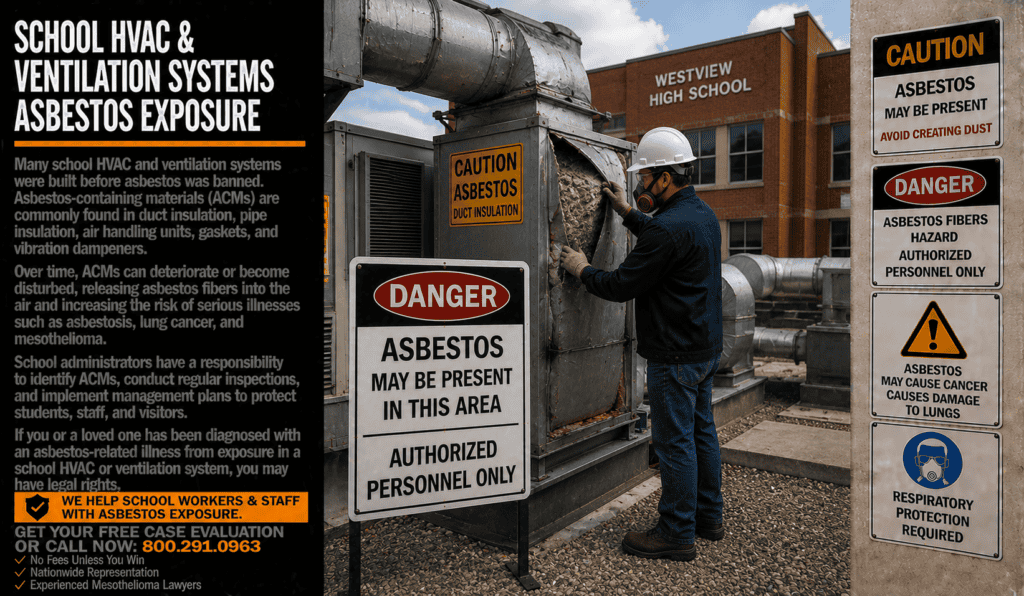
🌬️ School HVAC & Ventilation Systems Asbestos Exposure
Ductwork, air handlers, and insulation spread asbestos fibers throughout classrooms and common areas.
School HVAC and ventilation systems were a major source of asbestos exposure in educational buildings. From elementary schools to large university campuses, heating, ventilation, and air-conditioning systems relied heavily on asbestos-containing materials to insulate ducts, control heat, and prevent fires. These systems operated continuously for decades, often circulating air through every occupied space in the building.
Unlike isolated areas such as boiler rooms, HVAC systems created a building-wide exposure pathway. When asbestos insulation deteriorated or was disturbed during maintenance, microscopic fibers could be pulled into airflow systems and distributed throughout classrooms, hallways, offices, and dormitories—affecting students, teachers, and staff far from the original source.
🧱 Why Asbestos Was Used in School HVAC Systems
Asbestos was widely used in HVAC systems because it provided essential performance and safety benefits:
-
🛡️ Fire resistance around ductwork and air-handling equipment
-
🔥 Thermal insulation for heated air distribution systems
-
🧱 Durability in systems exposed to vibration and temperature changes
-
🎧 Sound dampening in large air-handling units
-
💲 Cost efficiency for large-scale school construction
Because HVAC systems were hidden above ceilings and behind walls, asbestos hazards often remained undetected for decades.
🧪 Common Asbestos-Containing HVAC Materials in Schools
Asbestos may be found in multiple components of school HVAC and ventilation systems, including:
🌬️ Ductwork & Air Distribution
-
Duct insulation and wraps
-
Asbestos paper liners
-
Tape and joint sealants
⚙️ Air Handling Units
-
Insulated panels
-
Gaskets and seals
-
Fire-resistant linings
🔥 Mechanical & Utility Areas
-
Plenum insulation
-
Vibration dampeners
-
Fireproof coatings
🧱 Ceiling & Wall Cavities
-
Insulated plenums
-
Asbestos-containing ceiling materials connected to ventilation pathways
As these materials age, they may dry out, crack, or shed fibers into moving air.
⚠️ How Asbestos Exposure Occurs Through HVAC Systems
HVAC-related asbestos exposure commonly occurs during:
-
Routine HVAC maintenance and filter replacement
-
Duct repairs or rerouting
-
Ceiling tile replacement near ductwork
-
System upgrades or retrofits
-
Air handler or fan servicing
-
Renovation projects disturbing hidden insulation
Once asbestos fibers enter ventilation systems, they can spread throughout the building and remain suspended in the air for extended periods.
🧑🏫 Who Is Most at Risk from HVAC Asbestos Exposure
👶 Students
Students may be exposed daily in classrooms where contaminated air circulates, especially in older school buildings with outdated ventilation systems.
👩🏫 Teachers & School Staff
Teachers and staff working in the same rooms for years may experience cumulative exposure through HVAC-distributed fibers.
🛠️ HVAC Technicians & Maintenance Workers
HVAC workers face the highest exposure risk when handling ducts, insulation, and air-handling equipment containing asbestos.
🧹 Custodial Staff
Custodial workers may disturb asbestos dust during ceiling access, vent cleaning, or equipment maintenance.
🧬 Health Risks Linked to HVAC-Related Asbestos Exposure
Prolonged asbestos exposure through ventilation systems may lead to serious illnesses, including:
🫁 Asbestosis
A chronic lung disease caused by asbestos fiber scarring, resulting in reduced lung capacity and breathing difficulty.
🧠 Mesothelioma
A rare and aggressive cancer affecting the lining of the lungs or abdomen, almost always caused by asbestos exposure.
🫁 Lung Cancer
Long-term inhalation of asbestos fibers significantly increases lung cancer risk, especially when combined with smoking.
Because asbestos diseases often take decades to develop, many individuals do not associate illness with past school exposure.
📜 Regulations for School HVAC & Ventilation Systems
Schools are required to:
-
Identify asbestos-containing HVAC materials
-
Monitor and document material condition
-
Maintain asbestos management plans
-
Repair or remove damaged insulation
However, many HVAC systems remain in service long past their intended lifespan, increasing the likelihood of fiber release.
❓ Frequently Asked Questions (FAQs)
1️⃣ Can asbestos in HVAC systems affect entire school buildings?
Yes. HVAC systems can distribute asbestos fibers throughout classrooms, offices, and common areas.
2️⃣ Is asbestos exposure possible even if HVAC systems appear intact?
Yes. Aging insulation can shed fibers internally without visible damage.
3️⃣ Are HVAC workers at higher risk?
Yes. HVAC technicians frequently disturb asbestos insulation during repairs and upgrades.
4️⃣ Can asbestos fibers remain airborne for long periods?
Yes. Fibers can remain suspended in indoor air and settle on surfaces throughout buildings.
5️⃣ Can exposure from school HVAC systems cause illness decades later?
Yes. Asbestos-related diseases often appear 20–50 years after exposure.
⚖️ How a Lawyer Can Help Get Compensation
Individuals diagnosed with asbestos-related illnesses may have legal options. An experienced asbestos lawyer can help by:
-
Identifying school buildings with asbestos-contaminated HVAC systems
-
Tracing exposure timelines through employment or school attendance
-
Filing claims against asbestos manufacturers and trust funds
-
Pursuing compensation for medical bills, lost wages, and pain and suffering
-
Assisting families with wrongful death claims
Asbestos cases involving HVAC exposure often involve multiple responsible parties, making skilled legal guidance critical.
📞 Free Case Evaluation – Get Help Today
If you or a loved one were exposed to asbestos through a school HVAC or ventilation system and later developed an asbestos-related illness, help is available.
📞 Call Now for a FREE Case Evaluation: 800-291-0963
There is no obligation, and compensation may be available.
📌 Key Takeaways
-
School HVAC systems widely used asbestos insulation
-
Ventilation systems could spread fibers throughout entire buildings
-
Students, teachers, and staff faced long-term exposure risks
-
HVAC workers experienced especially high exposure
-
Legal options may be available for asbestos-related illnesses