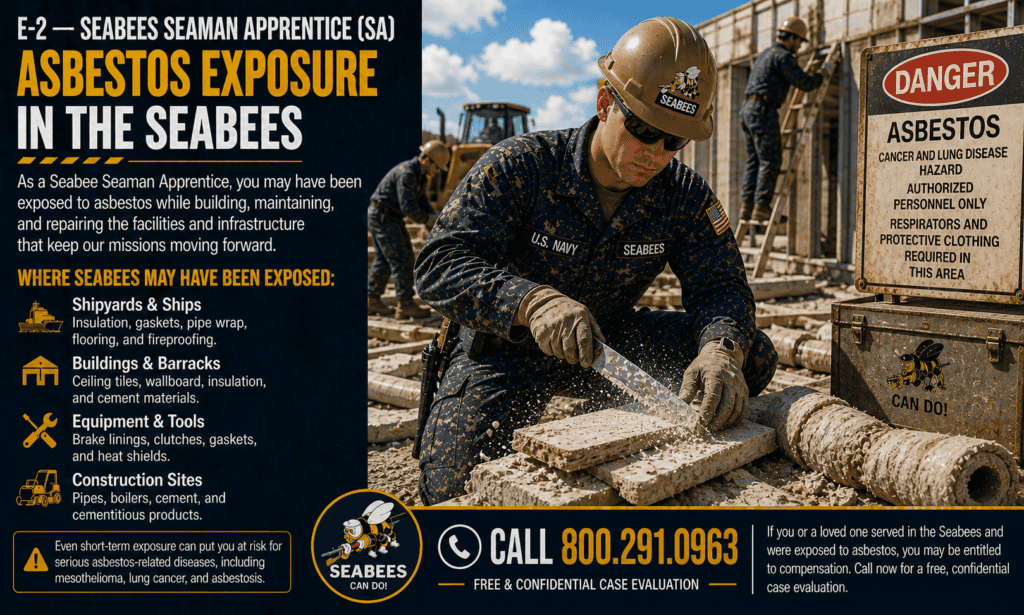
E-2 — Seabees Seaman Apprentice (SA) Asbestos Exposure
Asbestos Exposure Risks for Early-Career Naval Construction Specialists
The U.S. Navy Seabees are one of the most construction-intensive forces in military history. Before asbestos restrictions came into place in the 1980s, nearly every material used by Seabees—especially in carpentry, plumbing, electrical work, roofing, demolition, and general construction—contained asbestos. As a result, Seabee apprentices (E-2) often performed hands-on tasks that released large amounts of asbestos dust.
An E-2 Seabees Seaman Apprentice (SA) progresses from basic labor performed at the SR level into more trade-specific work. They assist carpenters, electricians, equipment operators, steelworkers, utilitiesmen, and construction mechanics—meaning they worked directly on structures built with asbestos-laden materials.
This comprehensive 1,200-word page explains:
-
The role and trade-support duties of a Seabee SA
-
How cutting transite, handling insulation, and roofing materials created asbestos exposure
-
Why early-career Seabees experienced frequent inhalation of fibers
-
Health risks, early symptoms, and long-term dangers
-
VA disability benefits and asbestos trust fund eligibility
-
How SA veterans can receive legal compensation
The Role of an E-2 Seabee Seaman Apprentice (SA)
After completing recruit training, Seabee SAs enter the Naval Construction Force with increased responsibility. They receive training in construction fundamentals, tool use, safety procedures, and their assigned trade. Although still junior in rank, SAs perform substantial hands-on work.
Typical Duties
🛠️ Assisting carpenters, electricians, plumbers, and equipment operators
More specifically, SA responsibilities include:
-
measuring, cutting, and shaping building materials
-
assisting carpenters with framing and siding
-
helping electricians install conduit and wiring
-
supporting plumbers with pipe installation
-
handling roofing and exterior materials
-
operating small construction tools
-
mixing cement, mortar, and grout
-
performing demolition tasks
-
sweeping, hauling, and cleaning up job sites
-
transporting asbestos-containing materials (often unknowingly)
Because Seabees deploy worldwide—including remote islands, expeditionary bases, disaster zones, and older U.S. military facilities—SAs often found themselves working in environments built decades earlier with asbestos materials.
Why Seabee SA Personnel Faced Severe Asbestos Exposure
Three core job realities put SAs at high risk:
1️⃣ They worked directly with older building materials.
2️⃣ They performed tasks that generate large volumes of airborne dust.
3️⃣ They assisted multiple trades, increasing their exposure points.
Before the mid-1980s, Seabees routinely used and demolished asbestos products such as:
-
transite cement board
-
asbestos siding and roofing
-
electrical insulation
-
pipe insulation
-
furnace and boiler insulation
-
vinyl asbestos tile
-
plaster and joint compound
-
mastics and adhesives
-
fireproofing sprays
-
sound-deadening materials
These tasks exposed SA personnel to high concentrations of airborne asbestos, particularly when cutting, drilling, sawing, breaking, or sweeping contaminated materials.
Below are the most significant exposure sources.
Exposure Source #1: Cutting Transite Board
Transite (asbestos cement board) was used extensively by Seabees for:
-
exterior siding
-
wall panels
-
roof underlayment
-
electrical backboards
-
utility enclosures
-
partitions in expedient buildings
How SA Personnel Were Exposed
As E-2 apprentices, SAs often cut, drilled, or handled transite sheets—one of the most friable and hazardous ACMs. Typical exposure situations included:
-
cutting transite with electric saws
-
drilling holes for fasteners or conduit
-
breaking old panels during demolition
-
sweeping up piles of asbestos fragments
-
loading and unloading damaged sheets
-
assisting carpenters who were actively cutting the material
Cutting cement board releases dense clouds of invisible asbestos fibers, especially when using high-speed power tools. Even outdoor use did not prevent exposure, as fibers linger in air currents.
Exposure Source #2: Electrical Insulation and Wiring Components
Seabee electricians used or encountered numerous asbestos-containing electrical components:
-
arc chutes
-
panel insulation boards
-
heat-resistant wiring
-
asbestos cloth wraps for conduits
-
fuse box linings
-
motor and generator insulation
Why SA Electrician Helpers Were Exposed
Seabee SAs assisting electricians were often required to:
-
open old panels
-
pull deteriorating wiring
-
drill through asbestos-backed walls
-
remove insulation surrounding conduit
-
cut mounts made from transite
Every one of these tasks disturbed asbestos dust that had accumulated for decades in confined electrical enclosures.
Exposure Source #3: Damaged Roofing and Siding Materials
Seabees maintained and replaced roofing systems across naval bases, deployed locations, and expeditionary environments. Before 1980, roofing contained:
-
asbestos shingles
-
roofing felt
-
black mastic adhesive
-
siding shingles
-
flashing materials reinforced with asbestos fibers
How Roofing Created Exposure
SAs assisting constructionmen or equipment operators encountered asbestos when:
-
scraping old shingles
-
removing siding panels
-
prying up roof tiles
-
sweeping roof debris
-
cutting replacement siding
-
handling buckets of old mastic
Once disturbed, roofing ACM releases asbestos that:
-
becomes airborne easily
-
travels with wind
-
clings to clothing and gear
-
settles into ventilation ducts and interior rooms
As junior personnel, SAs often performed cleanup—the job with the highest concentration of loose dust.
Additional Exposure Pathways for Seabee SAs
Demolition Work
Old barracks, warehouses, quonset huts, and offices were frequently torn out by Seabees, exposing SAs to asbestos in:
-
drywall
-
plaster
-
ceiling tiles
-
floor tile
-
insulation
-
boiler rooms
HVAC Support
Duct insulation and furnace linings contained asbestos.
Plumbing Support
Pipe wrap insulation exposed SAs during cutting, removal, or repair.
Motor Pool Areas
Brake linings and clutch materials often contained asbestos.
Shipyard Assignments
Some Seabees supported Navy vessel maintenance, bringing them into direct contact with shipboard ACM.
Health Risks for Seabee SA Veterans
Because asbestos fibers remain permanently embedded in the lungs and abdomen, Seabee SA veterans face elevated risks decades after service.
Diseases include:
-
Malignant Mesothelioma
-
Asbestos-related lung cancer
-
Asbestosis
-
Pleural thickening
-
Respiratory impairment
Symptoms often appear 20–50 years after exposure.
VA Disability Benefits for Seabee SA Personnel
The VA recognizes Seabee construction roles as high-risk MOS codes for asbestos exposure.
Evidence that strengthens a claim:
-
service records showing construction duties
-
proof of working in pre-1980 environments
-
statements from fellow Seabees
-
medical documentation linking illness to asbestos
A diagnosis of mesothelioma qualifies veterans for:
-
100% disability rating
-
Special Monthly Compensation (SMC)
-
Survivor benefits (DIC)
Asbestos Trust Fund & Legal Compensation
Over $30 billion remains available for asbestos victims. Seabees qualify because:
-
nearly all ACM products handled were made by private manufacturers
-
construction tasks caused direct fiber release
-
daily trade support created repeated exposure
Compensation sources include:
-
asbestos trust fund payouts
-
legal claims against manufacturers
-
VA disability benefits
-
family survivor benefits
These do not conflict with one another.
📞 Free Case Review for Seabee SA Veterans
If you served as an E-2 Seabees Seaman Apprentice (SA) and later developed mesothelioma, asbestos lung cancer, or asbestosis, you may qualify for substantial financial compensation.
📞 Call 800.291.0963 now for a free, confidential case review.
A specialist can help you document your exposure and pursue every available benefit.