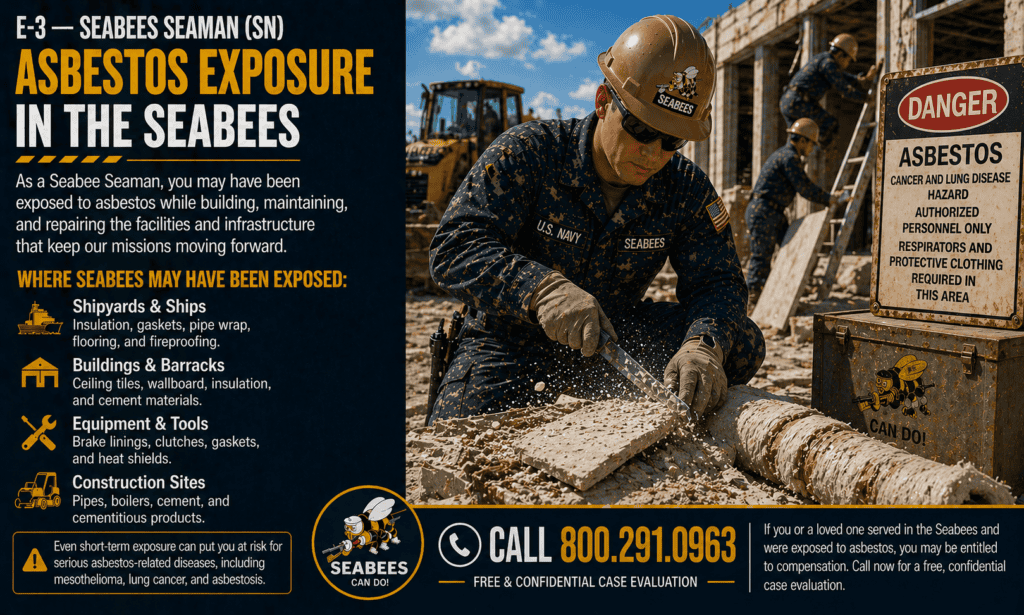
E-3 – Seabees Seaman (SN) Asbestos Exposure
Asbestos Exposure Risks for Early-Level Naval Construction Specialists
The U.S. Navy Seabees—America’s premier military construction force—historically faced some of the highest asbestos exposure rates in the entire U.S. Armed Forces. Before the early 1980s, almost every Seabee construction, renovation, or utilities assignment involved asbestos-containing materials (ACMs). Cement board, insulation, roofing, flooring, steam systems, boilers, siding, electrical systems, and exterior coatings all contained asbestos.
An E-3 Seabees Seaman (SN) is no longer a basic laborer but a developing construction specialist. SNs take on increased responsibility, assist tradesmen more independently, and perform early-stage technical tasks in carpentry, utilities, electrical work, plumbing, concrete, and heavy equipment operations. These tasks placed SNs directly in high-risk zones such as boiler rooms, steam tunnels, demolition sites, and pre-1980 structures—areas heavily contaminated with asbestos fibers.
This comprehensive 1,200-word page explains:
-
The expanded responsibilities of a Seabee SN
-
How boiler insulation, steam-pipe lagging, and demolition debris created exposure
-
Why Seabees faced repeated, daily asbestos inhalation
-
Long-term health dangers
-
VA disability and legal compensation options
The Role of an E-3 Seabees Seaman (SN)
A Seabee SN is a junior construction specialist who has completed basic training and early trade instruction. They support Navy Construction Battalion trades including:
-
Utilitiesmen (UT)
-
Construction Electricians (CE)
-
Builders (BU)
-
Equipment Operators (EO)
-
Construction Mechanics (CM)
-
Steelworkers (SW)
-
Engineering Aides (EA)
SNs perform tasks that require physical labor, trade awareness, tool skill, and safety training—placing them near materials known for asbestos contamination.
Typical Duties
🛠️ Early construction tasks, utilities installation, shop assistance
Expanded SN responsibilities include:
-
assisting in installing utility lines (water, steam, electrical)
-
working inside boiler rooms or mechanical spaces
-
cutting piping or conduit
-
prepping structures for renovation
-
operating shop tools
-
assisting with electrical wiring
-
mixing and pouring concrete
-
tearing out old building materials
-
replacing siding or roofing
-
interior and exterior repair work
-
base maintenance and utility checks
-
supporting HVAC or plumbing repair crews
-
demolishing older barracks, hangars, and administrative buildings
SNs often work under supervision but with far more hands-on responsibility than E-1 or E-2 personnel—meaning they entered asbestos-heavy areas more frequently.
Why Seabee SNs Faced Severe Asbestos Exposure
Three core factors increased the danger:
1️⃣ Pre-1980 structures were full of asbestos—especially utility rooms
2️⃣ SNs performed demolition and renovation tasks that disturbed friable ACM
3️⃣ Utilities work (steam, plumbing, HVAC) placed SNs in direct contact with insulation
Seabees were construction specialists working across bases worldwide—including older naval facilities built during WWII, Korea, and Vietnam—all of which used massive amounts of asbestos in:
-
boiler insulation
-
steam piping
-
furnace ducts
-
drywall mud
-
joint compound
-
plaster
-
roofing felt
-
floor tile
-
siding
-
electrical insulation boards
Below are the major exposure sources for SN-level personnel.
Exposure Source #1: Boiler-Room Insulation
Boiler rooms are among the most dangerous asbestos environments in military construction and maintenance.
Boilers and associated systems contained:
-
asbestos block insulation
-
refractory insulation
-
cement coatings
-
thermal blankets
-
asbestos adhesives
-
fireproofing sprays
SNs entered boiler rooms for:
-
utilities repairs
-
mechanical inspections
-
pump servicing
-
valve replacement
-
leak repairs
-
cleanup and debris removal
How Boiler Rooms Exposed SNs
Boiler insulation deteriorates into powder-like dust. When Seabees:
-
touched pipes
-
removed old insulation
-
swept the floor
-
opened access panels
-
replaced valves
-
checked gauges
they inhaled airborne asbestos fibers. The confined, poorly ventilated nature of boiler rooms made exposure unavoidable.
Exposure Source #2: Steam-Pipe Lagging
Steam systems were insulated heavily with asbestos because of extreme heat.
Steam-pipe lagging included:
-
woven asbestos cloth
-
corrugated asbestos wrap
-
plaster-like insulation
-
cement-based coatings
-
asbestos rope and tape
Seabee SNs assisted utilitiesmen and plumbers in:
-
removing pipe insulation
-
cutting and replacing steam lines
-
repairing valves and elbows
-
entering steam tunnels and crawlspaces
-
performing heat system rebuilds
Why Steam Systems Were Among the Highest-Risk Sites
Disturbing lagging produces friable fibers, which:
-
float in the air for hours
-
stick to clothing
-
contaminate shop areas
-
settle into hair, tools, and gear
SNs frequently brushed against deteriorated lagging while crawling or working in tight spaces—creating extremely high exposure events.
Exposure Source #3: Demolition of Pre-1980 Structures
Seabees were routinely tasked with demolishing old buildings—including:
-
WWII-era barracks
-
admin buildings
-
hangars
-
warehouses
-
mess halls
-
quonset huts
-
overseas structures built with local asbestos-containing materials
Demolition is the single highest-risk asbestos activity because it disturbs every ACM simultaneously.
How Demolition Exposed SNs
Seabee SNs participated in:
-
tearing down walls
-
removing ceiling tiles
-
scraping floor tile or mastic
-
knocking out drywall
-
breaking apart cement board
-
prying up roofing shingles
-
clearing the debris afterward
Common exposure points included:
-
airborne dust from collapsing ceilings
-
pulverized tile and plaster
-
shattered transite siding
-
disturbed insulation in walls
-
debris from HVAC ducts
SNs inhaled fibers even if they were simply sweeping or hauling debris.
Additional Exposure Sources for Seabee SNs
HVAC Repairs
Older ducts used asbestos insulation board and cloth joints.
Electrical Work
Panels, arc chutes, and wire insulation contained ACM.
Roofing & Siding Work
Asbestos shingles and siding were common.
Motor Pool Work
Brake shoes, clutch plates, and engine gaskets used chrysotile asbestos.
Field Deployments
Foreign structures—especially in Pacific and Middle Eastern regions—were built with unregulated asbestos products.
Long-Term Health Risks for Seabee SN Veterans
Asbestos diseases develop slowly but aggressively. SNs exposed in the 1960s–1980s are now at the highest risk today.
Common illnesses include:
-
Mesothelioma
-
Asbestos-related lung cancer
-
Asbestosis
-
Pleural plaques
-
Chronic respiratory issues
Symptoms often take 20–50 years to appear.
VA Disability Benefits for Seabee SN Personnel
The VA recognizes Seabee construction roles as high-risk for asbestos. SN-level service records strongly support exposure claims.
Evidence that strengthens a VA claim:
-
proof of Seabee construction duties
-
assignments in pre-1980 structures
-
deployment to older naval installations
-
buddy statements from other Seabees
-
medical documentation of asbestos illness
Mesothelioma qualifies for an automatic 100% disability rating and additional compensation.
Asbestos Trust Funds & Legal Compensation
Over $30 billion is available from asbestos trust funds created by manufacturers of:
-
cement board
-
insulation
-
roofing
-
flooring
-
electrical systems
These claims are against manufacturers, not the Navy, and can be pursued in addition to VA benefits.
Compensation may include:
-
medical coverage
-
settlements
-
trust payouts
-
survivor benefits
📞 Free Case Review for Seabee SN Veterans
If you served as an E-3 Seabees Seaman (SN) and later developed mesothelioma, asbestos lung cancer, or asbestosis, you may qualify for significant compensation.
📞 Call 800.291.0963 now for a free, confidential case review.
A specialist can verify your exposure sources and help secure both VA and legal compensation.