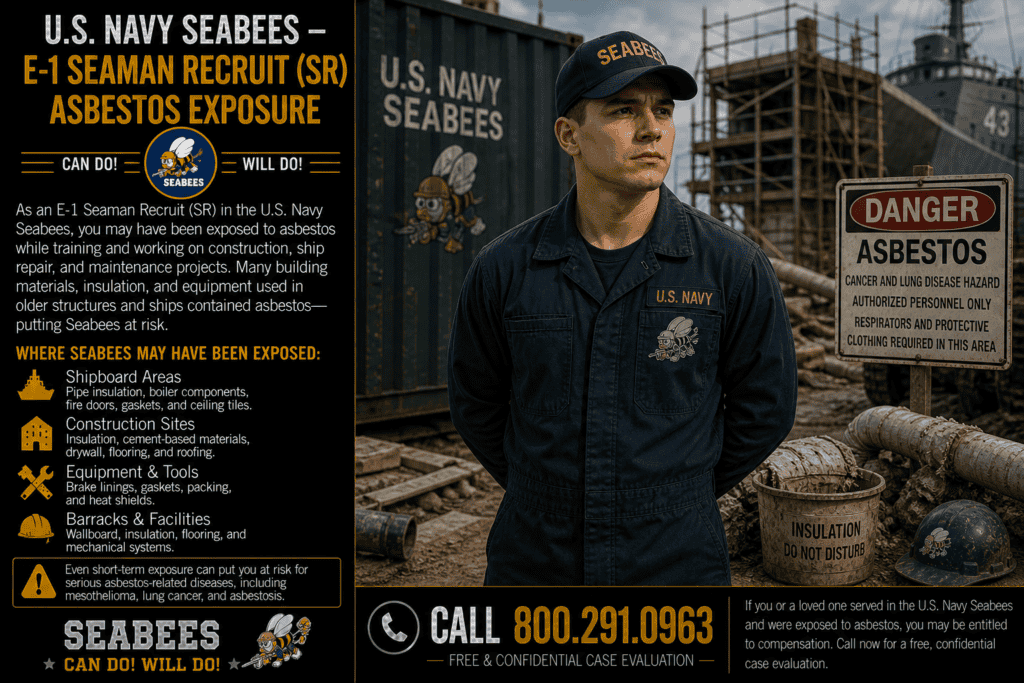
U.S. Navy Seabees – E-1 Seaman Recruit (SR) Asbestos Exposure
Asbestos Exposure Risks for Entry-Level Naval Construction Personnel
The U.S. Navy Seabees (Construction Battalions) have one of the highest historical asbestos exposure rates in the entire military. Because Seabees built bases, repaired structures, poured concrete, installed plumbing, wired electrical systems, and renovated older buildings across the world, almost every job site before the mid-1980s involved asbestos-containing materials (ACMs).
For an E-1 Seabee Seaman Recruit (SR)—the most junior rating in the Naval Construction Force—duties often involved heavy labor, demolition work, material transport, and assisting tradesmen such as carpenters, electricians, plumbers, steelworkers, and equipment operators. These daily tasks placed SRs directly in the path of airborne asbestos fibers.
This comprehensive 1,200-word page explains:
-
Typical construction and engineering duties of Seabee SR personnel
-
How cement board, pipe insulation, and renovation dust exposed E-1 recruits
-
Why Seabees experienced hazardous, repeated, hands-on ACM exposure
-
Long-term medical risks
-
VA disability rules
-
Asbestos trust fund and legal compensation options
The Role of an E-1 Seabee Seaman Recruit (SR)
An E-1 Seabee is new to the Naval Construction Force and is often assigned the most physically demanding and hands-on labor tasks. Seabees operate in expeditionary environments, remote bases, disaster zones, combat zones, and older military installations—many of which relied heavily on asbestos in construction materials.
Typical Duties
🛠️ Cleanup, material handling, basic construction support
More specifically, Seabee SR responsibilities include:
-
loading and unloading construction supplies
-
transporting lumber, cement board, pipes, tiles, and roofing materials
-
cutting building materials under supervision
-
demolition assistance for old structures
-
mixing concrete and grout
-
prepping buildings for repairs
-
sweeping and removing debris
-
supporting carpenters, electricians, steelworkers, and plumbers
-
operating or assisting with small tools
-
clearing vegetation and preparing job sites
-
working inside temporary or deteriorating structures
Because Seabees are construction specialists—not sailors working only on ships—they experienced ground-level, direct exposure to asbestos-containing materials during nearly every sort of job.
Why Seabee SRs Faced Extreme Asbestos Exposure
Before asbestos bans became widespread in the late 1970s and early 1980s, ACMs were used in nearly every construction material the Seabees handled.
SRs often worked with or around:
-
asbestos cement board (“transite”)
-
asbestos roofing shingles
-
asbestos siding
-
pipe insulation
-
boiler and furnace insulation
-
drywall joint compound
-
vinyl asbestos tile
-
acoustic ceiling materials
-
fireproofing sprays
-
electrical panel insulation
-
gaskets and valve packing
Even though E-1 personnel typically lacked specialized skills, they performed the demolition, cleanup, cutting, hauling, and sweeping—the very tasks that release the highest concentrations of airborne asbestos fibers.
Exposure Source #1: Dust from Cutting Cement Board
One of the most common ACMs Seabees worked with was asbestos cement board, used extensively in:
-
siding
-
roofing
-
wall panels
-
electrical backboards
-
duct coverings
-
construction partition walls
-
utility enclosures
Cement board was durable, fire-resistant, and easy to cut—making it ideal for Seabee field construction. Unfortunately, cutting, drilling, or breaking transite created heavy clouds of asbestos dust.
How SRs Were Exposed
E-1 Seabees often:
-
assisted carpenters by holding or cutting board
-
swept or shoveled broken panels
-
carried discarded cement board
-
drilled holes in transite sheets
-
loaded and unloaded pallets of ACM materials
-
cleaned sawdust and debris at the end of the day
The high-speed saws common in Seabee shops created invisible airborne fibers that lingered long after cutting stopped. Recruits breathing this dust—even outdoors—were at significant risk.
Exposure Source #2: Pipe-Insulation Debris
Seabees were heavily involved in plumbing, steam line installation, and mechanical-room repairs—jobs historically full of asbestos insulation.
ACM pipe insulation was used in:
-
steam lines
-
hot water pipes
-
boilers
-
valves
-
pumps
-
heating systems
This insulation was often soft, brittle, and easy to crumble.
Why SRs Encountered High Levels of Pipe Insulation Dust
As the most junior personnel, SRs commonly:
-
removed old insulation during repairs
-
swept floors where insulation had fallen
-
helped plumbers strip pipe covering
-
carried pipes wrapped in asbestos
-
pulled old lagging off steam systems
-
worked in crawlspaces, basements, and mechanical closets
Even brushing against deteriorated insulation released clouds of fine fibers.
Exposure Source #3: Old Building Renovation Dust
Seabees regularly renovated older Navy, Marine Corps, and allied military structures—many containing asbestos-laden materials such as:
-
ceiling tiles
-
drywall mud
-
acoustic plaster
-
floor tiles
-
mastic adhesives
-
roofing felt
-
cement siding
-
HVAC duct insulation
Demolition work is one of the highest-risk asbestos tasks.
Why SRs Were Exposed During Renovation
E-1 Seabees performed:
-
tear-outs of walls and ceilings
-
removal of old tile floors
-
scraping adhesives
-
breaking apart ACM sheets
-
loading debris into trucks
-
sweeping dusty interiors
-
standing near power tools used by tradesmen
Because SRs handled the bulk of demolition clean-up, they were often immersed in environments filled with airborne asbestos particles.
Additional Exposure Sources for Seabee SRs
Motor Pool and Equipment Shops
Brake drums, clutches, and engine insulation contained asbestos, exposing SRs assisting mechanics.
Deployed Environments
Seabees rebuilt older host-nation structures that frequently contained asbestos without warning labels.
Temporary Field Structures
Older tents, huts, and expeditionary facilities used asbestos blankets and insulation materials.
Shipboard Repairs
Even though Seabees are a land-based construction force, they often support shipyard projects where asbestos is prevalent.
Long-Term Health Risks for Seabee SR Veterans
Because asbestos fibers embed permanently in the lungs and abdomen, diseases often appear 20–50 years later. Seabee SRs are at elevated risk for:
-
Mesothelioma (cancer of the pleura or peritoneum)
-
Asbestos-related lung cancer
-
Asbestosis
-
Pleural plaques and pleural thickening
-
Chronic respiratory issues
Many Seabees only begin showing symptoms decades after service.
VA Disability Benefits for Seabee SR Asbestos Exposure
The VA recognizes construction-related naval occupations—including Seabees—as high-risk asbestos MOS codes.
Evidence that strengthens a VA claim:
-
Seabee SR service records
-
duty in pre-1980 buildings
-
participation in construction or renovation tasks
-
witness statements from fellow Seabees
-
medical reports linking illness to asbestos
A diagnosis of mesothelioma automatically qualifies for a 100% disability rating.
Asbestos Trust Fund & Legal Compensation
Over $30 billion remains available in asbestos trust funds funded by manufacturers—never the Navy or Department of Defense.
Seabees qualify for compensation because:
-
they handled materials made by many private companies
-
construction products had clear asbestos content
-
job duties involved high exposure levels
Compensation may include:
-
trust fund payouts
-
legal settlements
-
VA disability
-
survivor benefits
These do not interfere with one another.
📞 Free Case Review for Seabee SR Veterans
If you served as an E-1 Seabee Seaman Recruit (SR) and later developed mesothelioma, asbestos lung cancer, or asbestosis, you may qualify for substantial compensation through the VA and asbestos trust funds.
📞 Call 800.291.0963 now for a free, confidential case review.
A specialist can walk you through your exposure history and help secure the full benefits you deserve.