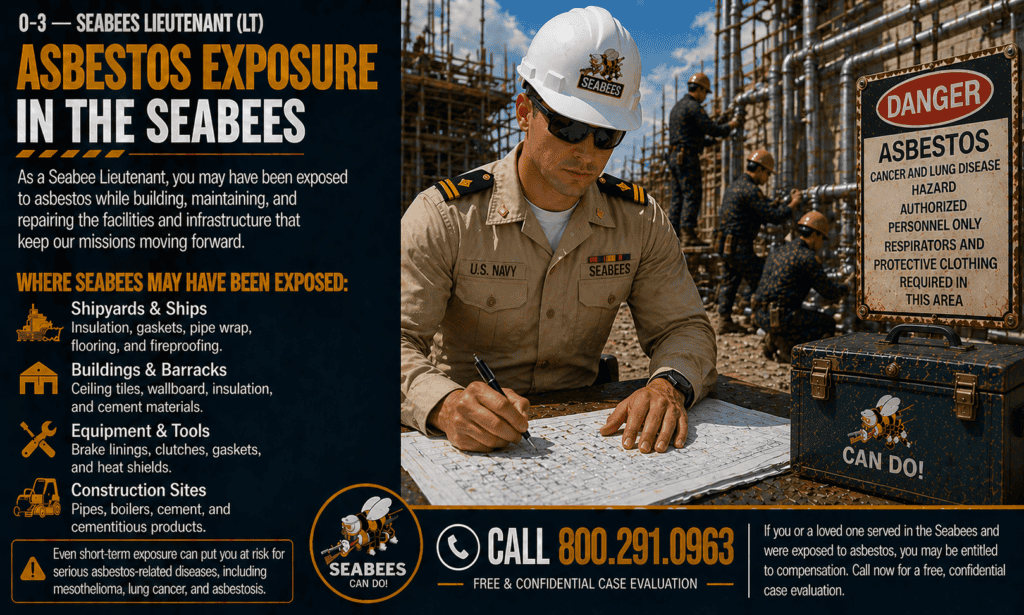
O-3 — Seabees Lieutenant (LT) Asbestos Exposure
Typical Duties
🛠️ Project officer, shop leader, platoon commander
Asbestos Exposure
Oversight in ACM environments
Mechanical infrastructure
Demolition project exposure
Asbestos Exposure Risks for Seabees Lieutenant (LT)
A Seabees Lieutenant (LT) is a mid-level commissioned officer with significant authority over construction operations, engineering planning, shop management, and mission execution. LTs oversee entire project teams, command platoons, evaluate infrastructure conditions, conduct detailed inspections, and manage complex utilities, mechanical, and structural systems across Navy and Marine Corps installations. Their leadership role requires continuous presence in active work sites, aging facilities, and mechanical environments where asbestos-containing materials (ACM) remained widespread for decades.
Because LTs supervise construction and renovation projects, inspect mechanical infrastructure, and ensure compliance across multiple engineering shops, they were consistently exposed to ACM in boiler rooms, mechanical vaults, utilities corridors, old administrative buildings, workshops, and demolition sites. Their position placed them directly in environments where insulation, gaskets, flooring, ceiling systems, electrical components, and structural products contained friable and deteriorating asbestos.
This page details:
✔ LT responsibilities in Seabees engineering and construction operations
✔ How ACM exposure occurred during oversight, inspections, and project execution
✔ Specific asbestos sources within mechanical systems, infrastructure, and demolition zones
✔ Long-term health risks associated with LT-level exposure
✔ Eligibility for VA disability, trust fund claims, and legal compensation
The Engineering Leadership Role of a Seabees LT
As experienced leaders, Seabees LTs manage large portions of construction and engineering missions while ensuring safety, quality control, and operational readiness.
Typical Responsibilities Include:
Commanding platoons and engineering teams
Serving as project officer for construction and repair missions
Leading shop operations across utilities, HVAC, electrical, and mechanical trades
Inspecting aging buildings, utilities corridors, and mechanical spaces
Reviewing engineering plans, structural assessments, and maintenance reports
Ensuring compliance with Navy standards and safety regulations
Evaluating infrastructure readiness and prioritizing repair needs
Overseeing renovation, modernization, and demolition efforts
Coordinating materials, budgets, and personnel assignments
Supporting humanitarian, contingency, and expeditionary construction missions
These duties required LTs to enter contaminated environments regularly—exposing them to airborne asbestos fibers in multiple operational settings.
Why Seabees LTs Faced Significant Asbestos Exposure
LTs served during an era when Navy bases, housing, workshops, and utility systems contained high concentrations of asbestos. Their leadership role required them to spend extended time in ACM environments while evaluating work, supervising crews, and making engineering decisions.
Common exposure locations included:
Boiler rooms
Mechanical/electrical spaces
Old administrative structures
Workshops and engineering shops
Utility tunnels and HVAC spaces
Base housing built before 1980
Demolition and renovation sites
Exposure occurred during:
Project oversight
Safety inspections
Troubleshooting system failures
Monitoring demolition progress
Reviewing infrastructure conditions
Shop management duties
Because LTs visited multiple job sites daily, their cumulative asbestos exposure was often substantial.
Exposure Source #1: Oversight in ACM Environments
LTs routinely supervised engineering teams performing high-risk tasks in older buildings.
Typical ACM components included:
Pipe insulation
Cement board
Ceiling and flooring materials
Fireproof coatings
Transite panels
Electrical insulation
Steam-line lagging
Every walkthrough through these structures increased exposure risk, especially when materials were crumbling or undergoing renovation.
Exposure Source #2: Mechanical Infrastructure
LTs frequently inspected and supervised work inside mechanical environments such as:
Boiler plants
HVAC systems
Pump stations
Water and steam distribution lines
Electrical rooms
Power-generation facilities
Mechanical spaces contained concentrated ACM, including:
Pipe wrap and refractory insulation
Gaskets and seals
Motor-control center insulation
Duct and turbine linings
Boiler blankets
Confined ventilation made these areas especially hazardous.
Exposure Source #3: Demolition Project Exposure
Because LTs often served as project officers, they supervised demolition phases where asbestos contamination was extreme.
High-risk demolition tasks included:
Removing old ceiling and floor tiles
Cutting or breaking cement board
Pulling mechanical systems with ACM gaskets
Tearing out HVAC ductwork
Removing or disturbing insulation
Demolishing interior walls and roofing materials
LTs walked job sites during active tear-outs, often surrounded by airborne asbestos dust.
Exposure Source #4: Shop Leadership and Engineering Oversight
As shop leaders, LTs supervised repair, fabrication, inspection, and maintenance spaces.
Shops included:
Electrical
Plumbing
Carpentry
Welding
Utilities
Mechanical repair
Many shop operations introduced ACM debris from mechanical tear-outs, pipe insulation removal, and electrical system repair jobs.
Exposure Source #5: Base Housing, Administrative Buildings, and Legacy Structures
LTs frequently evaluated facility readiness, assessed habitability, and supervised renovation of older structures.
ACM materials were common in:
Floor tile and adhesives
Ceiling tile
Drywall compound
HVAC duct linings
Siding and cement board
Roofing materials
Plumbing and heating insulation
Even routine inspections created opportunities for exposure.
Long-Term Health Risks for Seabees LTs
Asbestos fibers remain permanently in the lungs, with symptoms often appearing 20–50 years after exposure.
Associated diseases include:
Mesothelioma
Asbestos-related lung cancer
Asbestosis
Pleural plaques
Chronic respiratory conditions
Many LTs diagnosed today were exposed during inspections and project oversight years earlier.
VA Disability Benefits for LT Asbestos Exposure
The VA recognizes construction, engineering, mechanical oversight, and demolition supervision as high-risk for asbestos exposure.
LTs may qualify for:
100% VA disability for mesothelioma
Compensation for lung cancer or asbestosis
Pleural disease ratings
Dependency and Indemnity Compensation for surviving families
Evidence That Strengthens Claims:
Seabees engineering or project officer role
Exposure in mechanical rooms or ACM buildings
Demolition or renovation oversight
Documented service at pre-1980 bases
Medical diagnosis linking asbestos exposure to disease
Asbestos Trust Fund & Legal Compensation
More than $30 billion remains available in asbestos trust funds.
Claims target asbestos manufacturers—not the U.S. Navy.
A Seabees LT may qualify for:
✔ VA disability benefits
✔ Multiple asbestos trust fund claims
✔ Legal compensation through lawsuits
Many veterans receive compensation from all available sources.
📞 Free Case Review for Seabees LT Veterans
If you served as a Seabees Lieutenant and later developed mesothelioma, lung cancer, or another asbestos-related illness, you may be entitled to significant compensation.
📞 Call 800.291.0963 now for a free, confidential case review.