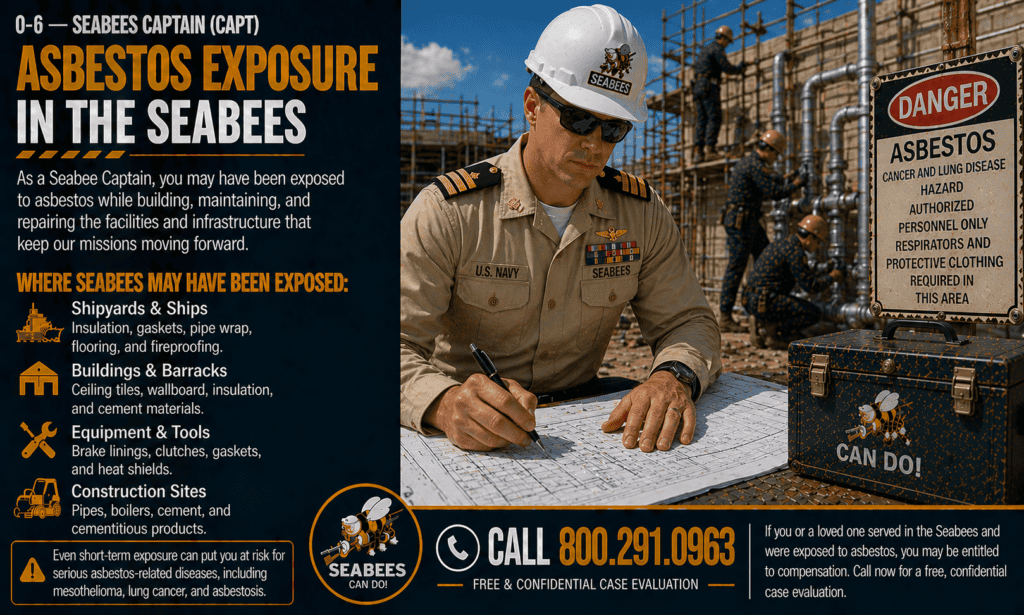
O-6 — Seabees Captain (CAPT) Asbestos Exposure
Typical Duties
🛠️ Regimental or NCF leadership
Asbestos Exposure
Base headquarters built pre-1980
Mechanical areas
High-heat insulation locations
Asbestos Exposure Risks for Seabees Captain (CAPT)
A Seabees Captain (CAPT) is a senior commanding officer within the Naval Construction Force (NCF), responsible for leadership at the regimental level, oversight of major engineering and construction operations, long-term infrastructure strategy, and coordination across multiple battalions and public works departments. CAPTs regularly engage in high-level inspections, operational evaluations, engineering reviews, and facility oversight across entire installations or regions.
Because CAPTs frequently operated inside base headquarters, administrative buildings, mechanical rooms, utilities areas, and high-heat facilities constructed before asbestos regulations, they routinely encountered asbestos-containing materials (ACM). Their leadership roles required them to evaluate infrastructure readiness, review renovation progress, conduct strategic assessments, and oversee modernization efforts across aging pre-1980 Navy bases—many of which contained widespread asbestos in insulation, structural components, and mechanical systems.
This page details:
✔ Leadership responsibilities of a Seabees Captain
✔ How base headquarters and mechanical environments exposed CAPTs to ACM
✔ Specific asbestos sources in high-heat areas, mechanical rooms, and legacy Navy buildings
✔ Long-term health risks for senior Seabees officers
✔ Eligibility for VA disability, trust fund claims, and legal compensation
The Executive Leadership Role of a Seabees CAPT
CAPTs guide the strategic direction of Naval Construction Force operations, shaping long-term engineering policy and ensuring mission readiness across multiple units.
Typical Responsibilities Include:
Commanding regiments and major engineering forces
Overseeing infrastructure maintenance, repair, and modernization programs
Reviewing engineering plans, readiness reports, and facility conditions
Conducting installation-wide inspections across administrative and mechanical areas
Coordinating major renovation, demolition, and construction initiatives
Supervising senior officers, warrant officers, and engineering department heads
Managing budget, logistics, and resource allocation for NCF operations
Ensuring compliance with Navy engineering, safety, and environmental standards
Supporting global humanitarian and contingency construction missions
Providing strategic leadership to installation commanders and Seabees battalions
These responsibilities required CAPTs to frequently enter older buildings, mechanical spaces, and high-heat environments where asbestos exposure was common.
Why Seabees CAPTs Faced Significant Asbestos Exposure
Most Navy installations built between WWII and the 1970s heavily relied on asbestos for fireproofing, insulation, and structural durability. CAPTs—tasked with reviewing and directing infrastructure operations—regularly encountered ACM in:
Base headquarters
Older administrative buildings
Mechanical rooms
Boiler plants
Electrical vaults
HVAC and utility areas
High-heat insulation zones
Barracks and family housing
Exposure occurred during:
Inspection visits
Operational evaluations
Infrastructure readiness assessments
Renovation oversight
Damage assessments
Engineering problem resolution
Even brief visits into contaminated areas resulted in repeated exposure over multi-decade careers.
Exposure Source #1: Base Headquarters Built Pre-1980
CAPTs commonly worked in base headquarters and administrative buildings that contained ACM in:
Ceiling tiles
Flooring materials
Drywall compound
Pipe insulation
HVAC duct linings
Transite siding
Fireproof coatings
Electrical panel insulation
Daily occupancy and walkthroughs in these facilities contributed to chronic, low-level exposure.
Exposure Source #2: Mechanical Areas
As senior leaders overseeing utilities and engineering operations, CAPTs frequently inspected mechanical spaces such as:
Boiler rooms
HVAC plants
Pump stations
Chiller systems
Water-treatment facilities
Generator rooms
These spaces contained high concentrations of asbestos, including:
Pipe wrap
Thermal insulation
Refractory boiler materials
Gaskets and seals
Valve packing
Duct insulation
Mechanical rooms often retained airborne asbestos fibers due to poor ventilation.
Exposure Source #3: High-Heat Insulation Locations
High-heat environments relied extensively on asbestos products to prevent fires and protect mechanical components.
These areas included:
Steam lines
Boilers
Turbines
Engineered heat exchangers
High-temperature pumps and valves
Common ACM materials included:
Heat-resistant gaskets
Insulation blankets
Fireproof cement
Pipe lagging
Refractory coatings
CAPTs often evaluated these facilities during inspections or readiness reviews.
Exposure Source #4: Renovation, Modernization & Demolition Oversight
CAPTs supervised or approved large-scale renovation and demolition projects—key moments when asbestos is released in large quantities.
High-risk activities included:
Removing siding or roofing
Demolishing walls or ceilings
Replacing HVAC and mechanical systems
Opening electrical panels with ACM backings
Modernizing utility lines
Renovating pre-1980 administrative buildings
Walking these job sites often placed CAPTs directly in contaminated dust clouds.
Exposure Source #5: Multi-Decade Leadership Exposure
Because CAPTs often serve 20–30+ year careers, exposure accumulated through:
Repeated facility inspections
Oversight of construction programs
Presence in headquarters buildings
Evaluations of aging Navy infrastructure
Routine interactions with mechanical and utility spaces
Cumulative exposure significantly increases the risk of asbestos-related diseases.
Long-Term Health Risks for Seabees CAPTs
Asbestos fibers embed permanently in the lungs, with symptoms appearing 20–50 years after exposure.
Diseases include:
Mesothelioma
Asbestos-related lung cancer
Asbestosis
Pleural plaques
Chronic respiratory damage
Many senior officers receive diagnoses later in life due to early-career and long-term exposure.
VA Disability Benefits for CAPT Asbestos Exposure
The VA recognizes infrastructure oversight, mechanical inspections, and service in pre-1980 Navy buildings as high-risk exposures.
Seabees CAPTs may qualify for:
100% VA disability for mesothelioma
Disability ratings for lung cancer or asbestosis
Compensation for pleural disease
DIC benefits for surviving spouses
Evidence That Strengthens Claims:
Service in leadership roles involving facility oversight
Presence in pre-1980 headquarters and mechanical spaces
Renovation or demolition supervision
Engineering and utilities program management
Medical documentation linking disease to asbestos
Asbestos Trust Fund & Legal Compensation
More than $30 billion remains available across asbestos trust funds.
Claims target manufacturers—not the U.S. Navy.
A Seabees CAPT may qualify for:
✔ VA disability benefits
✔ Multiple asbestos trust fund claims
✔ Legal compensation against asbestos manufacturers
Many officers receive compensation from all three sources.
📞 Free Case Review for Seabees CAPT Veterans
If you served as a Seabees Captain and later developed mesothelioma, lung cancer, or another asbestos-related illness, you may be entitled to significant financial compensation.
📞 Call 800.291.0963 now for a free, confidential case review.