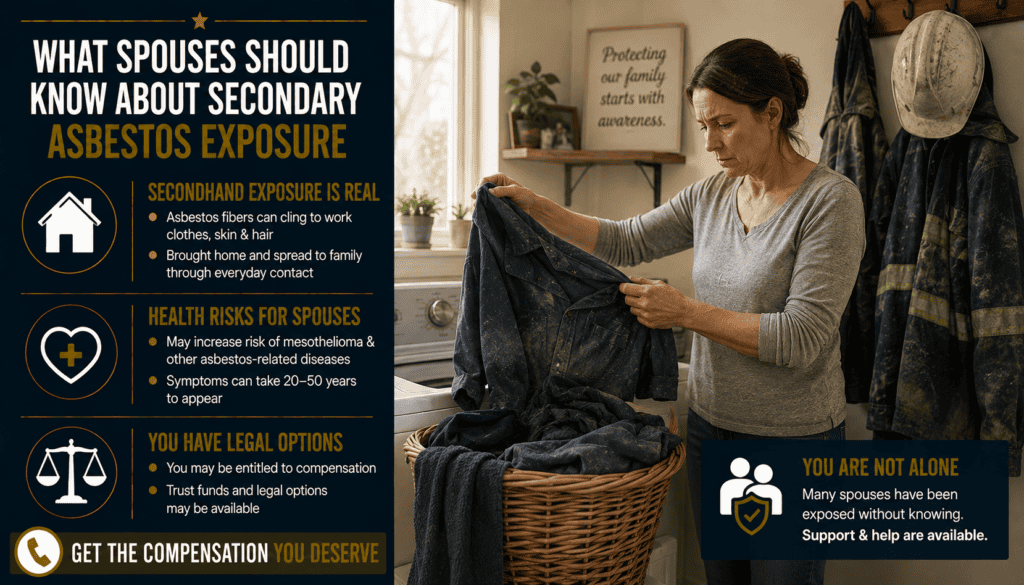
👩❤️👨 What Spouses Should Know About Secondary Asbestos Exposure
For decades, thousands of spouses were exposed to asbestos without ever stepping foot inside a factory, shipyard, refinery, construction site, or military vessel. This hidden danger—known as secondary or take-home asbestos exposure—occurs when workers unknowingly bring dangerous fibers home on their clothing, hair, skin, tools, or vehicles.
Many mesothelioma diagnoses today are linked not to the worker, but to the spouse who washed dusty uniforms, cleaned contaminated cars, or lived in homes where asbestos particles settled inside carpets and furniture.
This guide explains what spouses need to know about exposure risks, prevention, and how secondary-exposure claims can help families receive compensation.
If you or a loved one has been diagnosed with mesothelioma due to household exposure, call 800.291.0963 today for help.
🏠 Step 1: Understand What Secondary Asbestos Exposure Is
Secondary asbestos exposure happens when fibers are carried home by someone who worked around asbestos-containing materials. These microscopic fibers are sharp, durable, and invisible—and they easily cling to:
-
Work uniforms
-
Jackets and outerwear
-
Hair and facial hair
-
Skin
-
Shoes and laces
-
Tool bags and equipment
-
Car seats and floor mats
Once inside the home, these fibers can become airborne again every time clothing is handled or surfaces are disturbed.
🧺 Step 2: How Spouses Were Commonly Exposed at Home
For many years—especially between the 1940s and early 1990s—spouses were regularly exposed to asbestos through everyday household routines.
Common Exposure Sources for Spouses
-
Laundering dusty work clothes: shaking out uniforms before washing
-
Sweeping or vacuuming dust from floors and carpets
-
Cleaning the family vehicle used for commuting to high-risk job sites
-
Handling work boots or jackets covered in dust
-
Hugging a spouse immediately after work
-
Sitting on contaminated furniture
-
Being in areas where uniforms were stored, such as closets, laundry rooms, or mudrooms
Even small amounts of asbestos can lead to mesothelioma decades later.
🛠️ Step 3: Know the High-Risk Jobs that Often Caused Take-Home Exposure
Some occupations were far more likely to contaminate homes because workers came into heavy contact with asbestos-based insulation, cement, gaskets, fireproofing, and machinery.
High-Risk Industries Include:
-
Construction
-
Shipyards and Navy vessels
-
Oil refineries and chemical plants
-
Power plants
-
Railroads
-
Auto repair shops
-
Steel mills
-
Aerospace manufacturing
-
HVAC, plumbing, and electrical trades
-
Asbestos mining and manufacturing
Spouses of workers in these fields often experienced significant unintentional exposure.
🩺 Step 4: Recognize Symptoms of Asbestos-Related Disease
Symptoms may take 20–50 years to appear. Early detection improves treatment options.
Common Symptoms
-
Shortness of breath
-
Chest or abdominal pain
-
Persistent cough
-
Fatigue
-
Unexplained weight loss
-
Fluid buildup around the lungs or abdomen
Anyone with a history of washing asbestos-contaminated clothing should notify their doctor and request appropriate screening.
🧼 Step 5: Learn How to Prevent Household Contamination Today
Although asbestos use has declined, secondary exposure still occurs in certain industries. Taking simple precautions greatly reduces the risk.
Prevention Strategies
-
Change out of work clothes before entering the home
-
Bag contaminated clothing separately
-
Wash uniforms separately from family laundry
-
Shower immediately after returning home
-
Avoid shaking clothing or sweeping dusty areas
-
Use HEPA-filtered vacuums if cleaning is necessary
-
Keep work tools and boots stored outside or in garages
-
Ask employers about protective gear and decontamination protocols
Employers are legally responsible for providing safe workplaces—and that includes preventing take-home exposure.
⚖️ Step 6: Understand Your Rights to a Secondary-Exposure Claim
Spouses who developed mesothelioma from indirect exposure have strong legal options. Even if the original employer has closed or declared bankruptcy, compensation is still possible.
Potential Sources of Compensation
-
Asbestos bankruptcy trust funds
-
Lawsuits against manufacturers of asbestos-containing materials
-
Workers’ compensation (in limited cases)
-
Wrongful-death claims for surviving spouses or children
-
VA benefits if exposure occurred through a veteran’s service
Secondary-exposure claims are recognized nationwide and have resulted in substantial financial recovery.
📁 Step 7: Preserve Key Evidence to Strengthen Your Claim
Good documentation helps establish the source and timeline of exposure.
Helpful Evidence Includes:
-
Work history of the spouse who brought asbestos home
-
Pay stubs, union records, or job-site locations
-
Photos of dusty work clothing or equipment
-
Statements from coworkers or family
-
Household routines (laundering, cleaning, storage habits)
-
Medical records confirming diagnosis
-
Product manuals or brand names associated with exposure
Even partial documentation can significantly support a claim.
🧑⚕️ Step 8: Seek Medical Specialists Trained in Asbestos-Related Diseases
Doctors unfamiliar with mesothelioma may misdiagnose symptoms as pneumonia or lung cancer. Early evaluation by a specialist improves diagnostic accuracy and treatment planning.
Specialists Provide:
-
Imaging (CT, MRI, PET)
-
Fluid analysis tests
-
Biopsies confirming cell type
-
Treatment options such as immunotherapy or surgery
-
Referrals to clinical trials
-
Detailed documentation for legal claims
Specialized care leads to stronger medical records and better outcomes.
👩❤️👨 Step 9: Communicate Openly With Your Partner About Fears and Emotions
Secondary exposure can bring complex emotions—guilt, anger, sadness, or fear. Many spouses feel responsible, even though they couldn’t have known the risks.
Healthy Ways to Communicate
-
Remind each other that the exposure was not your fault
-
Talk openly about feelings and fears
-
Share concerns about treatment, finances, or the future
-
Support each other through difficult moments
-
Seek counseling or support groups when needed
Strong communication strengthens relationships and emotional resilience.
💬 Step 10: Join Support Groups for Secondary-Exposure Families
Connecting with others who faced similar experiences helps spouses feel less alone.
Support Groups Provide:
-
Emotional support
-
Practical coping strategies
-
Advice on navigating treatment
-
Guidance on legal and financial resources
-
Hope from families who walked the same path
Many groups meet online, making it easier for anyone to join.
📊 Step 11: Understand the Compensation Timeline
Families often worry about the process taking too long, but secondary-exposure claims are often resolved faster than traditional lawsuits.
Typical Timeline Includes:
-
Case review
-
Evidence gathering
-
Identifying responsible companies
-
Filing trust-fund or litigation claims
-
Receiving compensation (often in phases)
Many families begin receiving compensation within months—not years.
👨👩👧 Step 12: Protect Your Family’s Future
Compensation from secondary exposure can help cover:
-
Medical treatments
-
Travel for specialized care
-
Lost income
-
End-of-life support
-
Funeral costs
-
Long-term financial stability for spouses and children
Families should never bear the financial burden of exposure caused by negligent companies.
🏥 Where to Get Help
If you or a loved one developed mesothelioma from secondhand asbestos exposure, our advocates can help you:
-
Understand how exposure may have occurred
-
Connect with top mesothelioma specialists
-
Access financial and legal resources
-
File secondary-exposure claims
-
Preserve evidence for future compensation
-
Support your emotional and caregiving needs
📞 Call 800.291.0963 today to speak with a secondary-exposure specialist.
📝 Summary
Secondary asbestos exposure has harmed countless spouses through no fault of their own. Understanding how take-home exposure happens—and knowing how to prevent it today—protects families and strengthens compensation claims for those already diagnosed.
Key Takeaways
-
Asbestos fibers can be carried home on clothes, shoes, hair, and tools
-
Spouses exposed during laundry or cleaning have valid legal claims
-
Early medical evaluation is essential for symptoms
-
Preserve evidence of work history and household routines
-
Join support networks to stay emotionally strong
-
Compensation can help secure financial stability for the entire family
To explore your rights and next steps, call 800.291.0963 now.