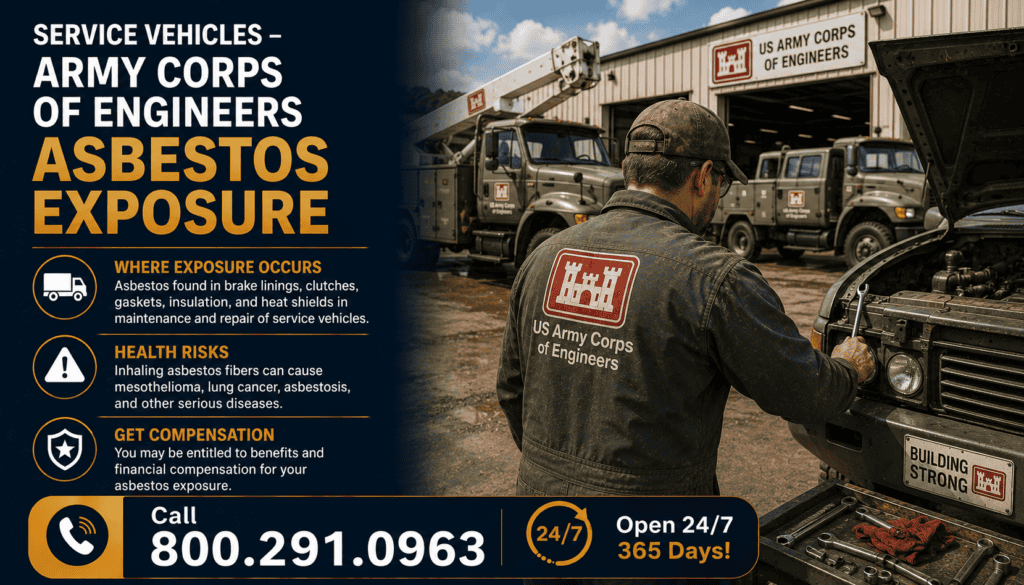
🚚 Military Service Vehicles Asbestos Exposure
Service vehicles used by the U.S. Army Corps of Engineers supported a wide range of logistics, utility, and operations needs. These versatile trucks and vans transported equipment, tools, and personnel across construction and engineering sites. Their frequent stops and starts demanded robust brake, engine, and insulation systems—many of which contained asbestos.
Asbestos was widely used in brake linings, clutch components, engine gaskets, and heat insulation due to its resistance to wear and heat. Mechanics were routinely exposed during brake pad changes, engine overhauls, and insulation work. Dust released during maintenance in confined motor pools or field conditions presented significant inhalation risks.
⚙️ Service Vehicles – Army Corps of Engineers – What You’ll Learn from This Page:
🚛 Utility and service vehicles used by the Army Corps of Engineers contained asbestos in brake linings, gaskets, and engine insulation. Mechanics and operators were frequently exposed during routine field maintenance and emergency repairs.
💼 Legal claims are available to veterans and contractors who worked on or around these vehicles and developed mesothelioma or other asbestos-related illnesses.
🧰 Field maintenance workers and mechanics faced daily asbestos exposure while replacing worn parts or conducting repairs in confined or poorly ventilated environments.
💰 Asbestos trust funds totaling more than $30 billion remain available for exposed individuals, with many claims settling between $300,000 and $400,000.
🎖️ VA benefits are available to veterans exposed while working on Corps of Engineers projects. Monthly disability compensation often exceeds $3,800/month for qualifying mesothelioma cases.
⏳ Lawsuits involving service vehicles and asbestos typically settle for $1 million–$1.4 million. Trial verdicts may exceed $5 million depending on the case specifics.
📄 Free legal consultations and home visits are available through national and local asbestos law firms experienced in military and government claims.
Estimated Number of People Exposed via Army Corps of Engineers Service Vehicles
| Exposure Category | Estimated Number of People Exposed |
|---|---|
| Occupational Exposure (vehicle maintenance, field repairs) | Over 190,000 engineers, mechanics, and contractors |
| Secondary Exposure (family of workers) | Around 25,000 family members exposed through contaminated clothing |
| Environmental Exposure (vehicle bays, depots, storage yards) | Nearly 60,000 residents and workers affected |
| Product-Based Exposure (brake pads, gaskets, insulation materials) | About 45,000 people exposed |
Total Estimated Exposure: Over 320,000 people.
Why Asbestos Was Used in Army Service Vehicles
Durability and thermal protection were essential for these heavily used multipurpose vehicles.
-
Brake shoes and linings with asbestos to manage constant friction
-
Clutch facings contained asbestos for high-load performance
-
Engine gaskets and valve covers made with asbestos to prevent leaks
-
Exhaust systems wrapped in asbestos insulation to contain heat
-
Interior fireproofing panels included asbestos to protect occupants
These components were replaced regularly, increasing exposure risks over time.
Army Corps Use of Service Vehicles
| Deployment Area | Primary Use | Common Service Locations |
|---|---|---|
| Engineering Projects | Equipment and personnel transport | Dam sites, bridges, flood zones |
| Construction Zones | Tool and supply distribution | Roadwork areas, airfields |
| Domestic Installations | Utility and operations support | Maintenance yards, depots |
Heavy mileage and on-site service demands led to frequent part replacements.
Estimated Number of Personnel Exposed from Service Vehicle Use
| Occupation Group | Estimated Number Exposed |
|---|---|
| Vehicle Mechanics | Over 6,200 exposed during repairs |
| Equipment Operators | Around 4,000 worked in dusty cabins |
| Maintenance Personnel | Approx. 3,500 assisted in field servicing |
| Motor Pool Staff | Over 4,800 handled brake and engine work |
Total Estimated Exposure: Over 18,500 Corps personnel may have encountered asbestos.
Asbestos Exposure Areas on Army Service Vehicles
Brakes and Clutch
-
Contained asbestos-based linings and pads
-
Ground or replaced during frequent servicing
Engine Compartments
-
Gaskets, heat shields, and wraps made with asbestos
-
Mechanics worked in confined, poorly ventilated spaces
Exhaust Systems
-
Used asbestos to insulate hot piping
-
Deteriorated wraps released fibers during removal
Cabin Insulation and Panels
-
Included asbestos materials for fire protection
-
Aging interiors released dust when disturbed
Service Vehicle Personnel at High Risk of Exposure
| Job Role | Exposure Risk | Details |
|---|---|---|
| Vehicle Mechanics | High | Repeated brake and engine servicing |
| Operators and Drivers | Moderate | Sat in cabs with degraded insulation |
| Field Technicians | High | Conducted repairs in dusty, confined areas |
| Motor Pool Staff | Moderate | Handled aging vehicle parts and systems |
Common Asbestos Products Used in Service Vehicles
-
Brake Pads and Linings – Replaced frequently due to constant use
-
Clutch Discs and Assemblies – Contained heat-resistant asbestos fibers
-
Engine Gaskets – Provided high-temperature sealing in motors
-
Exhaust Wraps and Shields – Wrapped to prevent heat damage
-
Cabin Insulation – Fire-retardant panels degraded over time
Long-Term Health Risks from Asbestos Exposure
-
Mesothelioma – Deadly cancer from inhaled asbestos fibers
-
Asbestosis – Scarring of lung tissue causing breathlessness
-
Lung Cancer – Increased risk with long-term asbestos exposure
-
Pleural Plaques – Thickening of chest cavity lining
Lawsuits Filed by Army Vehicle Workers
-
Mechanics diagnosed with mesothelioma after years of service work
-
Operators exposed while driving vehicles with crumbling interiors
-
Field crews handled parts in unprotected conditions
-
Claims filed against parts suppliers and government contractors
Sample Army Service Vehicle Asbestos Settlements
| Settlement Amount | Case Details |
|---|---|
| $2.9 million | Army mechanic exposed to brakes and gaskets |
| $2.6 million | Motor pool tech developed mesothelioma |
| $2.3 million | Utility driver exposed in vehicle cabins |
| $1.8 million | Field tech worked in poorly ventilated repair tents |
Companies Linked to Asbestos Parts in Service Vehicles
-
Raybestos – Brake linings and clutch materials
-
Johns-Manville – Engine insulation wraps
-
Bendix – Automotive asbestos products
-
Owens Corning – Asbestos gasket materials
-
Federal-Mogul – Parts used in Corps fleet vehicles
Asbestos Trust Funds for Army Mechanics
-
Over $30 billion in active trust funds
-
Typical payouts range from $300,000–$600,000+
-
Filing does not affect VA disability
-
Claims accepted even decades post-service
VA Benefits for Army Service Vehicle Veterans
-
$3,800+/month for 100% disability rating (mesothelioma)
-
VA hospitals offer specialized cancer treatment
-
DIC benefits available for surviving family
-
Priority care access for asbestos-related illness
Filing an Army Service Vehicle Asbestos Claim
-
Get a formal diagnosis of asbestos-related disease
-
Collect records showing vehicle maintenance exposure
-
File lawsuits or trust claims with attorney support
-
Receive compensation within 6–12 months
Statute of Limitations
-
Injury Claims: File within 2–3 years of diagnosis
-
Wrongful Death: File within 2–3 years of death
-
Trust Funds: Many remain open without strict deadlines
Service Vehicle Asbestos Exposure FAQs
Q: Did all Army Corps service vehicles use asbestos?
Yes. Most pre-1990 vehicles included asbestos in critical parts.
Q: Can I still file decades later?
Yes. Veterans are eligible to file long after exposure.
Q: Will I lose VA benefits if I file a claim?
No. Trust and legal claims are separate from VA disability.
Q: Can families file if the veteran passed?
Yes. Survivor claims and trust fund access are available.
Talk to a Legal Advocate for Army Corps Exposure
📞 Call 800.291.0963 for a free case review.
Legal professionals can help you file claims for service-related asbestos exposure.