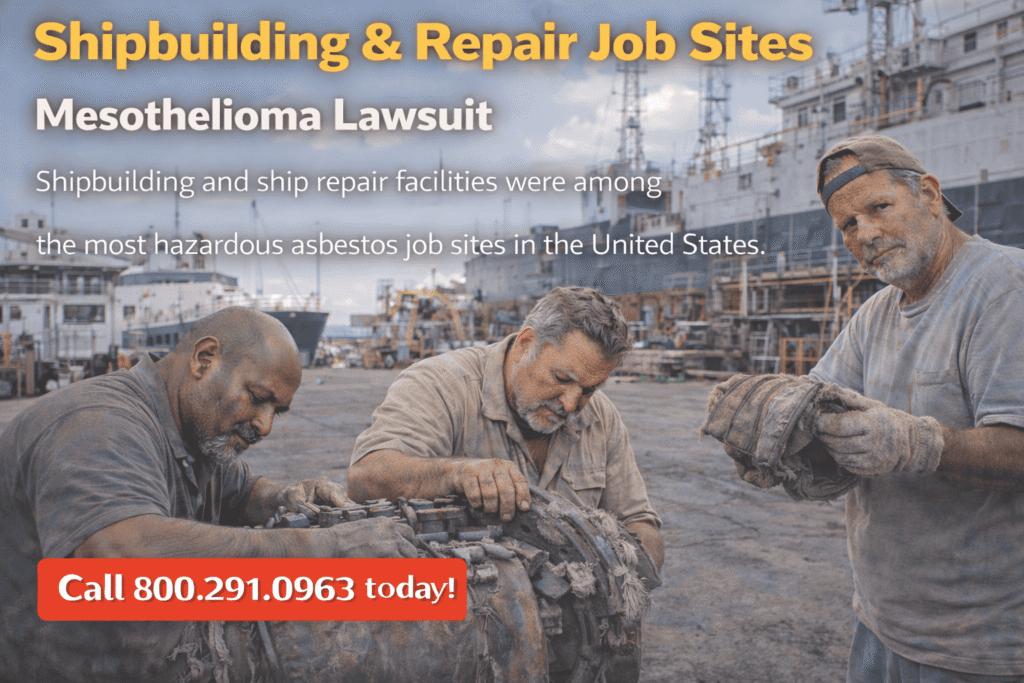
Shipbuilding & Repair Job Sites Mesothelioma Lawsuit
Shipbuilding and ship repair facilities were among the most hazardous asbestos job sites in the United States. From the 1930s through the 1980s, asbestos was used in nearly every part of naval and civilian ships. Boilers, turbines, piping, insulation, gaskets, adhesives, pumps, and even protective gear were packed with asbestos for fireproofing and heat resistance.
Shipbuilders, welders, insulators, machinists, and repair crews were regularly exposed to asbestos fibers in enclosed ship compartments, dry docks, and shipyard facilities. Veterans serving on Navy ships, as well as civilian shipyard workers, faced some of the highest risks of asbestos-related illnesses. Inhaled asbestos fibers can remain in the body for decades, leading to deadly diseases such as:
• Mesothelioma
• Asbestos-related lung cancer
• Asbestosis
Shipbuilding & Repair Job Sites – What You’ll Learn From This Page:
-
Asbestos was used in ship boilers, turbines, pumps, and piping.
-
Shipbuilders and repair crews faced constant exposure in confined spaces.
-
Navy veterans and civilian shipyard workers were both at high risk.
-
Dry docks, shipyards, and on-board repairs released asbestos dust.
-
Workers and veterans diagnosed with asbestos illness may qualify for compensation.
Estimated Number of People Exposed to Asbestos in U.S. Shipbuilding
| Exposure Category | Estimated Number of People Exposed |
|---|---|
| Occupational Exposure (shipyard workers, welders, machinists) | Over 1,200,000 workers exposed |
| Secondary Exposure (families of workers and veterans) | Estimated 400,000 exposed |
| Environmental Exposure (residents near shipyards) | Around 350,000 people exposed |
Total Estimated Exposure:
Over 1.9 million people were exposed at shipbuilding and repair job sites.
Facts About Asbestos in Shipbuilding
• Every major U.S. Navy ship built before the 1980s contained asbestos.
• Asbestos Exposure: Boilers, piping, turbines, gaskets, insulation, and adhesives.
• Asbestos-Related Disease Risk: Extremely high in confined ship compartments.
• Veterans and shipyard workers remain a large portion of mesothelioma cases.
• Similar Occupations: Dock workers, steelworkers, and industrial repairmen.
History of Asbestos Use in Shipbuilding
World War II and Cold War–era naval construction relied heavily on asbestos. From aircraft carriers and battleships to destroyers and submarines, asbestos was considered essential for safety and insulation. Civilian shipyards also used asbestos in commercial vessels, tankers, and fishing fleets.
Repairs and retrofits in shipyards disturbed asbestos regularly, coating workers in dust. Poor ventilation aboard ships made exposure even more severe. Many shipyards across the U.S. remained contaminated with asbestos long after construction practices changed.
Mesothelioma Risk in Shipbuilding & Repair
Exposure risks included:
• Boiler and turbine repairs inside asbestos-insulated rooms
• Welding and cutting asbestos-coated pipes and bulkheads
• Pump and valve replacements with asbestos gaskets and seals
• Sanding, grinding, and drilling asbestos adhesives and cement
• Painting and retrofitting projects in asbestos-filled compartments
• Cleaning asbestos dust in dry docks and repair yards
These exposures placed shipyard workers and Navy veterans at extreme risk.
Asbestos Materials Found in Shipbuilding
-
Boilers and Turbines – Insulated with asbestos bricks and wraps.
-
Piping and Valves – Lagged with asbestos gaskets and coverings.
-
Bulkheads and Decking – Contained asbestos insulation and cement.
-
Adhesives and Sealants – Manufactured with asbestos binders.
-
Flooring and Ceiling Tiles – Installed in living quarters and mess halls.
-
Protective Gear – Gloves, aprons, and blankets woven with asbestos fibers.
-
Insulation Sprays – Applied throughout ship compartments.
Who Was Exposed in Shipbuilding
-
Shipyard Workers – Built and repaired asbestos-filled vessels.
-
Welders and Pipefitters – Disturbed asbestos in pipes and boilers.
-
Machinists and Electricians – Worked with asbestos insulation and wiring.
-
Insulators – Applied asbestos lagging in confined spaces.
-
Custodians and Laborers – Cleaned asbestos dust daily in shipyards.
-
Navy Veterans – Served aboard asbestos-laden ships for years.
Types of Shipbuilding & Repair Sites With Asbestos Risk
-
Naval Shipyards – Built and repaired aircraft carriers, destroyers, and submarines.
-
Commercial Shipyards – Constructed freighters, tankers, and passenger liners.
-
Dry Docks – Contained asbestos dust during repairs and overhauls.
-
Fishing and Cargo Vessels – Relied on asbestos insulation in engine rooms.
-
Decommissioning Yards – Released asbestos during dismantling projects.
Common Questions About Shipbuilding Asbestos Exposure
Can Navy veterans file a claim?
Yes — veterans exposed aboard asbestos ships may qualify for VA benefits and lawsuits.
What about civilian shipyard workers?
Yes — many shipbuilders and repair crews qualify for compensation.
Do families of workers face risks?
Yes — asbestos fibers carried home on uniforms caused secondary exposure.
Do nearby communities face risks?
Yes — asbestos dust spread into neighborhoods around shipyards.
Can families pursue wrongful death lawsuits?
Yes — survivors of veterans and workers lost to asbestos illness may qualify.
How a Mesothelioma Attorney Can Help
An experienced lawyer can:
• Investigate shipyard job history and Navy service records
• Identify asbestos exposure sources in vessels and shipyards
• File asbestos trust fund claims or lawsuits
• Assist families with wrongful death and personal injury cases
• Work on contingency (no fee unless you win)
Free Legal Help for Shipyard Workers and Families
If you or a loved one worked in shipbuilding or ship repair—or served aboard a Navy ship—and now face a mesothelioma or asbestos-related diagnosis, help is available.
Call Now: 800.291.0963
• No upfront costs
• No legal fees unless we win
• Exposure investigation included
• Support for families, veterans, retirees, and secondhand victims
Or request help online 24/7