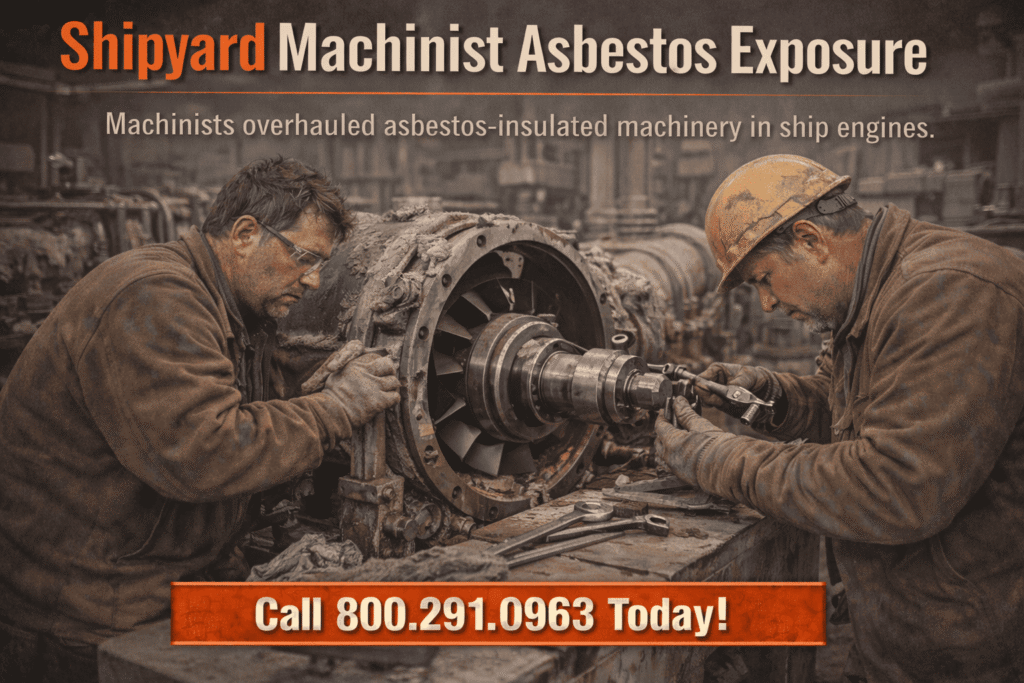
⚙️ Shipyard Machinist Asbestos Exposure
Shipyard machinists faced significant and prolonged asbestos exposure while operating, repairing, and overhauling shipboard machinery and equipment. Engines, turbines, pumps, compressors, generators, and auxiliary systems were heavily insulated with asbestos to withstand heat, friction, and vibration. During maintenance and repairs, machinists routinely disturbed asbestos-containing components, releasing hazardous fibers into confined workspaces.
Machinists often worked below deck in engine rooms, pump rooms, and mechanical compartments, where ventilation was limited and asbestos dust accumulated quickly.
⚠️ How Asbestos Exposure Occurred for Shipyard Machinists
Asbestos exposure occurred during routine machinist duties, often without protective equipment or warnings.
Common exposure activities included:
-
Servicing asbestos-insulated pumps and motors
-
Overhauling turbines and generators
-
Removing and replacing asbestos gaskets and seals
-
Scraping asbestos insulation from machinery housings
-
Grinding and machining asbestos-containing components
-
Working near insulated boilers and piping systems
-
Repairing valves, compressors, and bearings
-
Handling asbestos blankets and insulation debris
These tasks released high concentrations of airborne fibers, especially in enclosed engine spaces.
🧱 Asbestos Materials Used in Shipyard Machinery
Asbestos was widely incorporated into shipboard machinery due to its durability and resistance to heat and friction.
Common asbestos-containing materials included:
-
Machine housing insulation
-
Gaskets and flange packing
-
Pump and valve seals
-
Insulating blankets and wraps
-
Asbestos cement and refractory compounds
-
Fireproofing panels and boards
-
Asbestos cloth and tape
-
Brake and clutch components in auxiliary systems
As machinery aged, these materials became friable and released fibers continuously.
👷 Why Shipyard Machinists Faced Extreme Exposure Risk
Machinists worked hands-on with asbestos-containing equipment daily, often performing repairs that required cutting, scraping, grinding, or disassembling components. These actions generated visible asbestos dust clouds.
Because machinists frequently moved between engine rooms, boiler spaces, and machinery compartments, they were also exposed to secondary asbestos dust generated by other trades working nearby.
🫁 Health Risks Linked to Machinist Asbestos Exposure
Long-term asbestos exposure among shipyard machinists is strongly linked to serious and often fatal diseases.
Health risks include:
-
Pleural mesothelioma
-
Peritoneal mesothelioma
-
Lung cancer
-
Asbestosis
-
Pleural plaques and thickening
-
Chronic respiratory impairment
Symptoms often develop 20 to 50 years after exposure, delaying diagnosis and treatment.
⚖️ Shipyard Machinist Mesothelioma Lawsuit Options
Machinists diagnosed with asbestos-related diseases may pursue compensation through several legal avenues.
Legal options include:
-
Product liability lawsuits against machinery and gasket manufacturers
-
Shipyard premises liability claims
-
Maritime asbestos lawsuits
-
Asbestos trust fund claims
-
Wrongful death lawsuits for surviving family members
Many cases involve multiple manufacturers responsible for asbestos-containing components.
🏦 Asbestos Trust Fund Claims for Shipyard Machinists
Numerous manufacturers of machinery components, gaskets, and insulation established asbestos trust funds to compensate exposed workers.
Trust fund claims typically require:
-
Medical documentation of diagnosis
-
Employment records showing machinist duties
-
Evidence of asbestos-containing product exposure
-
Shipyard or vessel assignment history
-
Supporting coworker or supervisor affidavits
Trust fund compensation can be pursued alongside civil lawsuits.
⏳ Statute of Limitations for Machinist Asbestos Claims
Statutes of limitations vary by state and generally begin at diagnosis rather than exposure. Machinists may qualify to file claims in multiple jurisdictions depending on shipyard locations, vessel routes, and employer history.
Failing to meet filing deadlines can permanently bar recovery, making early legal review critical.
👨⚖️ How a Shipyard Asbestos Lawyer Helps Machinists
Shipyard machinist cases require detailed occupational reconstruction and technical product identification. An experienced asbestos lawyer can:
-
Identify asbestos-containing machinery and component manufacturers
-
Obtain shipyard maintenance and vessel records
-
File lawsuits and asbestos trust fund claims
-
Coordinate expert medical and industrial testimony
-
Maximize total compensation recovery
Most asbestos attorneys work on contingency, meaning no upfront legal fees.
❓ Shipyard Machinist Asbestos Exposure FAQs
Were machinists heavily exposed to asbestos?
Yes. Machinists worked directly with asbestos-insulated machinery daily.
Can claims still be filed decades later?
Yes. Asbestos diseases have long latency periods.
Are multiple companies typically responsible?
Yes. Machinery systems used components from many manufacturers.
Do family members qualify for compensation?
Yes, through wrongful death or secondary exposure claims.
Is shipyard machinist exposure well documented?
Yes. Extensive shipyard and maritime records exist.
📞 Free Case Evaluation – Shipyard Machinist Asbestos Exposure
If you worked as a machinist in shipyards and later developed mesothelioma or another asbestos-related disease, legal options may still be available.
✔️ Free, confidential case evaluation
✔️ No upfront legal fees
✔️ Nationwide asbestos legal representation
📲 Call 800-291-0963 today to discuss your options.