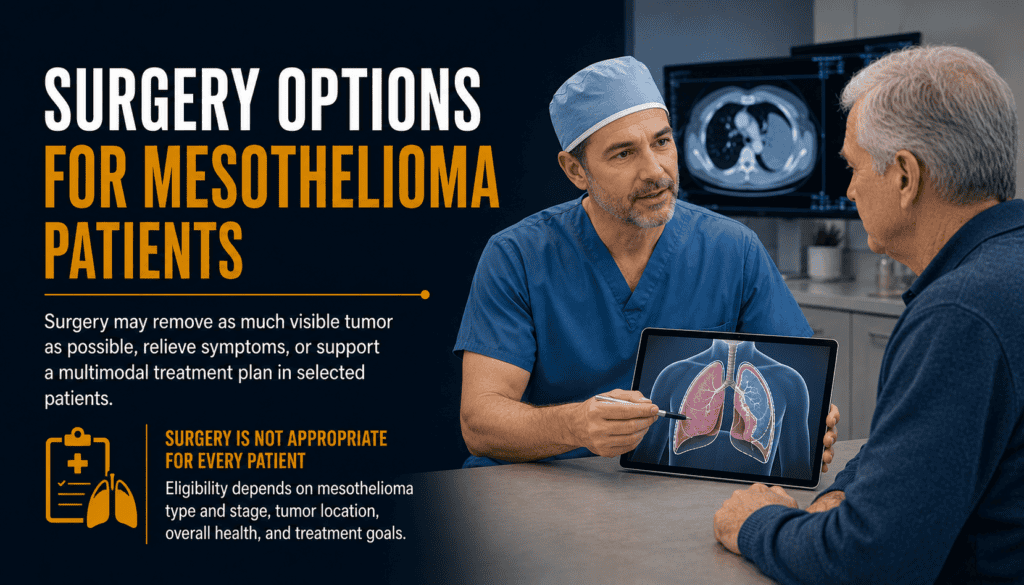
🩺 Surgery Options for Mesothelioma Patients (P/D, EPP)
Understanding surgical approaches is vital for patients diagnosed with mesothelioma. This guide explains the two primary procedures — pleurectomy/decortication (P/D) and extrapleural pneumonectomy (EPP) — including how they work, who qualifies, and typical recovery timelines.
By knowing what to expect, you can ask better questions, plan for recovery, and choose a path that fits your goals and overall health.
📞 Need help right now? Call 800.291.0963 for free answers and guidance today.
🎯 Step 1: Surgical Goals
Surgery for mesothelioma aims to:
-
🩹 Remove cancerous tissue and reduce tumor burden.
-
🌬️ Improve breathing and overall lung function.
-
💪 Enhance quality of life through symptom relief.
Depending on your stage and health, your surgeon may recommend curative or palliative surgery. It’s often combined with chemotherapy or radiation to boost effectiveness.
🫁 Step 2: Pleurectomy/Decortication (P/D)
What happens:
The surgeon removes the diseased pleural lining and peels visible tumor off the lung, diaphragm, and chest wall — while keeping the lung intact.
Who qualifies:
✅ Early to moderate pleural mesothelioma
✅ Good lung function
✅ Tumors confined to the chest lining
Recovery timeline:
-
🏥 Hospital stay: 5–10 days
-
🕒 Daily activities: 4–8 weeks
-
💨 Breathing therapy and physical rehab are key to recovery.
Why choose P/D:
-
Preserves the lung for better long-term breathing.
-
Shorter recovery time and fewer complications.
-
Provides lasting symptom relief.
⚕️ Step 3: Extrapleural Pneumonectomy (EPP)
What happens:
The surgeon removes the entire affected lung, pleura, part of the diaphragm, and sometimes the pericardium. These structures are then reconstructed with synthetic materials.
Who qualifies:
✅ Early-stage disease on one side of the chest
✅ Strong heart and lung function
✅ Candidates who can safely tolerate single-lung breathing
Recovery timeline:
-
🏥 Hospital stay: 10–14 days
-
⏳ Full recovery: 3–6 months
-
💪 Intensive pulmonary rehab and nutrition support required
Why choose EPP:
-
Removes most visible cancer.
-
Can lower recurrence rates in eligible patients.
-
Often combined with chemotherapy or radiation for better survival outcomes.
⚖️ Step 4: Choosing Between P/D and EPP
Your care team will evaluate:
-
📈 Stage and spread of the cancer.
-
🫁 Lung function and overall health.
-
🧠 Personal goals — quality of life vs. aggressive treatment.
-
🧬 Tumor invasion — if it’s confined or extends into the lung.
When preservation is possible, P/D is often preferred. If cancer has invaded deep tissue, EPP may be the best approach.
💙 Step 5: Recovery & Postoperative Care
Recovery is gradual and requires full support from your medical team.
Key components:
-
💊 Pain management and infection prevention.
-
💨 Breathing exercises and mobility therapy.
-
🥗 Balanced nutrition and hydration.
-
❤️ Emotional support from family and counseling.
-
📅 Regular follow-ups to monitor healing and recurrence.
Tip: Keep a notebook or digital app to track milestones and questions for your doctors.
🔬 Step 6: Combining Surgery with Other Treatments
Most patients receive a multimodal treatment plan, such as:
-
💉 Chemotherapy to destroy microscopic cancer cells.
-
☢️ Radiation therapy to prevent recurrence.
-
🧪 Clinical trials or immunotherapy for advanced cases.
This combination approach improves long-term outcomes and overall quality of life.
❓ Step 7: Questions to Ask Your Surgeon
-
Am I eligible for P/D, EPP, or both?
-
What are the risks, benefits, and recovery time?
-
How experienced is your team with mesothelioma surgeries?
-
What additional treatments will I need afterward?
-
What will my day-to-day recovery look like?
📘 Pro Tip: Bring a friend or family member to your consultation to take notes.
🤝 Where to Get Help
If you’ve been diagnosed with mesothelioma, you don’t have to face it alone.
We can connect you with top mesothelioma surgeons, specialized treatment centers, and legal resources to cover your care.
📞 Call 800.291.0963 to speak with a Mesothelioma Help Center advocate today.
🧭 Summary
Pleurectomy/Decortication (P/D) offers lung preservation with faster recovery, while Extrapleural Pneumonectomy (EPP) provides a more aggressive approach for complete tumor removal.
Knowing your options and asking the right questions helps you make informed decisions for your health, comfort, and future.
You are not alone — expert help is only one call away.
800.291.0963