🧵 Textile Mill Asbestos Exposure
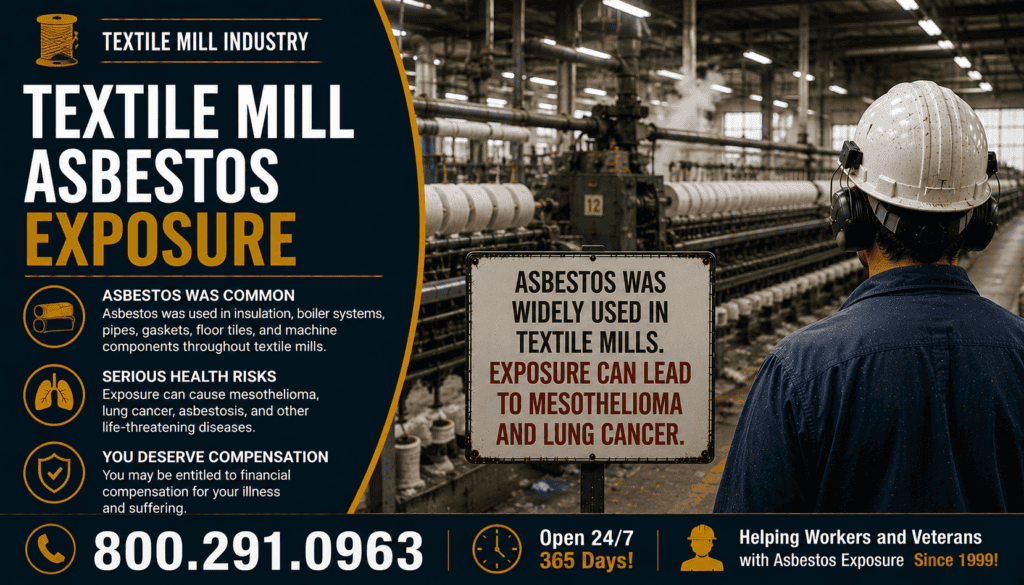
Textile mill asbestos exposure was widespread throughout the 20th century as mills relied on high-speed machinery, steam systems, boilers, and fireproofing materials that frequently contained asbestos. To control heat, friction, and fire hazards, asbestos was incorporated into equipment, insulation, and building materials across textile production facilities.
When these materials aged, vibrated, or were serviced, asbestos fibers were released into the air, exposing workers daily—often for decades.
⚠️ How Asbestos Exposure Occurred in Textile Mills
Textile mills operated continuously, with spinning, weaving, dyeing, and finishing processes generating heat and mechanical stress. Asbestos exposure occurred during normal operations and routine maintenance.
Common exposure sources included:
-
Spinning and weaving machine insulation
-
Steam pipes and boilers
-
Dryer and press equipment
-
Carding and combing machinery
-
Belt-driven motors and pulleys
-
Electrical panels and wiring insulation
-
Ceiling tiles and sprayed fireproofing
-
Renovation and demolition projects
Fine fibers easily circulated through poorly ventilated mill floors, increasing inhalation risk.
🧱 Asbestos Materials Commonly Used in Textile Mills
Textile manufacturing facilities incorporated asbestos for durability and fire resistance.
Frequently used asbestos-containing materials included:
-
Pipe insulation and thermal lagging
-
Boiler insulation and cement
-
Dryer and press heat shields
-
Gaskets and seals in machinery
-
Electrical insulation boards
-
Fireproof wall and ceiling coatings
-
Conveyor belt components
-
Furnace and oven linings
As these materials deteriorated or were disturbed, fibers became airborne repeatedly.
👷 Textile Mill Workers at Highest Risk
Exposure affected both production and maintenance personnel.
High-risk roles included:
-
Spinners and weavers
-
Carding and combing operators
-
Dye house workers
-
Dryer and press operators
-
Maintenance mechanics
-
Millwrights
-
Electricians
-
Boiler operators
-
Supervisors and floor managers
Workers often experienced long-term cumulative exposure, especially in older mills.
🫁 Health Risks from Textile Mill Asbestos Exposure
Prolonged asbestos exposure in textile mills is linked to serious illnesses with long latency periods.
Common asbestos-related diseases include:
-
Pleural mesothelioma
-
Peritoneal mesothelioma
-
Lung cancer
-
Asbestosis
-
Pleural thickening and plaques
-
Chronic obstructive pulmonary disease
Symptoms may not appear until 20–50 years after exposure, delaying diagnosis and legal action.
⚖️ Textile Mill Mesothelioma Lawsuit Options
Workers diagnosed with asbestos-related illnesses may pursue compensation through multiple legal avenues.
Potential claims include:
-
Product liability lawsuits against asbestos manufacturers
-
Premises liability claims
-
Asbestos trust fund claims
-
Wrongful death lawsuits for surviving families
Most lawsuits focus on asbestos product suppliers, not textile mill employers.
🏦 Asbestos Trust Fund Claims for Textile Workers
Many asbestos manufacturers that supplied materials to textile mills filed for bankruptcy and created trust funds.
Trust fund claims may involve:
-
Industrial insulation manufacturers
-
Boiler and steam system suppliers
-
Machinery component manufacturers
-
Electrical insulation producers
Eligible workers may file multiple trust claims, depending on exposure history.
⏳ Statute of Limitations for Textile Mill Asbestos Claims
Each state enforces strict deadlines for filing asbestos-related claims, typically starting from the date of diagnosis. Workers may qualify to file in more than one jurisdiction based on employment location and product manufacturers.
Missing deadlines can permanently bar recovery.
👨⚖️ How an Asbestos Lawyer Helps Textile Mill Workers
Textile asbestos cases require industry-specific knowledge and historical documentation. An experienced asbestos attorney can:
-
Identify asbestos-containing textile equipment and materials
-
Reconstruct work histories and exposure timelines
-
Locate responsible manufacturers and trust funds
-
Coordinate lawsuits and trust fund filings
-
Maximize compensation through strategic claim filing
Most cases are handled on a contingency fee basis, with no upfront costs.
❓ Textile Mill Asbestos Exposure FAQs
Was asbestos common in textile mills?
Yes. Especially in steam systems, dryers, and machinery insulation.
Can former textile workers still file claims?
Yes, even decades after employment ended.
Are family members eligible for compensation?
Yes, through wrongful death claims and secondary exposure cases.
Do textile asbestos cases have strong evidence?
Yes. Mill records and supplier histories are well documented.
Can claims be filed after retirement?
Yes. Diagnosis date—not employment date—usually starts the legal clock.
📞 Free Case Evaluation – Textile Mill Asbestos Exposure
If you worked in a textile mill and were diagnosed with mesothelioma or another asbestos-related disease, you may be entitled to significant compensation.
✔️ Free, confidential consultation
✔️ No upfront legal fees
✔️ Nationwide asbestos legal representation
📲 Call 800-291-0963 today to review your legal options.