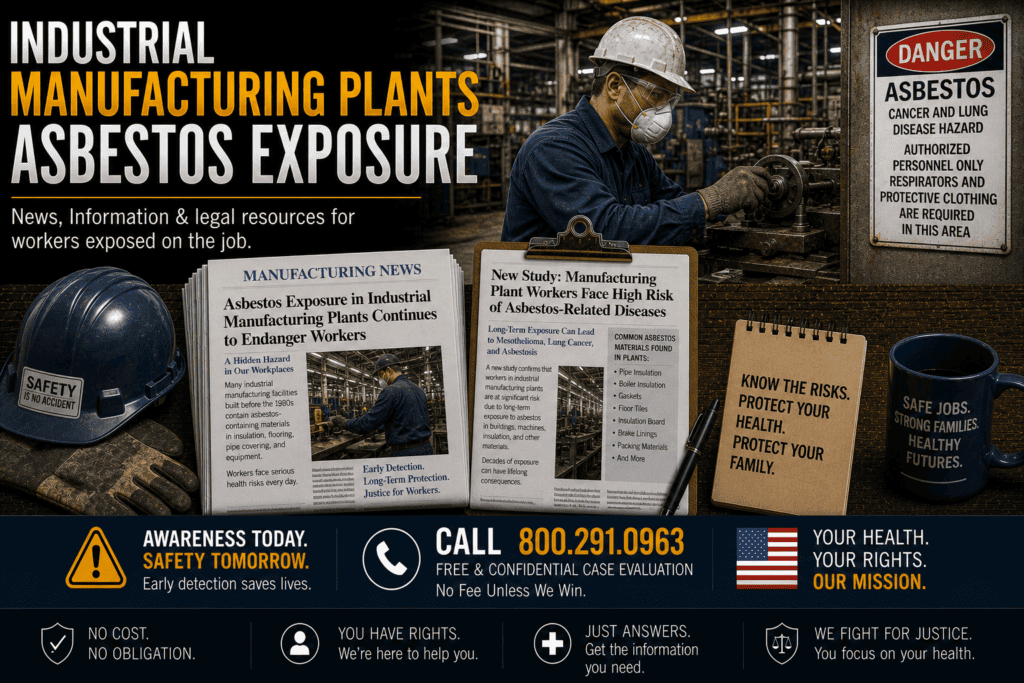
🧱 Tile Manufacturing Plants Asbestos Exposure
Tile manufacturing plants used asbestos in flooring tiles, ceiling tiles, adhesives, mastics, and fillers during large-scale production, exposing workers to dangerous airborne fibers.
Tile manufacturing plants were among the most hazardous industrial workplaces during the decades when asbestos was widely used. For much of the 20th century, asbestos was intentionally added to tile products because of its strength, durability, heat resistance, and fireproofing qualities. Flooring tiles, ceiling tiles, adhesives, and fillers commonly contained asbestos, and workers were exposed at nearly every stage of the manufacturing process.
Unlike passive exposure environments, tile plants created direct, repeated, and high-volume asbestos exposure. Raw asbestos fibers were delivered to plants, mixed into compounds, pressed into tiles, cut, ground, packaged, and shipped—releasing fibers continuously into the air. Many workers spent years or decades in these environments without adequate ventilation or protective equipment.
🏭 Why Tile Manufacturing Plants Were Extremely Dangerous
Tile manufacturing plants posed severe asbestos risks because:
-
🧪 Raw asbestos was handled in bulk
-
⚙️ Production processes disturbed asbestos daily
-
🌫️ Dust-heavy environments increased inhalation
-
🏗️ Facilities operated continuously
-
⏱️ Workers spent long shifts in confined spaces
-
⚠️ Protective warnings were minimal or nonexistent
Even workers not directly involved in mixing or cutting were exposed through shared air systems and contaminated surfaces.
🧪 How Asbestos Was Used in Tile Manufacturing
Asbestos was deliberately incorporated into tile manufacturing because it:
-
Increased strength and durability
-
Improved fire and heat resistance
-
Reduced cracking and warping
-
Lowered production costs
Common asbestos-containing tile products included:
-
Vinyl asbestos floor tiles
-
Asphalt-based tiles
-
Ceiling tiles and panels
-
Adhesives, mastics, and fillers
Because asbestos was embedded into the product itself, manufacturing exposure was unavoidable.
⚠️ How Asbestos Exposure Occurred in Tile Plants
Workers were exposed to asbestos during nearly every production phase, including:
-
Unloading and handling raw asbestos
-
Mixing asbestos into tile compounds
-
Pressing and forming tiles
-
Cutting, grinding, and finishing products
-
Cleaning machinery and work areas
-
Packaging and warehousing finished tiles
Each step released asbestos fibers into the air, where they remained suspended for hours.
🧱 High-Risk Areas Inside Tile Manufacturing Plants
🧪 Raw Material Handling Areas
Raw asbestos arrived in bags or containers that released fibers when opened, poured, or transferred.
⚙️ Mixing & Blending Stations
Dry asbestos fibers were mixed with resins, binders, and fillers, generating dense airborne dust.
🧱 Pressing & Forming Lines
Compressed asbestos-containing compounds released fibers when excess material broke away.
🛠️ Cutting, Grinding & Finishing Areas
Cutting and shaping hardened tiles disturbed embedded asbestos fibers.
📦 Packaging & Warehouse Areas
Broken tiles and dusty surfaces released fibers during boxing, stacking, and shipping.
Because air circulated throughout the facility, exposure was facility-wide, not isolated.
🧑🏭 Workers Most at Risk in Tile Manufacturing Plants
🧱 Production Line Workers
Handled asbestos-containing materials throughout the manufacturing process.
⚙️ Machine Operators
Ran mixers, presses, grinders, and cutting equipment that released fibers.
📦 Packers & Warehouse Workers
Handled dusty tiles during packaging and shipment.
🛠️ Maintenance & Repair Workers
Disturbed asbestos during equipment servicing and facility repairs.
👷 Supervisors & Quality Inspectors
Spent extended time on production floors and inspection areas.
Many workers unknowingly inhaled asbestos for years before health risks were widely acknowledged.
🌫️ Tile Plant Dust & Airborne Asbestos Exposure
Tile plants were notoriously dusty environments. Asbestos fibers:
-
Floated in the air for extended periods
-
Settled on clothing, skin, and hair
-
Contaminated break rooms and offices
-
Circulated through ventilation systems
Workers often left shifts covered in dust, unknowingly carrying asbestos fibers home.
🧬 Secondary Asbestos Exposure from Tile Plants
Family members of tile plant workers were exposed through secondary exposure, also known as “take-home exposure.” This occurred when asbestos fibers:
-
Clung to work clothes
-
Settled on hair and skin
-
Transferred to vehicles and homes
-
Became airborne during laundering
Spouses and children developed mesothelioma decades later despite never working in a tile plant.
🫁 Health Risks Linked to Tile Manufacturing Asbestos Exposure
Long-term asbestos exposure in tile manufacturing plants is strongly linked to serious diseases, including:
🧠 Mesothelioma
A rare, aggressive cancer caused almost exclusively by asbestos exposure.
🫁 Asbestosis
A progressive lung disease caused by heavy asbestos inhalation.
🫁 Lung Cancer
Significantly increased risk following prolonged exposure.
Because these diseases have long latency periods, symptoms often appear 20–50 years after exposure.
📜 Employer Knowledge & Safety Failures
Many tile manufacturers knew or should have known about asbestos hazards but failed to:
-
Warn workers of the dangers
-
Provide respirators or protective clothing
-
Implement proper ventilation
-
Reduce airborne dust
-
Train workers on asbestos safety
These failures form the basis for many legal claims filed today.
❓ Frequently Asked Questions (FAQs)
1️⃣ Were tile manufacturing workers heavily exposed to asbestos?
Yes. Exposure was daily and often intense.
2️⃣ Did finished tiles still release asbestos?
Yes. Cutting and grinding released embedded fibers.
3️⃣ Were warehouse and packaging workers at risk?
Yes. Dust from finished tiles caused exposure.
4️⃣ Can family members file claims for secondary exposure?
Yes. Take-home exposure is legally recognized.
5️⃣ Can claims still be filed decades later?
Yes. Asbestos disease latency allows late claims.
⚖️ How a Lawyer Can Help Get Compensation
An experienced asbestos lawyer can help tile plant workers and families by:
-
Investigating specific tile manufacturing facilities
-
Identifying asbestos-containing products and materials
-
Tracing manufacturers responsible for asbestos use
-
Documenting work history and exposure timelines
-
Filing mesothelioma lawsuits against liable companies
-
Submitting asbestos trust fund claims
-
Pursuing compensation for medical bills, lost income, and suffering
Because tile manufacturing exposure often involved multiple asbestos products, legal expertise is critical.
📞 Free Case Evaluation – Get Help Today
If you worked in a tile manufacturing plant—or were exposed through a family member—and later developed mesothelioma or another asbestos-related illness, help is available.
📞 Call Now for a FREE Case Evaluation: 800-291-0963
There is no obligation, and compensation may be available.
📌 Key Takeaways
-
Tile plants used asbestos extensively in production
-
Workers faced daily, high-level exposure
-
Dust circulated throughout entire facilities
-
Family members were exposed secondarily
-
Legal options may be available