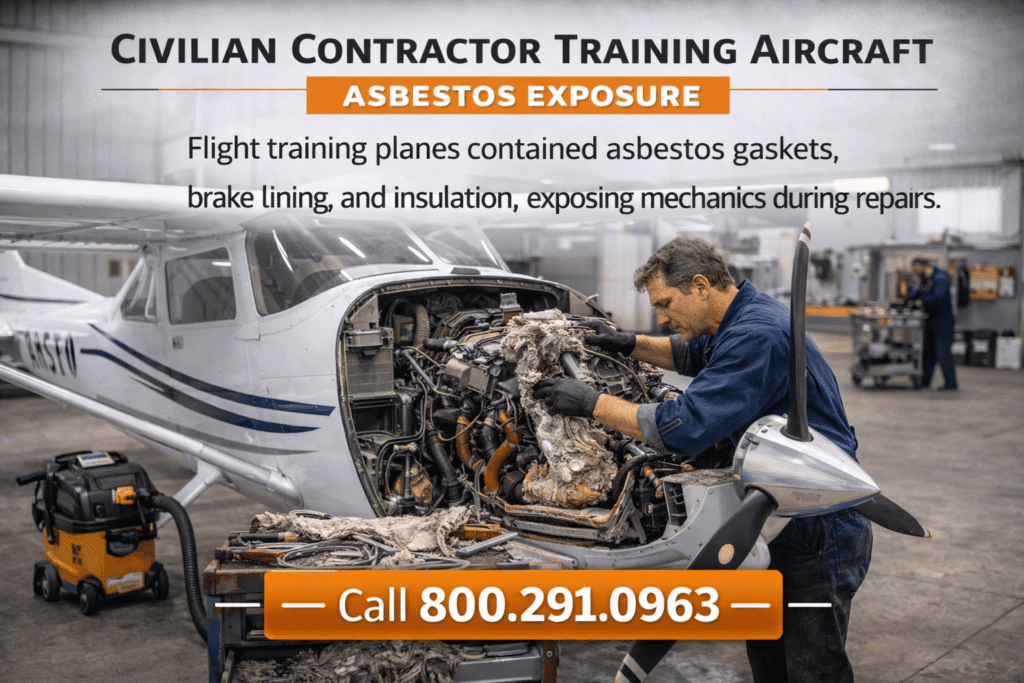
🎓 Civilian Contractor Training Aircraft – Asbestos Exposure
Training aircraft, used by flight schools, military academies, and civilian defense contractors, were critical to preparing new pilots and technicians. These planes were built for durability and repeated use, but many also contained asbestos in key components due to the high heat and mechanical stress they endured.
Asbestos was used in brake pads, engine insulation, firewall panels, and cockpit control surfaces. Because training aircraft flew frequent missions, maintenance and part replacements were common. Mechanics, instructors, and student pilots were all at risk of inhaling asbestos fibers during daily upkeep and repairs.
📘 Training Aircraft – What You’ll Learn from This Page:
-
Training aircraft used asbestos in brakes, gaskets, engine insulation, and fire barriers. Exposure occurred during frequent repairs, overhauls, and cockpit work.
-
Aviation mechanics, instructors, and flight students diagnosed with asbestos-related diseases may qualify for legal or trust fund compensation.
-
Tasks like brake servicing, gasket scraping, and control panel maintenance often released asbestos into tightly enclosed spaces.
-
More than $30 billion remains available in asbestos trust funds. Training aircraft-related claims often settle between $275,000 and $475,000.
-
Some victims qualify for VA benefits, SSDI, or workers’ compensation depending on background and work history.
-
Legal settlements from training aircraft asbestos exposure have reached $1.2 to $1.6 million. Some jury awards have exceeded $5 million.
-
Free legal evaluations are available for former mechanics, instructors, and aviation personnel exposed during training aircraft maintenance.
🧾 Estimated Number of People Exposed via Training Aircraft
| Exposure Category | Estimated Number of People Exposed |
|---|---|
| Mechanics & Ground Crew | Over 76,000 exposed |
| Flight Instructors | Around 39,000 exposed |
| Student Pilots | About 31,000 exposed |
| Civilian Contractor Techs | Nearly 44,000 exposed |
Total Estimated Exposure: Over 190,000 personnel.
🔥 Why Asbestos Was Used in Training Aircraft
Training planes operated under heavy stress and needed durable, heat-resistant materials:
-
Brake Linings – Made with asbestos to handle frequent landings
-
Engine Insulation – Protected internal components from extreme heat
-
Firewall Panels – Used asbestos to shield the cockpit from fire risk
-
Cockpit Instrument Panels – Included asbestos for electrical heat control
-
Gasket Materials – Contained asbestos for sealing under pressure and heat
Heavy flight schedules and constant repairs increased wear on asbestos parts, resulting in high exposure for ground personnel and flight crews.
🌍 Training Aircraft Use Across Sectors
| Sector | Primary Use | Common Locations |
|---|---|---|
| Civilian Flight Schools | Pilot instruction and certification | Regional airports, training fields |
| Military Academies | Initial flight training | Air bases, naval stations |
| Contractor Training | Private flight instruction | Defense industry airfields |
Planes often remained in service for decades, with outdated asbestos components degrading over time and requiring frequent handling.
👷 Estimated Number of Personnel Exposed from Aircraft Work
| Occupation Group | Estimated Number Exposed |
|---|---|
| Airframe & Brake Techs | Over 8,100 |
| Avionics & Control Panel | Approx. 7,300 |
| Engine Maintenance Crew | Around 6,000 |
| Civilian Flight Contractors | Nearly 5,700 |
Total Estimated Exposure: Over 27,100 personnel.
🧱 Asbestos Exposure Areas on Training Aircraft
-
Brake Assemblies – Pads and linings released fibers during maintenance
-
Firewall Panels – Contained asbestos between the engine and cockpit
-
Engine Compartments – Lined with asbestos insulation
-
Instrument Panels – Included asbestos in wiring shields and mounts
-
Gaskets and Seals – Disturbed during engine repairs and overhauls
⚠️ High-Risk Training Aircraft Personnel
| Job Role | Exposure Risk | Details |
|---|---|---|
| Mechanics | High | Serviced brakes, gaskets, and engine components |
| Flight Instructors | Moderate | Flew frequently in enclosed, contaminated spaces |
| Avionics Techs | High | Handled fireproof panels and wiring near controls |
| Student Pilots | Moderate | Operated in aircraft with deteriorating materials |
🧰 Common Asbestos Products in Training Aircraft
-
Brake Linings & Discs – Replaced regularly due to high flight cycles
-
Engine Gaskets – Seals exposed to repeated heat and friction
-
Firewall Shields – Panels between cockpit and engine compartments
-
Cockpit Insulation – Used around instruments and electrical panels
-
Adhesives & Compounds – Contained asbestos for durability and fire resistance
🫁 Long-Term Health Risks from Asbestos Exposure
-
Mesothelioma – Rare, incurable cancer caused solely by asbestos
-
Asbestosis – Progressive lung condition caused by scar tissue
-
Lung Cancer – Common among long-term exposed aviation personnel
-
Pleural Thickening – Reduces lung function and flexibility
⚖️ Lawsuits Filed by Training Aircraft Workers
-
Filed by mechanics, instructors, and civilian flight techs
-
Legal action targets part manufacturers—not the training institutions
-
Families may file wrongful death claims for deceased aviation workers
-
Exposure documented in schools, contractor facilities, and hangars
💰 Sample Training Aircraft Asbestos Settlements
| Settlement Amount | Case Details |
|---|---|
| $3.1 million | Brake tech exposed to linings and gaskets, diagnosed with mesothelioma |
| $2.5 million | Instructor flew planes with degraded insulation, developed lung cancer |
| $2.3 million | Civilian contractor removed fire panels, diagnosed with asbestosis |
| $2.0 million | Engine mechanic inhaled fibers during overhaul, later diagnosed |
🏢 Companies Linked to Asbestos in Training Planes
-
Raybestos – Brake pads and clutch linings
-
Bendix – Engine and avionics system parts
-
Garlock – Gasket and sealing products
-
Johns-Manville – Insulation panels and firewall components
-
3M – High-temperature wraps and adhesives
🏦 Asbestos Trust Funds for Training Aircraft Workers
-
Over $30 billion in funding remains available
-
Claims range from $300,000 to $600,000+
-
Filing a claim does not affect VA or SSDI eligibility
-
Many training aircraft cases are still being approved decades later
🪖 Benefits for Exposed Personnel
-
VA benefits for veterans exposed while training
-
SSDI for civilian workers unable to continue employment
-
Workers’ compensation in some civilian aviation settings
-
Legal claims can supplement these support options
📝 Filing a Training Aircraft Asbestos Claim
-
Get diagnosed with mesothelioma or asbestos-related illness
-
Document aircraft types and specific maintenance duties
-
Work with experienced asbestos law firms for legal and trust claims
-
Most claims resolve with financial compensation in 6–12 months
⏳ Statute of Limitations
-
Injury Claims: File within 2–3 years of diagnosis
-
Wrongful Death: File within 2–3 years after death
-
Trust Fund Claims: No expiration for most funds
❓ Training Aircraft Asbestos Exposure FAQs
Q: Did training planes contain asbestos parts?
Yes. Pre-1990s training aircraft used asbestos in brakes, insulation, and panels.
Q: Can student pilots or instructors file claims?
Yes. Exposure doesn’t require being a mechanic—regular cockpit use also counts.
Q: Does a lawsuit impact VA or SSDI benefits?
No. Legal settlements are independent and do not reduce other compensation.
Q: Can families file if the worker has died?
Yes. Wrongful death claims and trust fund filings are available to survivors.
📞 Talk to a Legal Advocate for Training Aircraft Exposure
Call 800.291.0963 for a free case review.
Skilled asbestos attorneys are available to help training school staff and flight crews file claims.