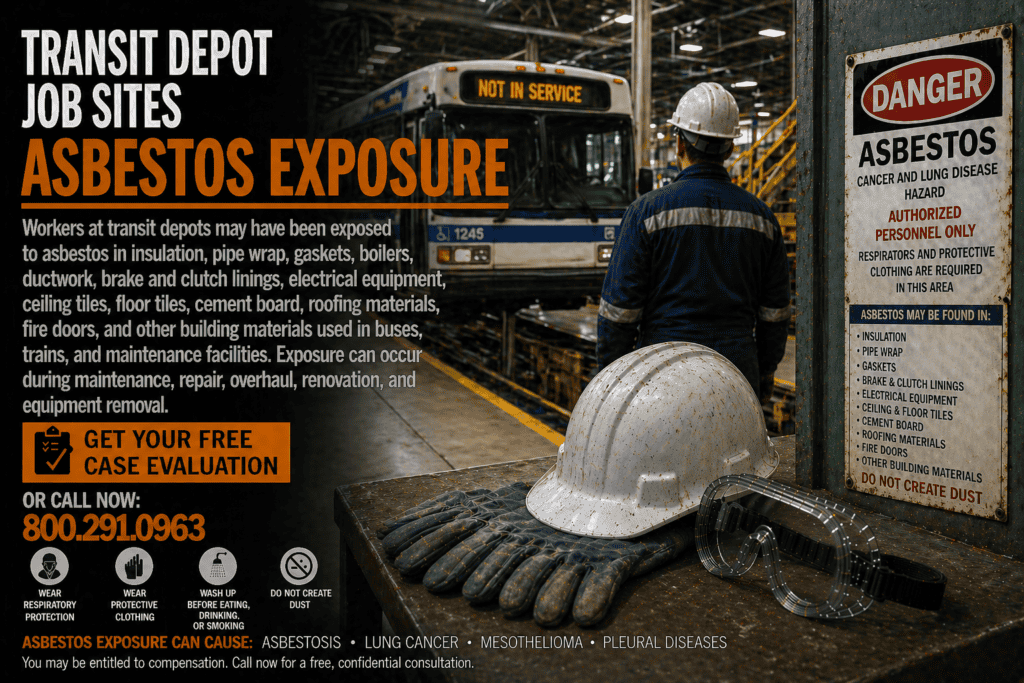
Transit Depot Job Sites Mesothelioma Lawsuit
Transit depots—including bus barns, streetcar facilities, and maintenance garages—built before the 1980s frequently contained asbestos in vehicles, repair shops, and building structures. Buses and streetcars used asbestos in brakes, clutches, gaskets, insulation, and heating systems. Depot facilities housed boilers, turbines, and piping wrapped in asbestos, while flooring, roofing, and wall panels were also constructed with asbestos cement and adhesives. During daily repairs, servicing, and renovations, asbestos fibers were disturbed and released into the air.
Mechanics, drivers, electricians, maintenance crews, and custodial staff in transit depots were often exposed to asbestos dust without knowing the risks. Inhaled asbestos fibers remain in the body for decades, leading to serious illnesses such as:
• Mesothelioma
• Asbestos-related lung cancer
• Asbestosis
Transit Depot Job Sites – What You’ll Learn From This Page:
-
Asbestos was used in brakes, clutches, gaskets, and insulation.
-
Mechanics and depot workers faced exposure during repairs and maintenance.
-
Depot buildings contained asbestos flooring, roofing, and cement panels.
-
Poor ventilation in garages worsened asbestos dust exposure.
-
Transit depot employees diagnosed with asbestos disease may qualify for compensation.
Estimated Number of People Exposed to Asbestos in U.S. Transit Depots
| Exposure Category | Estimated Number of People Exposed |
|---|---|
| Occupational Exposure (mechanics, drivers, maintenance crews) | Around 300,000 workers exposed |
| Secondary Exposure (families of workers) | Estimated 100,000 exposed |
| Environmental Exposure (residents near depots) | Around 200,000 people exposed |
Total Estimated Exposure:
Over 600,000 people were exposed at transit depot job sites.
Facts About Asbestos in Transit Depots
• Buses, streetcars, and service vehicles used asbestos brakes and clutches.
• Asbestos Exposure: Boilers, piping, insulation, floor tiles, and adhesives.
• Asbestos-Related Disease Risk: High among mechanics and maintenance staff.
• Dusty bus barns and poorly ventilated garages trapped asbestos fibers.
• Similar Occupations: Railroad workers, auto mechanics, and subway yard crews.
History of Asbestos Use in Transit Depots
From the 1920s through the 1970s, asbestos was a standard material in both transit vehicles and depot facilities. Brakes, clutches, and gaskets in buses and streetcars contained asbestos, while boilers, piping, and building structures in depots were insulated with asbestos products.
Routine maintenance—including sanding, grinding, and replacing brake parts—disturbed asbestos fibers. Renovations of depot buildings also spread asbestos dust into workspaces, exposing employees and surrounding neighborhoods.
Mesothelioma Risk in Transit Depot Job Sites
Exposure risks included:
• Repairing asbestos-containing brakes, clutches, and gaskets in buses
• Servicing boilers, turbines, and piping insulated with asbestos
• Renovations disturbing asbestos floor tiles, ceilings, and roofing
• Grinding and sanding asbestos brake linings during depot maintenance
• Cleaning asbestos dust from bus barns, garages, and storage bays
• Wearing asbestos gloves and protective gear during high-heat work
These exposures endangered not only workers but also their families through secondary exposure.
Asbestos Materials Found in Transit Depots
-
Brakes and Clutches – Contained asbestos friction components.
-
Boilers and Turbines – Insulated with asbestos bricks and wraps.
-
Piping and Valves – Lagged with asbestos insulation and gaskets.
-
Flooring and Ceiling Tiles – Contained asbestos adhesives and backing.
-
Roofing and Siding Panels – Constructed with asbestos cement.
-
Protective Gear – Gloves, aprons, and blankets woven with asbestos fibers.
Who Was Exposed in Transit Depots
-
Mechanics – Repaired buses and streetcars with asbestos parts.
-
Drivers – Inhaled asbestos fibers from bus heating and brake systems.
-
Maintenance Crews – Serviced boilers, piping, and depot infrastructure.
-
Electricians – Worked with asbestos-insulated wiring and panels.
-
Custodians – Cleaned asbestos dust from garages and storage areas.
-
Nearby Residents – Exposed when asbestos dust escaped from depots.
Types of Transit Depot Sites With Asbestos Risk
-
Bus Barns and Garages – Contained asbestos in vehicles and building structures.
-
Streetcar Facilities – Used asbestos in brakes, clutches, and overhead systems.
-
Repair and Maintenance Shops – Exposed workers during sanding and grinding tasks.
-
Depot Offices and Control Rooms – Built with asbestos flooring and roofing.
-
Storage Facilities – Contained asbestos insulation in equipment and warehouses.
Common Questions About Transit Depot Asbestos Exposure
Can transit workers file a claim?
Yes — mechanics, drivers, and depot staff exposed may qualify.
What about bus and streetcar mechanics?
Yes — brake and clutch repairs were major asbestos exposure sources.
Are families of workers at risk?
Yes — asbestos fibers carried home on clothing caused secondary illnesses.
Do residents near depots face risks?
Yes — asbestos dust often spread into neighborhoods surrounding depots.
Can families pursue wrongful death lawsuits?
Yes — survivors of transit workers lost to asbestos diseases may qualify.
How a Mesothelioma Attorney Can Help
An experienced lawyer can:
• Investigate transit depot job history and facility records
• Identify asbestos exposure sources in vehicles and buildings
• File asbestos trust fund claims or lawsuits
• Assist families with personal injury and wrongful death cases
• Work on contingency (no fee unless you win)
Free Legal Help for Transit Workers and Families
If you or a loved one worked at a transit depot and now face a mesothelioma or asbestos-related diagnosis, help is available.
Call Now: 800.291.0963
• No upfront costs
• No legal fees unless we win
• Exposure investigation included
• Support for families, retirees, and secondhand victims
Or request help online 24/7