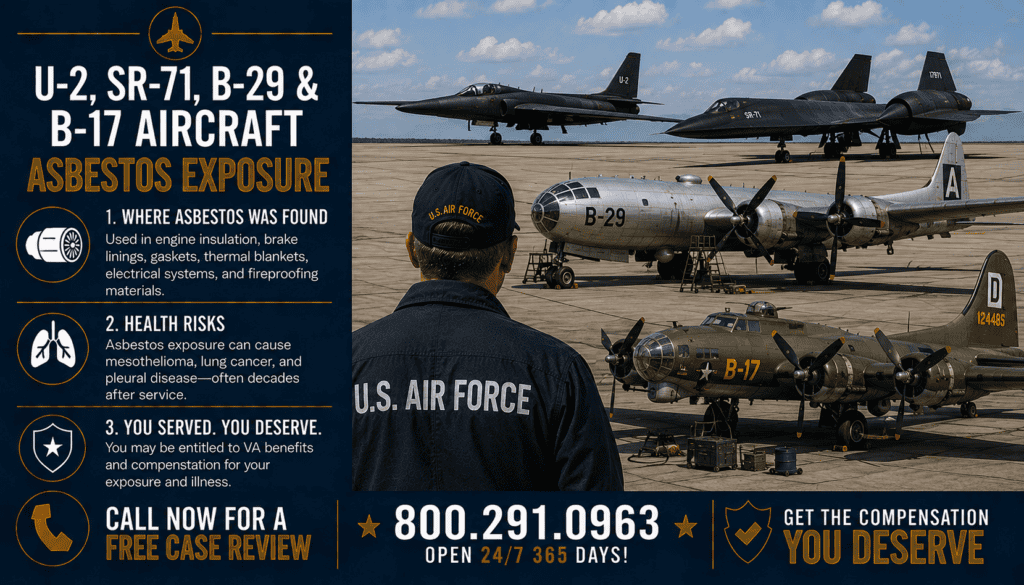
✈️ U-2, SR-71, B-29 & B-17 Aircraft
Legacy Airframe Asbestos Insulation Risks
From World War II through the Cold War, the B-17 Flying Fortress, B-29 Superfortress, U-2 Dragon Lady, and SR-71 Blackbird represented milestones in American military aviation. Yet across these eras, one constant remained — the widespread use of asbestos insulation to manage the intense heat generated by engines, exhausts, and avionics systems. Whether in bomber compartments or reconnaissance fuselages, airmen and maintenance crews faced daily exposure to airborne asbestos fibers that now cause mesothelioma and other lung diseases decades later.
This guide explains how asbestos exposure occurred in these aircraft, who was most affected, and how veterans and mechanics can pursue VA disability, trust-fund, and civil compensation.
📞 Need help filing a veteran claim for aircraft asbestos exposure? Call 800.291.0963 for free assistance today.
🧭 Step 1: Asbestos Use in Historic Military Aircraft
Each aircraft relied on asbestos for heat resistance and fire control during long-range missions.
Common asbestos applications:
-
⚙️ Engine manifolds, gaskets, and exhaust insulation.
-
🧱 Cabin and cockpit wall insulation for heat protection.
-
💨 Ducting and ventilation linings.
-
🔩 Electrical and instrument wiring sheaths.
-
🪖 Brake linings and clutch assemblies on landing gear.
Goal: Understand that nearly all legacy bombers and reconnaissance planes used asbestos throughout their airframes.
📁 Step 2: Aircraft Models and Service Eras
WWII Bombers:
-
B-17 Flying Fortress (1936–1945) — built with asbestos in engines, ducts, and brakes.
-
B-29 Superfortress (1942–1950s) — cockpit, bomb-bay insulation, and engine heat panels.
Cold War Reconnaissance Aircraft:
-
U-2 Dragon Lady (1956–present) — early models used asbestos in engine seals and avionics bays.
-
SR-71 Blackbird (1966–1999) — high-temperature titanium skin insulated with asbestos blankets and turbine seals.
Goal: Identify the aircraft or era connected to your military service or maintenance career.
🏗️ Step 3: Who Was Exposed
Exposure extended from pilots to ground support and depot technicians.
Highest-risk personnel:
-
🧰 Aircraft Mechanics and Sheet-Metal Workers replacing insulation and panels.
-
⚙️ Engine Technicians repairing gaskets, seals, and turbines.
-
💨 Environmental Systems Specialists handling duct and ventilation insulation.
-
🪖 Pilots and Flight Engineers in asbestos-lined cockpits.
-
🧾 Civilian contractors restoring or maintaining legacy aircraft.
Goal: Match your Air Force specialty to aircraft systems containing asbestos materials.
💼 Step 4: How Exposure Occurred
Even minor maintenance activities released microscopic fibers into enclosed hangars and cabins.
Common exposure scenarios:
-
🔧 Removing asbestos-lagged engine insulation and exhaust shields.
-
⚙️ Grinding or sanding asbestos brake pads and gaskets.
-
💨 Cleaning aircraft interiors or ventilation ducts without masks.
-
🧱 Stripping or repainting panels lined with asbestos fireproofing.
-
🧾 Restoring old bombers for museum display or air shows.
Goal: Document repetitive or high-dust tasks linked to airborne exposure.
🩺 Step 5: Health Risks for Airmen and Mechanics
Prolonged exposure causes severe illnesses that may not appear for 30–50 years.
Common asbestos-related diseases:
-
💀 Pleural or peritoneal mesothelioma.
-
🫁 Asbestosis and lung fibrosis.
-
💬 Pleural plaques and recurrent effusions.
-
🩺 Lung, throat, and gastrointestinal cancers.
Goal: Obtain medical imaging, pathology reports, and lung-function tests for diagnosis.
⚖️ Step 6: VA Disability Benefits for Exposed Veterans
Airmen diagnosed with asbestos-related diseases qualify for 100% VA disability compensation.
VA benefit highlights:
-
💰 Tax-free monthly compensation.
-
🏥 Access to VA mesothelioma specialists and treatment facilities.
-
🕊️ DIC survivor benefits for families.
-
⚖️ Separate asbestos trust-fund claims permitted.
Goal: File both VA and trust-fund claims to maximize total financial recovery.
🧱 Step 7: Civilian Restoration & Museum Exposure
Restoration crews and volunteers working on legacy bombers have faced renewed asbestos exposure.
Eligible claimants include:
-
⚙️ Civilian mechanics restoring B-17 or B-29 aircraft.
-
💵 Trust-fund and civil lawsuit claimants from aircraft part manufacturers.
-
🧾 SSDI and workers’-comp applicants.
-
🕊️ Surviving family members of affected restoration workers.
Goal: Preserve employment, volunteer, or museum-service records for evidence.
🧠 Step 8: Evidence That Strengthens Aircraft Claims
Helpful documentation:
-
🧾 Air Force or civilian service records listing aircraft assignments.
-
⚙️ Maintenance manuals or technical orders referencing asbestos components.
-
💬 Witness statements from flight-line or restoration coworkers.
-
🧱 Air Force and museum abatement records confirming asbestos removal.
Goal: Correlate specific aircraft work with proven asbestos exposure sources.
🌈 Step 9: Abatement and Modernization Efforts
Many legacy aircraft underwent asbestos removal during restoration or preservation.
Key cleanup milestones:
-
🏗️ B-17 and B-29 museum aircraft abatement in the 1980s–2000s.
-
⚙️ U-2 and SR-71 maintenance retrofits with non-asbestos insulation.
-
🧾 EPA-supervised decontamination and disposal of old parts.
Goal: Use abatement records and safety reports to support historical exposure claims.
💬 Step 10: Filing Your Claim
Next steps:
-
🧭 Verify aircraft service or maintenance assignments.
-
⚙️ Gather diagnostic and exposure documentation.
-
🧾 File VA, trust-fund, and civil claims together.
-
📞 Call 800.291.0963 for free claim evaluation.
Goal: Secure your compensation rights before deadlines or evidence loss.
🤝 Where to Get Help
Our advocates assist Air Force veterans, mechanics, and restorers exposed while serving on or working with historic aircraft.
📞 Call 800.291.0963 today for dedicated veteran claim assistance.
🧭 Summary
From the piston-driven B-17 and B-29 bombers to the jet-powered U-2 and SR-71, asbestos was standard in aircraft insulation, brakes, and engine systems for over four decades. Veterans and mechanics who breathed these fibers are now at risk for mesothelioma and other deadly illnesses. Filing VA disability, trust-fund, and civil claims ensures the recognition and justice their service deserves.
Your legacy is part of aviation history—let your recovery be part of justice.
800.291.0963