Guide to Asbestos Trust Fund Claims - (800) 291-0963

U.S. Air Force Asbestos Exposure

U.S. Air Force Mesothelioma Lawsuits - Mesotheliomahelp.center

U.S. Air Force Mesothelioma Lawsuits

Asbestos exposure remains a serious risk for many U.S. Air Force veterans who were unknowingly exposed during service. From the 1940s to the late 1970s, asbestos was used in aircraft parts, engine insulation, brake systems, piping, hangars, and base housing due to its heat resistance and fireproofing properties. While effective, asbestos is now known to cause life-threatening illnesses like mesothelioma, asbestos lung cancer, and asbestosis. Many veterans developed symptoms decades after exposure. Today, veterans are filing Air Force asbestos exposure lawsuits against the manufacturers of asbestos-containing products. These lawsuits seek compensation for medical bills, lost wages, and pain and suffering.

Veterans diagnosed with mesothelioma or asbestos-related diseases may also qualify for VA benefits, asbestos trust fund payouts, or wrongful death compensation for family members.

Visit our Air Force Asbestos Exposure Articles

Air Force Ranks and Asbestos Exposure

Here’s what you’ll learn when you read this page:

  • ✈️ Asbestos was widely used in U.S. Air Force aircraft — found in brakes, insulation, wiring, gaskets, and cockpit materials.

  • 👨‍🔧 Airmen, mechanics, and ground crews faced exposure during maintenance, aircraft repairs, and inspections.

  • ⚠️ Small spaces made exposure worse — technicians worked in tight engine bays, crawlspaces, and on panels where dust was easily inhaled.

  • 🎖️ Many Air Force veterans now suffer from mesothelioma, lung cancer, or asbestosis—often developing illnesses decades after their service without realizing the danger.

  • Visit our 100 Military Veteran’s Asbestos Exposure Article Archive

History of Asbestos Exposure for Air Force Veterans

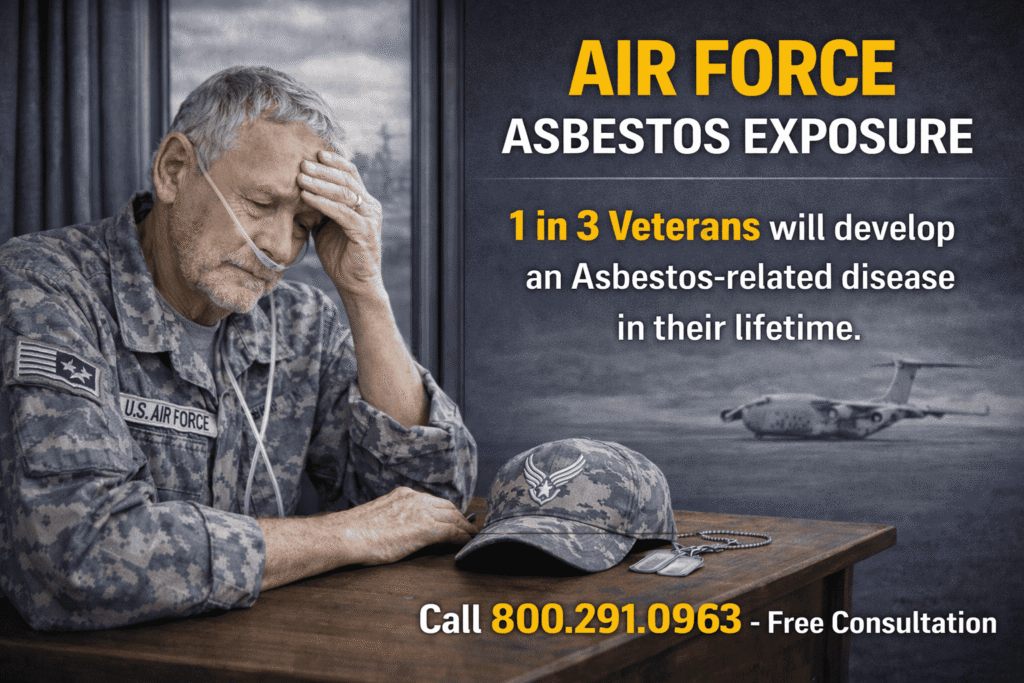
U.S. Air Force Asbestos Exposure Recruiting PosterAsbestos use was widespread throughout U.S. Air Force operations during the mid-20th century, particularly from the 1940s through the late 1970s. This heat-resistant mineral was considered essential for fireproofing and insulation across a wide range of military applications. It was found in aircraft insulation, brake pads, engine gaskets, electrical wiring, piping, and floor tiles within hangars, flight lines, and control towers. Asbestos was also heavily used in the construction of barracks, mess halls, boiler rooms, administrative buildings, and base housing on Air Force installations worldwide. Service members who worked in maintenance, engineering, or construction roles were especially vulnerable, though even those in non-technical roles faced exposure through contaminated environments. At the time, many personnel were never warned of the dangers, and protective measures were rarely implemented. Asbestos-related diseases such as mesothelioma, asbestosis, and lung cancer often take 20 to 50 years to develop, meaning many Air Force veterans are just now receiving diagnoses linked to past military exposure. Today, those affected may be eligible for VA benefits, medical support, and asbestos trust fund compensation.


Number of U.S. Service Members Exposed to Asbestos in the U.S. Air Force

The U.S. Air Force extensively used asbestos in aircraft, maintenance facilities, and support equipment for its heat-resistant and insulating properties. Pilots, ground crews, and support personnel faced significant asbestos exposure during their service.

Air Force Asset Type Estimated Number of Service Members Exposed
Military Aircraft (e.g., B-52 Stratofortress, F-4 Phantom) Approximately 150,000 pilots, maintenance, and ground crews served with asbestos-containing aircraft.
Air Force Bases and Hangars Around 120,000 personnel worked in bases and hangars insulated with asbestos materials, facing prolonged exposure.
Support Vehicles and Equipment Nearly 60,000 Air Force members operated or maintained vehicles and equipment with asbestos insulation or gaskets.
Missile and Rocket Facilities Estimated 30,000 personnel served in missile silos and rocket maintenance facilities containing asbestos insulation.

Total Estimated Exposure: Over 360,000 U.S. Air Force personnel served in roles and locations with significant asbestos exposure risk.


Common Places of Asbestos Exposure for Air Force Veterans

🛠️ Aircraft Hangars & Repair Bays

Aircraft hangars and maintenance bays were filled with asbestos in brake pads, gaskets, and engine insulation. Servicing engines or replacing parts disturbed these materials, releasing toxic fibers that circulated through enclosed maintenance environments.

🔥 Power Plants & Boiler Rooms

Air Force bases relied heavily on asbestos within boilers, heating systems, pipes, and electrical panels. Boiler technicians, electricians, and maintenance crews inhaled asbestos dust during repairs, cleanouts, and insulation replacements in poorly ventilated mechanical rooms.

✈️ Flight Line Work

Flight line personnel, including mechanics and fuel technicians, handled asbestos gaskets, seals, and heat shields in aircraft systems. Routine servicing disturbed fibers, which contaminated the air and clung to uniforms, tools, and equipment.

🏠 Base Housing & Barracks

Military housing and barracks built before asbestos bans contained asbestos in floor tiles, ceiling panels, siding, and duct insulation. Renovation, demolition, or everyday deterioration exposed both maintenance workers and residents to inhaled fibers.

📡 Radar, Control, and Communication Centers

Asbestos was common in electrical wiring insulation, panel boards, and electronic components. Repairs or upgrades disturbed these hidden materials, exposing technicians and operators working long hours inside confined, climate-controlled radar and communications facilities.


How Do You Prove Asbestos Exposure in the U.S. Air Force? 📋

Air Force veterans were often unknowingly exposed to asbestos fibers at various assignments, leading to long-term health risks.

Common Ways to Prove Exposure:

  • 🗂️ Service records showing aircraft maintenance, HVAC, or facility operations

  • 🪖 MOS documentation indicating high-risk roles (e.g., aircraft mechanic, electrician)

  • 🏥 Medical diagnosis of mesothelioma or asbestos-related cancer

  • 👥 Buddy statements confirming asbestos conditions in hangars or housing

  • 🛠️ Work orders showing involvement with asbestos-laden components

  • ⚖️ Legal & VA specialists assist in verifying exposure and disease links


Who in the U.S. Air Force Is Eligible for Compensation? 🎖️

Veterans diagnosed with asbestos-related diseases may qualify for trust funds, lawsuits, and VA benefits.

You may qualify if:

  • 📅 Served before 1990 in aircraft or base maintenance

  • 🧰 Worked with asbestos brake pads, insulation, wiring, or ceiling tiles

  • 🩺 Diagnosed with mesothelioma or asbestos lung cancer

  • 🏢 Stationed in older hangars, dormitories, or boiler rooms

  • 💔 Family member died from asbestos-related disease linked to Air Force service

Veterans often qualify for multiple asbestos trust fund claims and legal settlements, even years after exposure.


Benefits Available for U.S. Air Force Families 💼

Families of veterans diagnosed with asbestos illnesses may qualify for financial support and aid.

Air Force families may receive:

  • 💵 Monthly support payments to offset lost household income

  • 🎖️ VA Dependency and Indemnity Compensation (DIC) for surviving spouses/dependents

  • ⚖️ Wrongful death lawsuit settlements against asbestos manufacturers

  • ⚰️ Funeral cost reimbursement through VA burial benefits

  • 👗 Secondhand asbestos exposure claims for spouses exposed via uniforms or gear

  • 🤝 Free legal assistance for trust fund and court claims


✈️ High-Risk Air Force Jobs & Ranks with Asbestos Exposure

Air Force personnel across all ranks—from Airman Basic to Senior Master Sergeant, Warrant Officers, and Commissioned Officers—faced significant asbestos exposure, especially between the 1940s and 1980s. Many worked in enclosed hangars, aircraft maintenance bays, and base facilities where asbestos-containing materials were widely used.

🔧 High-risk Air Force jobs included aircraft mechanics, sheet metal workers, HVAC specialists, powerplant technicians, electricians, and civil engineering crews. These roles often required direct contact with asbestos in engine insulation, brake linings, wiring insulation, valve gaskets, and fireproof panels.

🏢 Base operations support personnel—including construction teams, plumbers, flooring installers, and boiler technicians—also disturbed asbestos in wallboards, ceiling tiles, pipe insulation, and adhesives during maintenance and building renovations.

🛑 Regardless of rank, service members often performed duties without proper respiratory protection or awareness of asbestos hazards. Over time, this put thousands at risk of developing mesothelioma, asbestosis, lung cancer, and other diseases linked to airborne asbestos fibers.


U.S. Air Force Personnel and Asbestos Exposure

U.S. Air Force personnel were widely exposed to asbestos during the 20th century while working on aircraft, base infrastructure, and support systems. From mechanics and electricians to firefighters and clerical staff, countless service members unknowingly inhaled asbestos fibers during their daily duties, putting them at risk for mesothelioma and other serious diseases.

Job Title Asbestos Exposure Description
✈️ Aircraft Crew Chiefs Crew chiefs inspected and repaired multiple aircraft systems containing asbestos. Overseeing brake, gasket, and insulation maintenance exposed them to fibers during inspections, hangar work, and flight line operations without consistent respiratory protection.
🛠️ Aircraft Maintenance Crews Maintenance specialists serviced jet engines, brakes, gaskets, and exhaust systems. Frequent replacements disturbed asbestos linings, releasing dangerous fibers that circulated throughout hangars and repair bays, contaminating both the air and workers’ uniforms.
⚙️ Aerospace Ground Equipment Mechanics These mechanics serviced power units, heating systems, and compressors insulated with asbestos. Repairs on engines and exhausts disturbed components, filling maintenance shops with toxic dust that spread easily across work areas.
🏢 Administrative & Clerical Staff Office staff were exposed within asbestos-insulated buildings. Fibers from deteriorating floor tiles, ceiling panels, and duct linings circulated through ventilation, contaminating administrative workspaces despite being far removed from aircraft or flight line duties.
🔥 Boiler & HVAC Technicians Boiler and HVAC technicians repaired asbestos-insulated pipes, ductwork, and furnaces. Replacing blankets or cleaning chambers disturbed asbestos layers, releasing fibers that spread through mechanical rooms and base heating systems during maintenance tasks.
🧱 Carpentry & Structural Specialists Carpenters built and renovated asbestos-laden walls, roofing, and ceilings. Cutting, sanding, and drilling panels contaminated shops with dust, exposing workers during construction and leaving residues across tools, uniforms, and work areas.
🏗️ Civil Engineering & Base Maintenance Personnel Engineers and maintenance personnel renovated barracks, hangars, and offices lined with asbestos insulation. Demolition and repair disturbed fibers, which spread across sites and contaminated tools, equipment, and protective clothing of workers.
🧯 Crash Rescue Teams Crash rescue specialists encountered asbestos in burning aircraft wreckage, insulation debris, and fireproof suits. Emergency responses exposed them to toxic fibers released during firefighting, contaminating sites and lingering in rescue gear.
Electricians & Power Production Technicians Electricians handled asbestos-insulated wiring, panels, and backup generators. Stripping insulation, repairing switchgear, and rewiring older systems disturbed asbestos fibers, which collected inside confined workspaces and ventilation ducts throughout Air Force bases.
🧪 Environmental Health & Bioenvironmental Engineers Specialists monitored asbestos hazards in inspections, sampling, and abatement planning. Handling contaminated debris and supervising removal placed them at risk, particularly before modern protective standards were widely enforced within Air Force facilities.
🚪 Dormitory & Housing Maintenance Staff Housing crews replaced asbestos floor tiles, ceiling insulation, and roofing in Air Force dormitories. Renovations disturbed settled dust, contaminating living spaces and exposing workers, residents, and custodians to long-term health hazards.
🚰 Plumbers & Utility System Workers Utility teams repaired asbestos-wrapped pipes, valves, and boilers. Cutting or removing insulation released fibers into pump rooms and tunnels, exposing both workers and nearby personnel inside crowded base facilities.
🛢️ Fuel System Maintenance Personnel Specialists repaired asbestos-insulated tanks and pipelines. Removing seals and scraping gaskets disturbed fibers, which clung to clothing, circulated through confined fuel compartments, and spread to maintenance shops after servicing.
🚒 Firefighters & Safety Specialists Firefighters wore asbestos-containing gear, blankets, and masks. Training exercises and real emergencies exposed them to airborne asbestos from burning structures and equipment, contaminating protective suits and gear storage facilities afterward.
🌡️ Laboratory Technicians Lab personnel used asbestos-insulated furnaces, gloves, and burners during tests. Handling heated equipment and replacing insulation disturbed asbestos materials, releasing dust that lingered within confined laboratory facilities.
🔩 Machinists & Tool Specialists Machinists shaped and repaired asbestos-insulated components for engines and support machinery. Grinding, sanding, and machining parts directly released fibers into the air, contaminating workshops and clothing daily.
🛠️ Munitions Handlers & Ordnance Technicians Ordnance crews handled asbestos-lined containers, carts, and seals. Repairs on transport equipment disturbed asbestos gaskets, spreading fibers across flight lines, bunkers, and weapons storage areas during routine operations.
🏚️ Facilities Maintenance Teams Maintenance crews renovated asbestos-lined mess halls, classrooms, and storage depots. Replacing ceiling tiles, flooring, and roofing disturbed asbestos, releasing fibers into occupied facilities where both workers and residents inhaled contamination.
🛩️ Sheet Metal Workers Sheet metal specialists cut and shaped ducts and panels lined with asbestos insulation. Grinding, drilling, or removing asbestos-protected materials released fibers, contaminating shops and exposing crews during fabrication and aircraft modification.
🔧 Welders & Metal Fabricators Welders worked around asbestos-insulated engine panels and ducts. Grinding, cutting, or welding disturbed fireproofing materials, spreading asbestos dust throughout poorly ventilated hangars and maintenance areas.

Common Asbestos Products Used in Air Force Operations

Asbestos was incorporated into hundreds of materials across Air Force aircraft, vehicles, and base facilities. Airmen and civilian workers routinely contacted these components, often disturbing asbestos fibers during daily maintenance, fueling, construction, or repair operations.


🏠 Adhesives & Flooring Materials

Air Force dormitories, offices, and hospitals used asbestos floor tiles, adhesives, and mastic. Renovations, sanding, or natural wear released fibers into living and work spaces. Custodians, carpenters, and residents were routinely exposed during maintenance.

🧱 Asbestos Insulation

Insulation containing asbestos lined aircraft engines, hangar walls, boilers, and base housing. Cutting, removing, or repairing deteriorating insulation exposed mechanics and engineers to fibers that circulated freely inside confined maintenance bays and poorly ventilated facilities.

🚗 Automotive Brake & Clutch Parts

Base vehicles and support trucks contained asbestos brake linings and clutch facings. Mechanics grinding or replacing parts disturbed asbestos dust, which accumulated in enclosed garages and hung in the air long after work ended.

🛑 Brake Linings (Aircraft & Equipment)

Aircraft wheel brakes and ground support equipment contained asbestos linings to withstand heat. Routine changes, sanding, and overhauls released heavy dust clouds, exposing maintenance crews on flight lines and inside crowded hangar repair bays.

🔧 Cement & Sealants

Air Force engineers used asbestos cement and sealants to secure ducts, pumps, and fuel systems. Scraping or cutting old sealants released fibers. Fuel specialists and construction teams inhaled dust inside confined tanks and maintenance rooms.

🔩 Gaskets & Seals

Jet engines, fuel pumps, valves, and compressors relied on asbestos gaskets. Replacing or scraping gaskets disturbed asbestos layers, releasing fibers that clung to uniforms, tools, and skin, contaminating both hangars and repair shops.

🔥 Fireproof Coatings & Paints

Asbestos-based coatings were applied to hangar walls, aircraft panels, and piping. Drilling, sanding, or fire damage released fibers into the air. Firefighters, painters, and engineers inhaled asbestos dust during training and structural repair work.

🚰 Pipe Lagging & Wrap

Pipes carrying steam, water, and exhaust gases across Air Force bases were wrapped in asbestos. Deteriorated lagging crumbled easily. Plumbers and custodians inhaled dust during replacements, while fibers circulated through utility tunnels and boiler rooms.

⚡ Electrical Panel Insulation

Fuse boxes, circuit breakers, and switchgear panels used asbestos for fire resistance. Electricians repairing wiring or replacing equipment disturbed asbestos insulation, releasing toxic fibers inside generator rooms, communications centers, and aircraft maintenance bays.

🛢️ Fuel System Sealants

Jet fuel tanks and lines were sealed with asbestos compounds to reduce fire risk. Technicians scraping, resealing, or repairing tanks released asbestos fibers, especially inside confined aircraft compartments where ventilation was minimal.

🛠️ Heat Shields & Thermal Barriers

Aircraft engines, exhaust manifolds, and ground power units used asbestos heat shields. Routine replacement or damage exposed maintenance crews to airborne fibers, which spread across hangar floors and contaminated nearby personnel not directly involved in repairs.

🔩 Packing Materials

Air Force pumps, valves, and engines contained asbestos packing for sealing high-pressure systems. Cutting or repacking these components disturbed asbestos fibers, which contaminated workshops and flight line tool areas, exposing mechanics and engineers daily.

🚪 Roofing & Siding Materials

Base facilities—including barracks, hangars, and offices—used asbestos shingles, siding, and roofing sheets. Deterioration or renovation released asbestos dust. Construction teams, roofers, and maintenance staff inhaled fibers while working overhead or replacing weather-damaged sections.

🔬 Welding Blankets & Protective Gear

Welding shops and flight line crews used asbestos blankets, gloves, and aprons for heat protection. Cutting, grinding, or welding disturbed asbestos fibers embedded in gear, exposing both welders and nearby airmen in shared workspaces.


⏳ Long-Term Health Consequences

Exposure to airborne asbestos fibers can cause mesothelioma, asbestos-related lung cancer, and asbestosis. Because these illnesses can take 20 to 50 years to develop, many veterans are just now receiving their diagnoses—often long after retirement or separation from the Air Force.


⚖️ Legal Help & Compensation for Air Force Veterans

If you or a loved one served in the U.S. Air Force and later developed an asbestos-related illness, you may qualify for:

  • 🩺 VA Disability Compensation

  • 👪 VA Dependency and Indemnity Compensation (DIC)

  • 💰 Asbestos Trust Fund Claims

  • ⚖️ Wrongful Death Lawsuits

  • ⚰️ Funeral Cost Reimbursement

  • 🤝 Free Legal Assistance for Families

Many veterans and their families are now filing lawsuits or VA claims to recover compensation for medical bills, lost wages, and long-term care.


Air Force Vehicles with Asbestos Components

Air Force operations relied on a variety of vehicles for transport, fueling, construction, firefighting, and maintenance. Many contained asbestos in brakes, clutches, gaskets, or insulation, exposing mechanics, operators, and support personnel during routine servicing and repairs.


🚑 Ambulances & Medical Transport Vehicles

Air Force ambulances and medical trucks contained asbestos brakes, clutches, and gaskets. Mechanics replacing worn components disturbed asbestos dust. Patients, medics, and drivers were indirectly exposed when asbestos fibers circulated through vehicle interiors during regular use.

🚜 Bulldozers, Backhoes & Heavy Equipment

Construction units operated bulldozers, backhoes, and graders with asbestos linings in brakes, clutches, and insulation. Servicing and overhauls disturbed asbestos components, contaminating base motor pools, workshops, and construction sites where engineers, operators, and support crews labored.

🚒 Crash Trucks & Firefighting Vehicles

Firefighting trucks used asbestos in brake systems, engine gaskets, and protective heat shields. Repairs disturbed asbestos parts, while crash response operations exposed firefighters to airborne fibers released from both vehicles and burning aircraft wreckage.

🏗️ Cranes & Forklifts

Cranes and forklifts contained asbestos in brakes and engine insulation. Mechanics replacing linings disturbed asbestos dust, while operators inhaled fibers during routine lifting tasks across warehouses, supply depots, and aircraft hangar storage facilities.

⚡ Generators & Power Units

Mobile generators and auxiliary power units were lined with asbestos in wiring and gaskets. Technicians disturbed asbestos during repairs, releasing fibers inside enclosed generator rooms and contaminating nearby equipment, tools, and uniforms.

🛠️ Ground Support Equipment (AGSE)

Tow tractors, maintenance trucks, and hydraulic carts used asbestos in brakes and clutches. Flight line servicing released asbestos fibers, contaminating ramps, hangars, and parked aircraft areas where large numbers of airmen worked daily.

🛻 Military Jeeps

Standard-issue jeeps carried asbestos gaskets, brake pads, and clutch facings. Mechanics disturbed asbestos during repairs, while drivers and passengers inhaled fibers circulating inside enclosed cabs after asbestos components deteriorated or failed during operations.

🚚 Personnel Buses & Surplus Vehicles

Base buses and repurposed surplus vehicles had asbestos brake pads, engine gaskets, and insulation. Maintenance disturbed asbestos parts, releasing fibers into garages and contaminating passenger cabins, exposing both vehicle operators and transported personnel.

🚚 Snow Removal Vehicles

Air Force snowplows and de-icing trucks contained asbestos brake systems, clutches, and insulated heaters. Winter servicing disturbed asbestos parts, exposing maintenance teams inside heated garages and operators clearing flight lines of snow and ice.

🛻 Service Trucks & Mobile AC Units

Service trucks and mobile air-conditioning units used asbestos in wiring, clutches, and insulation. Repairs disturbed asbestos materials, releasing fibers into base garages, hangars, and confined work areas where technicians and support staff were stationed.

🚚 Tanker Trucks & Fuel Vehicles

Fuel tankers and refueling trucks carried asbestos gaskets, seals, and exhaust insulation. Fuel specialists and mechanics disturbed asbestos while cleaning tanks, scraping gaskets, or repairing exhausts inside motor pools and enclosed hangar refueling areas.

🚛 Tractors & Towing Vehicles

Tractors and towing vehicles contained asbestos brake pads, clutches, and insulation. Mechanics replacing parts disturbed asbestos, contaminating hangar bays and flight line ramps. Dust spread to nearby aircraft and equipment staging areas during routine operations.

🚚 Transport Trucks

Transport trucks used for heavy hauling contained asbestos in brakes, clutches, and gaskets. Wear and tear released fibers. Mechanics and drivers were exposed during repairs and routine cargo transport across bases and deployment zones.

🏍️ Utility Vehicles & Scooters

Small utility vehicles, scooters, and flight line carts carried asbestos brakes, gaskets, and seals. Servicing these light-duty vehicles disturbed asbestos, releasing fibers that contaminated enclosed garages and open flight line areas where airmen worked closely.


👪 Family Members Were Also Exposed

Spouses and children faced asbestos risks by:

  • 🏠 Living near deteriorating asbestos materials in base housing

  • 🧹 Cleaning asbestos-laced uniforms

  • 🌀 Performing routine tasks near contaminated vents, tiles, or ductwork


✅ Key Takeaways

  • Asbestos was widespread—from aircraft engines to dormitory ceilings.

  • Most exposure happened unknowingly during daily duties or living.

  • Veterans and their families may be eligible for VA benefits, legal claims, or asbestos trust fund compensation if diagnosed with mesothelioma or related diseases.


🛩️ Air Force – Compensation Options for Veterans with Asbestos Illness

📜 Know Your Rights

If you served in the U.S. Air Force before the 1980s and worked in aircraft maintenance, base construction, or lived in military housing, you may have been exposed to asbestos. Veterans diagnosed with mesothelioma, asbestos lung cancer, or asbestosis may qualify for significant compensation and lifetime benefits.


💰 Available Compensation Sources

🏛️ Asbestos Trust Funds

  • Over $30 billion is available nationwide.

  • Payouts often range from $100,000 to over $600,000 depending on job duties and diagnosis.

⚖️ Lawsuits Against Manufacturers

  • These are not filed against the military or government.

  • Most cases settle out of court for $1 million to $2.4 million, tax-free.

🇺🇸 VA Disability Compensation

  • Offers 100% tax-free monthly benefits to veterans with asbestos-related diseases linked to service.

🫂 VA DIC Benefits

  • Provides monthly financial support to surviving spouses and dependents of veterans who died from service-connected illnesses.

🏥 VA Health Care Access

  • Free treatment for mesothelioma and lung cancer at VA centers of excellence, including Boston, Los Angeles, and Houston.

⚰️ Wrongful Death Claims

  • Can cover funeral costs, medical expenses, and lost household income.

  • Often result in multi-million-dollar settlements.

📆 Structured Settlements

  • Provides regular payments over time (monthly or yearly), with potential tax advantages.

👷 Workers’ Compensation

  • Available for civilian exposure during post-service employment. Covers lost wages and medical bills.

🧾 SSDI Benefits

  • For veterans under age 65 who are unable to work due to illness.

  • Can be received in addition to VA benefits and legal settlements.


💡 Tip for Veterans & Families:

Many veterans are eligible for compensation from multiple sources. Working with a VA-accredited attorney or asbestos legal team can help maximize your total benefits and avoid common application errors.


🧾 U.S. Air Force Asbestos Settlements

Here are examples of real asbestos-related settlements involving U.S. Air Force veterans:

  • $7.6M Settlement – Aircraft Mechanic
    Exposed to asbestos brake pads, engine gaskets, and insulation while maintaining jets in the 1960s–70s. Diagnosed with mesothelioma.

  • $4.2M Settlement – Power Plant Operator
    Worked with asbestos-insulated turbines and piping systems on Air Force bases. Developed lung cancer at age 72.

  • $3.7M Settlement – Barracks Maintenance Worker
    Removed asbestos ceiling tiles and pipe wrap in housing units across multiple bases. Diagnosed with pleural mesothelioma.

  • $5.4M Wrongful Death Verdict – Electrician’s Family
    Airman worked in electrical control rooms insulated with asbestos. Family awarded after his death from mesothelioma.

  • $6.1M Settlement – Firefighting Instructor
    Instructed fire safety classes using asbestos-laced blankets and gear. Diagnosed with mesothelioma decades after retirement.

⚠️ If you or a loved one served in the U.S. Air Force and developed mesothelioma or an asbestos-related disease, compensation is available.


✅ Find Out If You Qualify Today!

25 Years Working with Diagnosed Mesothelioma Victims!

⚖️ Our mesothelioma lawyers work on a contingency fee basis, meaning:
NO MONEY OUT OF POCKET for victims or their families.
💼 You’ll find our fees among the lowest in the country.

📞 Contact a mesothelioma lawyer today for a free, no-obligation case evaluation.
Call 800.291.0963 to see if you have a valid claim.


❓ FAQs About Mesothelioma Lawsuits

Q: What is asbestos, and why is it dangerous?
🧱 Asbestos is a heat-resistant mineral once widely used in construction and military materials.
⚠️ When disturbed, it releases tiny fibers that can be inhaled, causing serious illnesses like mesothelioma and lung cancer, often decades later.

Q: What are the risks of asbestos exposure?
🚧 Common in pipes, boilers, insulation, and gaskets.
👷 Workers in shipyards, construction, or maintenance face higher risk.
⚠️ Inhaled fibers cause diseases such as mesothelioma, lung cancer, and asbestosis, often years after exposure.

Q: What is mesothelioma, and how does it develop?
🦠 A rare cancer caused by inhaling asbestos fibers.
⏳ Fibers lodge in lung, abdomen, or heart linings and may take 20–50 years to cause disease.

Q: What are symptoms of asbestos exposure?
🚨 Watch for:

  • Persistent cough

  • Chest pain

  • Shortness of breath

  • Fatigue or weight loss

  • Wheezing or coughing up blood
    👩‍⚕️ Seek medical help if you experience these, especially after known exposure.

Q: What should I do if diagnosed with mesothelioma or lung cancer?
⚖️ Get legal help to pursue compensation
📂 Gather service and exposure records
🩺 Explore treatment options with your doctor
🤝 Consider joining support groups for emotional support

Q: Can I get compensation for asbestos-related illness?
💰 Yes, veterans and workers may qualify for lawsuits, VA claims, or asbestos trust fund compensation to cover medical costs, lost income, and more.

Q: Are asbestos trust funds available?
🏦 Many companies created trust funds to compensate victims.
⚖️ An attorney can help file claims and secure the compensation you deserve.

Q: How long after exposure does mesothelioma appear?
⏳ Mesothelioma often takes 20–50 years to develop, delaying diagnosis for decades after initial exposure.


Take Action Today!

U.S. Air Force Asbestos Exposure from Air Force Aircraft

⚠️ Don’t Wait — Get Legal Help Now!

If you or a loved one has been diagnosed with mesothelioma or any asbestos-related disease, it’s crucial to act quickly.

⚖️ Consult with a mesothelioma lawyer today to explore your legal options and understand your rights to compensation.

🩺 Early diagnosis and legal guidance are essential for securing the treatment and financial support you deserve.

🎖️ Thank you for serving in the U.S. Air Force. Your service is still appreciated!


📞 Talk to a Real Live Person Now!

💼 Contact a mesothelioma lawyer today for a free, no-obligation case evaluation.

📱 Call 800.291.0963 to find out if you have a valid claim.


Find Out If You Qualify Today!

25 Years Working With Diagnosed Mesothelioma Victims!

Our Mesothelioma lawyers work on a contingency fee basis.

This means NO MONEY OUT OF POCKET EXPENSES by the asbestos victims or their families. You will find the contingency fees to be among the lowest in the country.

Talk to a real live person!
Contact a mesothelioma lawyer today for a free, no-obligation case evaluation. 

Call (800) 291-0963 to find out if you have a valid claim.

Free Mesothelioma Case Evaluation

Get Answers From Expert Mesothelioma Attorneys