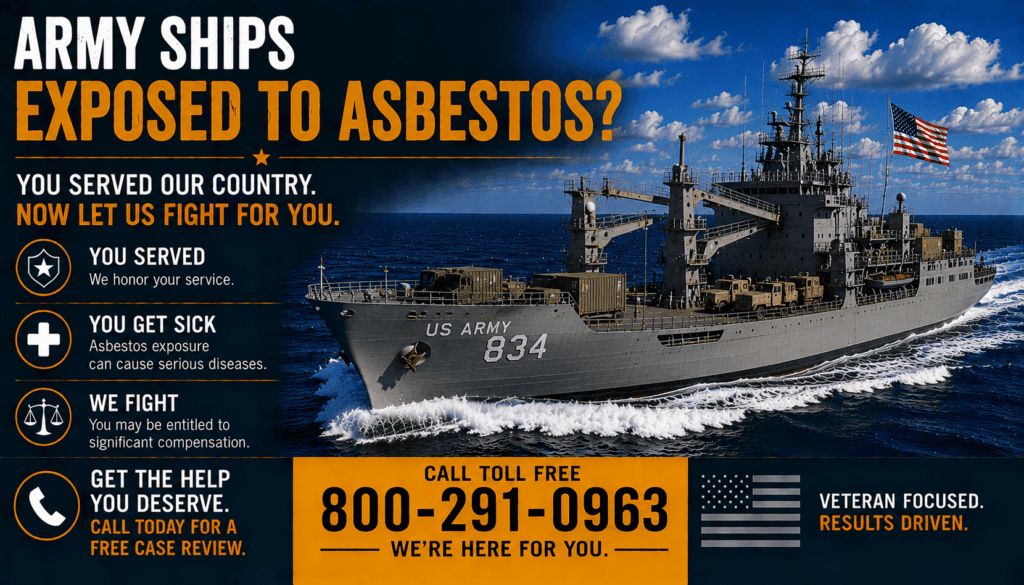
🚢 Army Ships Asbestos Exposure
U.S. Army transport and logistics vessels contained asbestos insulation, boiler systems, pipe lagging, engine-room fireproofing, gaskets, pumps, and electrical components—exposing Army personnel and civilian crews during transport missions, cargo operations, and vessel maintenance.
Although most people associate ships with the Navy, the U.S. Army historically operated and maintained its own fleet of transport and logistics vessels through the Army Transportation Corps. From World War I through the late 1970s, Army-operated ships were constructed with extensive asbestos materials to withstand high heat, fire risk, and mechanical stress.
As vessels aged, insulation deteriorated and maintenance activities disturbed asbestos-containing components. Engine overhauls, pipe repairs, boiler servicing, and ship retrofits released airborne fibers into confined compartments. Many Army veterans and civilian maritime workers are now being diagnosed decades later with mesothelioma, lung cancer, asbestosis, and pleural disease.
🧱 Why Army Ships Used Asbestos
Army transport vessels operated under demanding maritime conditions.
Asbestos was widely used because it:
🔥 Resisted extreme boiler and engine heat
🧯 Provided critical fireproofing protection
🌊 Insulated steam and fuel pipe systems
⚙️ Withstood vibration and heavy cargo operations
⚡ Protected electrical systems from heat damage
💲 Extended durability during long deployments
These properties made asbestos standard in military ship construction for decades.
⚙️ Where Asbestos Was Found on Army Ships
Asbestos was installed throughout mechanical and structural systems.
Common asbestos-containing components included:
🔥 Boiler insulation and refractory lining
🌡️ Steam pipe insulation and thermal wrapping
🧱 Engine-room wall and ceiling insulation
🔩 Gaskets, packing, and valve seals
⚡ Electrical panel insulation
🛑 Pump housings and heat shields
Heat cycles, vibration, and salt-air exposure caused asbestos materials to break down over time.
👷 Who Was Exposed on Army Transport Vessels
Exposure extended to military and civilian personnel.
High-risk groups included:
🧑🔧 Marine engineers and mechanics
⚙️ Engine-room operators
⚡ Electrical specialists
🚢 Deck crew assigned below deck
📦 Logistics and cargo personnel
🏗️ Civilian shipyard maintenance workers
Confined ship compartments increased airborne fiber concentration during repairs.
🛠️ Maintenance & Operations That Released Asbestos
Routine servicing disturbed asbestos materials.
Common exposure activities included:
🔥 Boiler inspections and repair
🌡️ Removing deteriorated pipe insulation
🔩 Replacing gaskets and valve packing
⚙️ Engine and pump overhauls
🧹 Cleaning mechanical compartments
🏗️ Ship modernization and retrofit projects
Even short-term maintenance work could generate significant asbestos dust.
🚢 Army Transport & Logistics Vessel Exposure
Army-operated vessels included:
⚓ Troop Transport Ships
⚓ Cargo & Supply Ships
⚓ Hospital Ships (Army-operated during certain periods)
⚓ Harbor Craft & Tugs
⚓ Barge & Landing Craft Units
⚓ Army Logistics Support Vessels (LSVs)
These ships contained heavy asbestos insulation in engine rooms, pipe chases, and below-deck compartments where personnel worked and lived.
🚢 U.S. Army Shipboard Asbestos Exposure
Army maritime vessels were built during an era when asbestos was widely used throughout shipbuilding. From World War I through the late 1970s, asbestos was installed in boilers, steam systems, engine compartments, electrical insulation, fireproof panels, and high-temperature gaskets. Army engineers, transport personnel, and maintenance crews were most at risk when performing mechanical repairs or operating in confined engine-room environments where asbestos fibers accumulated.
🫁 Diseases Linked to Army Ship Asbestos Exposure
Medical research links shipboard asbestos exposure to:
Mesothelioma (pleural and peritoneal)
Asbestos-related lung cancer
Asbestosis
Pleural plaques and pleural thickening
Symptoms often develop 20–50 years after exposure.
⏳ Long Latency Period in Army Maritime Cases
Typical progression includes:
⏱️ Exposure during Army ship service
⏱️ Decades without symptoms
⏱️ Progressive lung or tissue damage
⏱️ Diagnosis later in life
This long latency frequently delays recognition of service-related exposure.
⚖️ Legal Responsibility for Army Ship Asbestos Exposure
Claims do not sue the Army or federal government.
Instead, claims focus on:
🏭 Shipbuilders
🏭 Boiler and insulation manufacturers
🏭 Gasket and valve suppliers
🏭 Electrical component producers
🏭 Companies that failed to warn about asbestos hazards
Many responsible companies later established asbestos trust funds.
🧑⚖️ How a Lawyer Can Help Army Ship Exposure Victims
An experienced asbestos attorney can:
🔍 Identify vessel assignments and service dates
📂 Reconstruct maritime exposure history
🏭 Match exposure to specific manufacturers
🏦 File asbestos trust fund claims
⚖️ Pursue product-liability lawsuits
🏛️ Coordinate VA disability benefits
👨👩👧 Assist families with wrongful death claims
You do not need original vessel logs—military maritime asbestos databases already exist.
❓ Frequently Asked Questions (FAQs)
❓ I served in the Army—how was I exposed on ships?
The Army operated its own fleet of transport and logistics vessels built with asbestos materials.
❓ Was exposure limited to engineers?
No. Asbestos fibers circulated through ventilation systems and shared compartments.
❓ Can I file a claim decades later?
Yes. Claims typically begin at diagnosis.
❓ Can VA benefits and lawsuits both be pursued?
Yes. These are separate recovery options.
❓ Can families file wrongful death claims?
Yes. Surviving family members may be eligible.
📞 Help for Army Ship Asbestos Exposure Victims
If you served aboard Army transport or logistics vessels and were later diagnosed with mesothelioma or another asbestos-related disease, you may still have strong legal options.
📌 You May Be Eligible For:
Asbestos trust fund compensation
Product-liability lawsuits
VA disability benefits
Wrongful death claims
📞 Call 800-291-0963 for a free, confidential Army ship asbestos exposure review
⏱️ No upfront costs • Military maritime cases • Nationwide representation
Serving your country should never have cost your health.