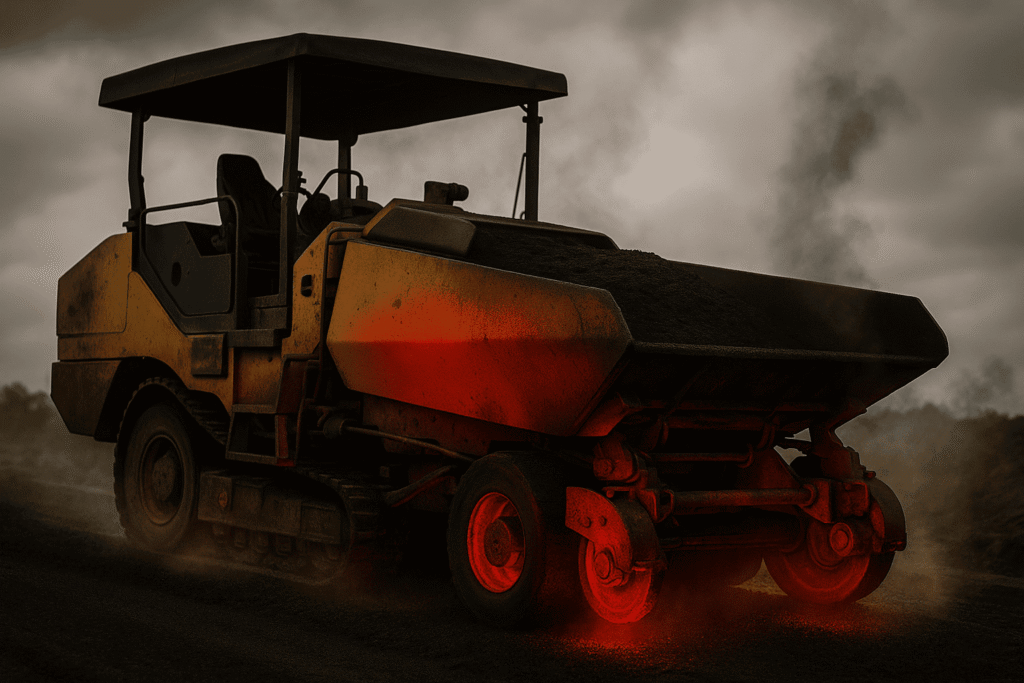
🏞️ Asphalt Pavers – Army Corps of Engineers
Asphalt pavers used by the U.S. Army Corps of Engineers were vital in constructing roads, airfields, and dam infrastructure. These machines operated under extreme heat and vibration, requiring heat-resistant insulation, panels, and engine components—many of which contained asbestos to prevent breakdowns and fires.
Asbestos was commonly used around heated zones, exhaust systems, engine housings, and under operator decks. Mechanics, paver operators, and field crews were exposed when removing or replacing deteriorated insulation, especially during maintenance, retrofitting, or cleaning clogged machinery parts under pressure and heat.
🏞️ Asphalt Pavers – Army Corps of Engineers – What You’ll Learn from This Page:
🚧 Army Corps asphalt pavers contained asbestos insulation and gaskets, especially near hot zones, engines, and exhaust vents. Workers faced fiber exposure during maintenance or insulation removal.
💼 Legal claims are available for veterans, mechanics, and operators exposed while working with or around asphalt pavers and later diagnosed with mesothelioma or asbestos-related diseases.
🛠️ High heat, vibration, and friction wore down asbestos parts quickly, releasing harmful fibers during insulation replacements, upgrades, and regular machine cleaning.
💰 $30+ billion remains in active asbestos trust funds, with claims for paver-related exposure typically settling between $300,000 and $400,000 depending on the case.
🎖️ VA benefits are available to veterans exposed to asbestos while operating or maintaining pavers, with monthly disability compensation often exceeding $3,800/month.
⏳ Lawsuits involving asbestos exposure from pavers often settle between $1 million–$1.4 million. Some verdicts have awarded $5 million or more for severe illness cases.
📋 Free case reviews and home consultations are available through law firms experienced in construction and military asbestos claims.
Estimated Number of People Exposed via Army Corps of Engineers Asphalt Pavers
| Exposure Category | Estimated Number of People Exposed |
|---|---|
| Occupational Exposure (operators, field mechanics) | Over 158,000 exposed during construction and servicing |
| Secondary Exposure (family of paver crew) | Around 21,000 exposed via contaminated clothing |
| Environmental Exposure (construction sites, machine bays) | Nearly 46,000 worked in fiber-laden work zones |
| Product-Based Exposure (insulation, heat gaskets) | About 39,000 exposed handling or replacing asbestos parts |
Total Estimated Exposure: Over 264,000 people.
Why Asbestos Was Used in Army Asphalt Pavers
Asphalt pavers operate under high heat and required fire-resistant materials to function safely and reliably.
-
Heat insulation made with asbestos around engine and exhaust zones
-
Fireproof panels under operator platforms contained asbestos
-
Gaskets and seals used asbestos to prevent heat damage and leaks
-
Sound and heat barriers included asbestos materials to protect operators
-
Exhaust shielding wrapped with asbestos for safety and durability
Heat stress, frequent repairs, and rugged outdoor use led to frequent replacement of asbestos materials.
Army Corps Use of Asphalt Pavers
| Deployment Area | Primary Use | Common Locations |
|---|---|---|
| Dam Projects | Paved embankments and access roads | Spillways, levees, canals |
| Road Construction | Built highways and airfields | Rural roads, bridges |
| Emergency Response | Repaired flood-damaged roads | Disaster zones, combat areas |
Exposure increased during paver breakdowns, re-insulation, or cleaning clogged, hot areas.
Estimated Number of Personnel Exposed from Asphalt Paver Use
| Occupation Group | Estimated Number Exposed |
|---|---|
| Field Mechanics | Over 5,800 exposed during insulation replacement |
| Equipment Operators | Around 4,300 sat near deteriorated insulation |
| Maintenance Crews | Approx. 3,600 removed and installed asbestos parts |
| Paving Specialists | Over 3,500 handled engine-side work on hot jobsites |
Total Estimated Exposure: Over 17,200 Corps personnel.
Asbestos Exposure Areas on Army Asphalt Pavers
Heated Zones and Insulation Panels
Lined with asbestos to prevent fire; replacement disturbed fibers.
Exhaust Systems and Shields
Wrapped in asbestos cloth; exposed crews during servicing and overheating events.
Engine Compartments
Gasket and insulation exposure occurred during engine rebuilds or cleaning.
Operator Platforms
Panels beneath deck contained asbestos to resist radiant heat.
Paver Personnel at High Risk of Exposure
| Job Role | Exposure Risk | Details |
|---|---|---|
| Mechanics | High | Removed and replaced insulation in engine zones |
| Operators | Moderate | Sat above asbestos-lined deck panels |
| Maintenance Workers | High | Serviced overheated and fiber-laced parts |
| Asphalt Teams | Moderate | Worked beside deteriorating machines daily |
Common Asbestos Products Used in Asphalt Pavers
-
Insulation Boards and Mats – Used in hot zones and control decks
-
Gaskets and Seals – Contained asbestos for heat tolerance
-
Muffler Wraps – Wrapped with asbestos to contain exhaust heat
-
Firewall Panels – Engine-side heat shields made with asbestos
-
Soundproof and Heat Liners – Included asbestos beneath cab surfaces
Long-Term Health Risks from Asbestos Exposure
-
Mesothelioma – Aggressive cancer from airborne fiber inhalation
-
Asbestosis – Chronic lung scarring that limits breathing
-
Lung Cancer – Elevated risk from high-volume exposure
-
Pleural Plaques – Thickening of lung lining from fiber exposure
Lawsuits Filed by Army Paver Workers
-
Field mechanics exposed while replacing hot insulation
-
Operators inhaled dust from deteriorating deck panels
-
Road crews handled asbestos-laced machine parts unprotected
-
Claims filed against equipment suppliers and part manufacturers
Sample Army Asphalt Paver Asbestos Settlements
| Settlement Amount | Case Details |
|---|---|
| $2.6 million | Paver operator exposed over 20 years of field work |
| $2.4 million | Maintenance mechanic serviced pavers in high-heat zones |
| $2.0 million | Field technician replaced worn gaskets and wraps |
| $1.7 million | Asphalt crew member inhaled dust from hot repairs |
Companies Linked to Asbestos Parts in Asphalt Pavers
-
Raybestos – Provided asbestos brakes, wraps, and insulation
-
Johns-Manville – Supplied heat shields and gasket boards
-
Owens Corning – Made exhaust and engine insulation
-
Bendix – Manufactured asbestos-based control panels
-
Federal-Mogul – Gaskets and heat control parts in paver systems
Asbestos Trust Funds for Paver Mechanics
-
$30+ billion in active asbestos trust funds
-
Typical payouts between $300,000 and $600,000+
-
Claims accepted even decades after work exposure
-
Filing will not affect VA benefits or pensions
VA Benefits for Army Paver Operators
-
$3,800+/month for mesothelioma-related disability
-
Access to specialized VA cancer centers
-
DIC survivor benefits for families
-
Fast-tracked priority care for asbestos diseases
Filing an Asphalt Paver Asbestos Claim
-
Obtain a diagnosis of an asbestos-related illness
-
Document Army Corps duties and exposure history
-
Work with a legal team to file lawsuits or trust claims
-
Receive compensation within 6–12 months
Statute of Limitations
-
Injury Claims: File within 2–3 years of confirmed diagnosis
-
Wrongful Death: File within 2–3 years of death
-
Trust Fund Claims: Often remain open with no strict filing windows
Asphalt Paver Asbestos Exposure FAQs
Q: Were asbestos parts common in asphalt pavers?
Yes. Most pavers used by the Corps pre-1990 had asbestos insulation and seals.
Q: Can I still file decades after exposure?
Yes. Trusts and legal claims accept older military exposure cases.
Q: Do asbestos claims impact my VA benefits?
No. VA benefits are separate and not reduced by legal claims.
Q: Can family file if the veteran has passed?
Yes. Survivors are eligible for trust payouts and VA DIC benefits.
Talk to a Legal Advocate for Army Paver Exposure
📞 Call 800.291.0963 for a free case review.
Legal professionals can assist with mesothelioma and asbestos claims linked to paver use.