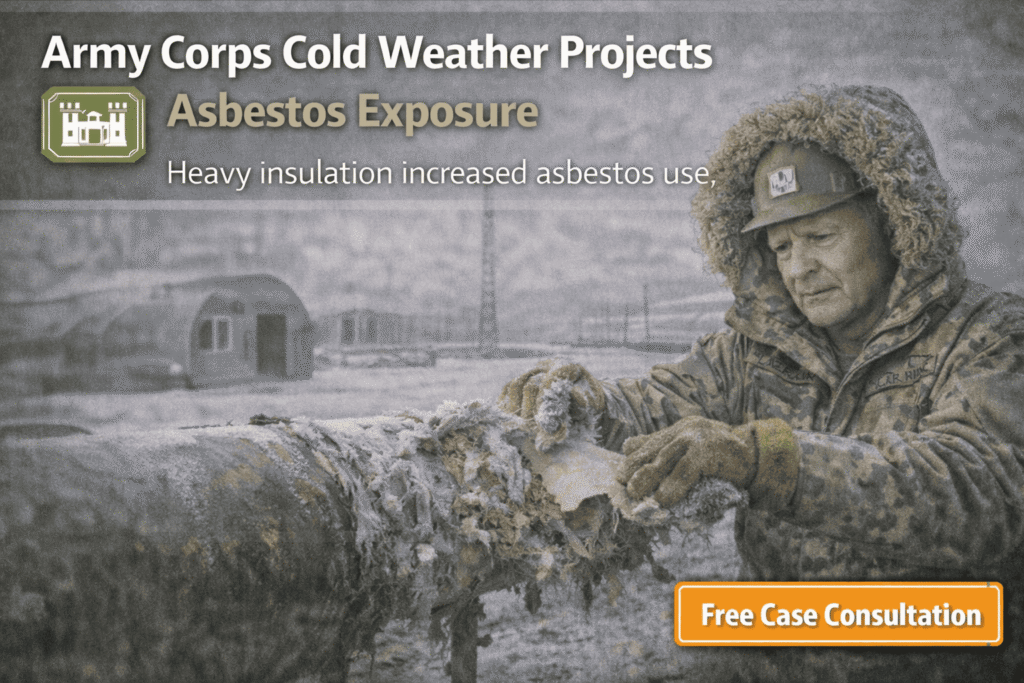
❄️ Army Corps Cold Weather Projects Asbestos Exposure
Heavy insulation increased asbestos use.
Cold-weather construction projects managed by the U.S. Army Corps of Engineers relied heavily on asbestos-containing insulation, cement, gaskets, and fireproofing materials to withstand extreme temperatures. Projects in Alaska, northern U.S. bases, Arctic installations, mountainous regions, and overseas cold-climate locations significantly increased asbestos exposure risks for workers.
Engineers, mechanics, electricians, welders, inspectors, and maintenance crews often worked in enclosed, insulated environments, where asbestos fibers became concentrated and easily inhaled.
📞 Immediate help available: 800.291.0963
⚠️ Why Cold Weather Projects Used More Asbestos
Cold-climate Army Corps projects required materials that could:
❄️ Retain heat in extreme temperatures
🔥 Protect boilers, turbines, and steam lines
🧱 Prevent structural cracking from freeze-thaw cycles
⚡ Insulate electrical and mechanical systems
🏗️ Fireproof enclosed facilities
Asbestos was widely used because it was cheap, durable, fire-resistant, and thermally insulating.
🏗️ Common Cold Weather Army Corps Projects
High-risk projects included:
🏢 Military bases and airfields
🏠 Barracks and government housing
⚡ Power plants and boiler facilities
🚧 Dams, flood-control systems, and pipelines
🏥 Medical and emergency facilities
🚢 Arctic ports and logistical hubs
Asbestos appeared in pipe lagging, boiler insulation, cement panels, roofing, flooring, gaskets, and electrical insulation.
👷 Workers Most Exposed on Cold-Climate Projects
Those frequently exposed included:
👷 Civil and structural engineers
🔧 Mechanics and equipment operators
⚡ Electricians and HVAC technicians
🔥 Welders and pipefitters
📋 Inspectors and project managers
🧰 Maintenance and repair crews
Exposure increased during repairs, retrofits, emergency maintenance, and demolition.
🧬 Health Conditions Linked to Cold-Climate Asbestos Exposure
Workers later developed:
🩺 Mesothelioma
🫁 Asbestos-related lung cancer
🧪 Asbestosis
⚠️ Pleural plaques and respiratory disease
Symptoms often appeared decades after cold-weather service, making early exposure easy to overlook.
⚖️ Legal Options for Cold Weather Asbestos Exposure
Workers and families may pursue:
⚖️ Asbestos personal injury lawsuits
💼 Asbestos trust fund claims
💔 Wrongful death lawsuits
🎖️ VA benefits (when applicable)
Claims target asbestos manufacturers and suppliers, not the Army Corps.
🛡️ How a Mesothelioma Attorney Helps Cold-Climate Workers
An experienced asbestos attorney can:
🧭 Identify cold-weather project assignments
📂 Reconstruct exposure timelines
🏭 Trace asbestos products used for insulation
⚖️ File claims in favorable jurisdictions
💼 Maximize combined compensation
Most cases require no upfront legal fees.
📞 Call 800.291.0963 for a free case review
❓ Frequently Asked Questions
Why was asbestos used more in cold climates?
Extra insulation was required to maintain heat and safety.
Does working in Alaska or overseas matter legally?
No. Cold-climate exposure is well recognized.
What if I worked indoors most of the time?
Indoor insulation increased asbestos concentration.
Can families file claims after a death?
Yes, wrongful death claims are available.
How long do I have to file a claim?
Deadlines vary—early legal review is critical.
📞 Get Compensation for Army Corps Cold-Weather Asbestos Exposure
If you worked on Army Corps cold-climate projects and were later diagnosed with mesothelioma or another asbestos disease, compensation may be available.
✅ Free case evaluation
✅ No upfront legal fees
✅ Nationwide representation
✅ Federal asbestos litigation experience
📞 Call now: 800.291.0963