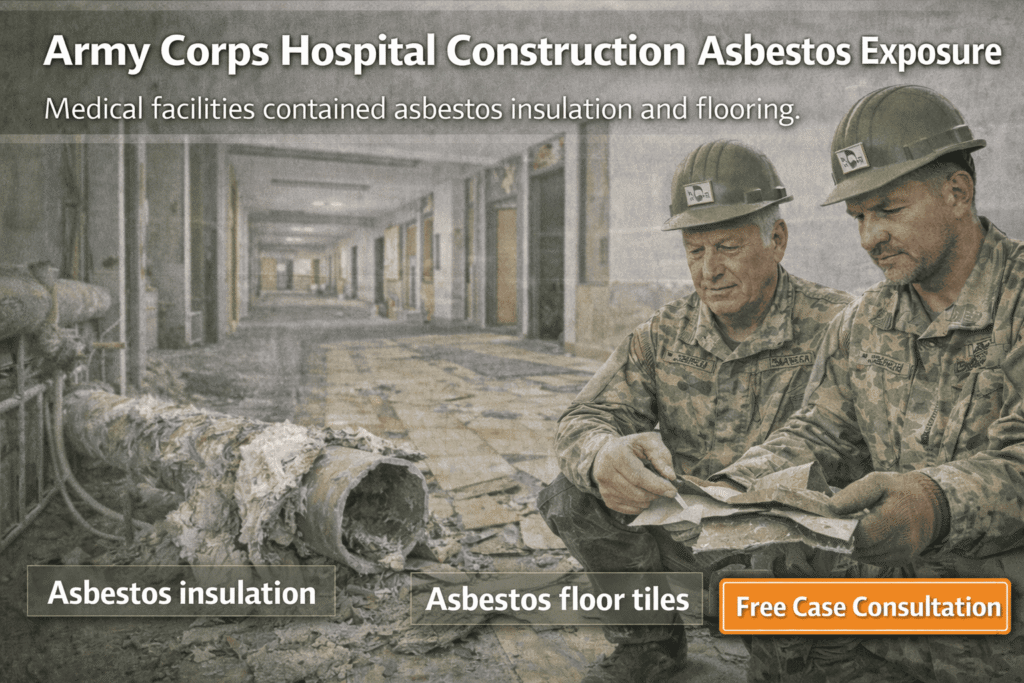
🛠️ Army Corps Hospital Construction Asbestos Exposure
Army Corps hospital construction projects throughout the 20th century often included the use of asbestos-containing materials because of asbestos’s durability, fire resistance, thermal insulation, and sound-proofing properties. These materials were installed in walls, ceilings, boilers, piping, flooring, and mechanical systems in Army medical facilities. During construction, renovations, maintenance, and demolition, Army Corps personnel — including builders, carpenters, electricians, plumbers, and laborers — were frequently exposed to airborne asbestos fibers. Decades later, many veterans and civilian workers who spent significant time in these environments now face mesothelioma, lung cancer, asbestosis, and other serious diseases.
This article explains where asbestos was used in Army Corps hospital construction, how exposure occurred, who was most at risk, and the long-term health consequences.
🏥 Common Uses of Asbestos in Army Hospital Facilities
Asbestos was built into many parts of military medical buildings for safety and performance.
• Insulation — Used in boilers, steam lines, ductwork, and hot water systems to control heat and prevent fires.
• Flooring and tiles — Vinyl asbestos floor tiles and adhesives were common in corridors, patient rooms, and kitchens.
• Ceilings and wall panels — Sprayed fireproofing, acoustical ceilings, and asbestos board walls reduced sound and fire spread.
• Cement and piping — Asbestos cement was used for water and waste pipes.
• Boiler rooms and mechanical areas — Boilers, valves, pumps, and compressors contained asbestos gaskets, packing, and insulation.
• Electrical systems — Wiring insulation and breaker panel backing used asbestos to limit fire risk.
These products were selected to improve building safety and longevity, but many were friable — meaning they could release fibers when disturbed.
⚠️ Where Asbestos Was Often Located in Army Hospitals
Asbestos materials were not limited to obscure spaces — they were everywhere asbestos performance was valued.
• Basements and boiler rooms — Thick insulation on steam and hot-water pipes.
• Mechanical and maintenance spaces — Asbestos-lined HVAC units and ducting.
• Patient care wings — Asbestos floor tiles, mastic, and acoustic ceiling tiles.
• Kitchens and dining areas — Heat-resistant panels near ovens and stoves.
• Utility corridors — Electrical wiring, switchgear, and asbestos fireproofing.
• Renovation and demolition sites — Older materials exposed during upgrades.
Asbestos fibers could become airborne when any of these materials were cut, drilled, scraped, or removed.
🔨 How Exposure Occurred During Construction & Renovation
Exposure to asbestos happened in many common scenarios on Army Corps hospital projects.
• Cutting and fitting material — Workers cut boards, tiles, and insulation with saws and knives.
• Drilling and fastening — Drilling holes released dust from fireproofing and insulation.
• Removal and demolition — Stripping old ceiling tiles, wall panels, and pipe insulation stirred fibers.
• Maintenance work — Replacing boilers, pumps, and ductwork disturbed asbestos insulation.
• Sanding and grinding — Finishing surfaces spread asbestos dust throughout workspaces.
Without adequate ventilation or respiratory protection, workers inhaled fibers that could lodge deep in the lungs.
👷 Personnel Most Affected by Asbestos Exposure
Certain roles were at especially high risk because their work routinely disturbed asbestos-containing materials.
• Construction Laborers — Cut, carried, and installed materials containing asbestos.
• Carpenters and Painters — Worked with floor tiles, wall panels, and sprays.
• Electricians — Removed and installed wiring with asbestos insulation.
• Plumbers and Pipefitters — Disturbed asbestos wrap on steam and water lines.
• HVAC Technicians — Worked on ductwork and insulation pieces.
• Boiler and Mechanical Workers — Encountered asbestos in high-heat systems.
Even support staff — cleaners, maintenance aides, and inspectors — inhaled fibers when dust settled and circulated through facilities.
🧬 Long-Term Health Effects of Asbestos Exposure
Asbestos exposure doesn’t cause immediate symptoms. Most asbestos-related diseases take years to develop.
Common illnesses include:
• Mesothelioma — A rare cancer of the lining of the lungs or abdomen.
• Lung cancer — Increased risk for those exposed, especially smokers.
• Asbestosis — Scarring of lung tissue leading to breathing difficulty.
• Pleural disease — Thickening or fluid around the lungs.
Symptoms may appear 20–50 years after exposure and often progress silently until advanced.
❓ Army Hospital Asbestos Exposure – FAQs
Was asbestos only a problem during construction?
No. Exposure also occurred during maintenance, repairs, and demolitions decades after original installation.
Can civilians who worked at Army hospitals be affected?
Yes. Civilian contractors and facility workers were frequently exposed alongside military personnel.
Does short-term exposure still pose risk?
Yes. Even brief, high-intensity exposure can lead to disease later in life.
How long after exposure do symptoms appear?
Most asbestos diseases take decades to develop, commonly 20–50 years after exposure.
⚖️ How an Asbestos Lawyer Can Get You Compensation
If you were exposed to asbestos during Army Corps hospital construction or related work and later developed an asbestos-related disease, an experienced asbestos attorney can help you pursue compensation.
An asbestos lawyer will:
• Review your service and construction records
• Identify which asbestos products you encountered
• Match exposure to specific hospital facilities
• Work with medical experts to confirm diagnosis
• File lawsuits and trust fund claims on your behalf
There are no upfront costs — you pay only if compensation is secured.
📞 Get Help Now
If you or a loved one worked on Army Corps hospital construction and later developed mesothelioma, lung cancer, asbestosis, or another asbestos-related disease, you may be entitled to compensation.
You may qualify for:
• Lawsuit settlements or verdicts
• Asbestos trust fund payments
• VA disability and survivor benefits
There is no upfront cost to get started.
Call now for a free, confidential case consultation:
800.291.0963