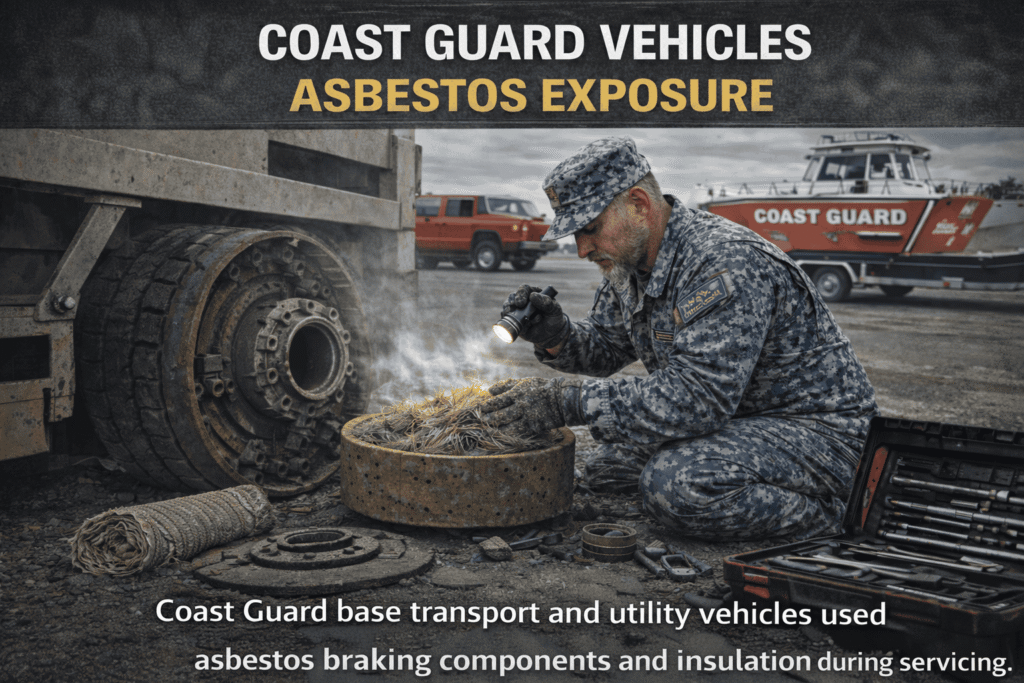
🚗 Coast Guard Vehicles Asbestos Exposure Lawsuit
Coast Guard base transport trucks, utility vehicles, air station support equipment, and motor pool fleets were widely manufactured during decades when asbestos was heavily used in automotive friction materials and industrial insulation components. From World War II through the late 1970s—and in some applications into the early 1980s—asbestos was installed in brake linings, clutch assemblies, engine gaskets, exhaust insulation, and heat-resistant materials throughout Coast Guard bases, ports, and air stations.
While the Coast Guard is commonly associated with shipboard asbestos exposure, shore-based vehicle maintenance created a separate and significant risk. Coast Guard mechanics, motor transport operators, aviation support personnel, engineering technicians, and civilian contractors routinely handled asbestos-containing parts during brake servicing, clutch repairs, gasket removal, and engine overhauls.
Routine maintenance activities—such as sanding brake shoes, blowing out brake drums with compressed air, scraping old gaskets, and replacing heat shields—released microscopic asbestos fibers into the air. Many Coast Guard motor pool facilities and pier-side maintenance shops lacked modern ventilation systems during peak asbestos-use decades, allowing fibers to linger in enclosed service bays.
Because these maintenance operations often occurred near hangars, docks, and confined repair facilities, repeated exposure could occur over months and years of active service.
🚛 Types of Coast Guard Vehicles With Asbestos Exposure Risk
Coast Guard installations relied on a wide range of land-based vehicles to support maritime operations, aviation missions, search-and-rescue activities, and base logistics. Many historically incorporated asbestos-containing components.
🚚 Base Transport & Utility Trucks
Base transport trucks moved personnel, supplies, and mechanical parts across Coast Guard installations and dock areas. These vehicles relied on asbestos brake linings and clutch systems designed for heavy-duty use. Mechanics replacing worn friction materials were exposed to airborne fibers released during servicing.
🚓 Shore Patrol & Security Vehicles
Coast Guard security units operated patrol cars and response vehicles containing asbestos brake pads and clutch assemblies. Routine brake servicing inside motor pools created exposure risks when worn components were removed and cleaned without wet-suppression techniques.
🚛 Pier & Dock Support Vehicles
Vehicles used along piers and shipyard areas handled equipment and supplies between shore facilities and cutters. These vehicles frequently used asbestos-based friction components due to constant stop-and-go operations. Maintenance crews encountered dust accumulation inside brake assemblies during part replacement.
🚒 Air Station Fire & Crash Vehicles
Coast Guard air stations operated aircraft rescue and firefighting vehicles with high-performance braking systems and insulated engine components containing asbestos materials. Fire vehicle maintenance personnel were exposed during clutch repairs, brake drum cleaning, and engine gasket replacement.
🛠️ Ground Support Equipment (GSE)
Ground support vehicles at Coast Guard air stations—including tow tractors, power carts, and hydraulic service units—incorporated asbestos brake systems and gasket materials. Technicians servicing these systems disturbed aging friction components during inspections and mechanical repairs.
🚜 Engineering & Construction Equipment
Coast Guard civil engineering units operated bulldozers, loaders, and heavy construction equipment for base expansion and maintenance. These machines used asbestos brake linings, heat shields, and engine insulation. Field servicing operations released fibers during component removal and repair.
🚐 Personnel Transport Vans & Buses
Personnel vans and shuttle buses transported Coast Guard members across large installations. Frequent braking led to regular maintenance cycles involving asbestos brake replacements, increasing exposure risks for mechanics and nearby workers.
🚜 Utility & Snow Removal Vehicles
Coastal bases operating in colder regions maintained snowplows and heavy-duty utility vehicles with asbestos brake systems and thermal insulation materials. Maintenance teams replacing worn parts encountered airborne asbestos dust in enclosed garages.
🫁 Diseases Linked to Coast Guard Vehicle Asbestos Exposure
Repeated occupational exposure to asbestos fibers from Coast Guard vehicle components has been medically linked to serious illnesses, including:
-
Pleural Mesothelioma
-
Peritoneal Mesothelioma
-
Asbestos-Related Lung Cancer
-
Asbestosis
-
Pleural Plaques and Thickening
Many Coast Guard veterans exposed in early service years did not develop symptoms until decades later.
⏳ Long Latency Period of Coast Guard Vehicle Asbestos Diseases
Asbestos-related diseases often develop 20 to 50 years after exposure. This extended latency period means:
⏱️ Exposure occurred during active-duty vehicle maintenance
⏱️ No symptoms appeared for decades
⏱️ Progressive lung or tissue damage developed silently
⏱️ Diagnosis occurred later in life
Because of this delay, many veterans do not initially connect their illness to past motor pool or air station maintenance duties.
⚖️ Legal Responsibility for Coast Guard Vehicle Asbestos Exposure
Claims involving Coast Guard vehicle asbestos exposure do not sue the Coast Guard or the federal government.
Instead, lawsuits focus on private manufacturers that:
🏭 Produced asbestos brake linings and pads
🏭 Manufactured clutch discs and friction materials
🏭 Supplied engine gaskets and packing compounds
🏭 Designed exhaust insulation and heat shields
🏭 Failed to warn mechanics about asbestos hazards
Many of these companies later established asbestos trust funds to compensate exposed service members and civilian workers.
🧑⚖️ How a Lawyer Can Help Coast Guard Vehicle Exposure Victims
An experienced mesothelioma attorney can:
🔍 Identify vehicle types serviced during Coast Guard duty
📂 Reconstruct motor pool and air station maintenance history
🏭 Match friction material manufacturers to exposure timelines
🏦 File asbestos trust fund claims
⚖️ Pursue product-liability lawsuits
🏛️ Coordinate VA disability compensation
👨👩👧 Assist families with wrongful death claims
Even without original maintenance records, established asbestos litigation databases document common vehicle manufacturers used across Coast Guard installations.
❓ Frequently Asked Questions (FAQs)
❓ How were Coast Guard personnel exposed through vehicles?
Exposure occurred during brake replacements, clutch servicing, engine gasket removal, and compressed air cleaning of asbestos-containing components.
❓ Was exposure limited to mechanics?
No. Motor transport operators and personnel working near maintenance operations could inhale airborne asbestos fibers.
❓ Can I file a claim decades after service?
Yes. Most asbestos claims begin at diagnosis due to the long latency period of asbestos-related diseases.
❓ Can VA benefits and lawsuits both be pursued?
Yes. VA disability benefits and civil product-liability claims are separate legal recovery options.
❓ Can surviving family members file claims?
Yes. Spouses and dependents may pursue wrongful death compensation if a Coast Guard veteran passed away from an asbestos-related illness.
📞 Help for Coast Guard Vehicle Asbestos Exposure Victims
If you served in the U.S. Coast Guard and worked with base transport vehicles, pier support trucks, air station equipment, or motor pool fleets—and were later diagnosed with mesothelioma or another asbestos-related disease—you may have important legal options available.
📌 You May Be Eligible For:
-
Asbestos trust fund compensation
-
Product-liability lawsuits
-
VA disability benefits
-
Wrongful death claims
📞 Call 800-291-0963 for a free, confidential Coast Guard vehicle asbestos exposure review
⏱️ No upfront costs • Military-focused cases • Nationwide representation
Serving your country should never have cost your health.