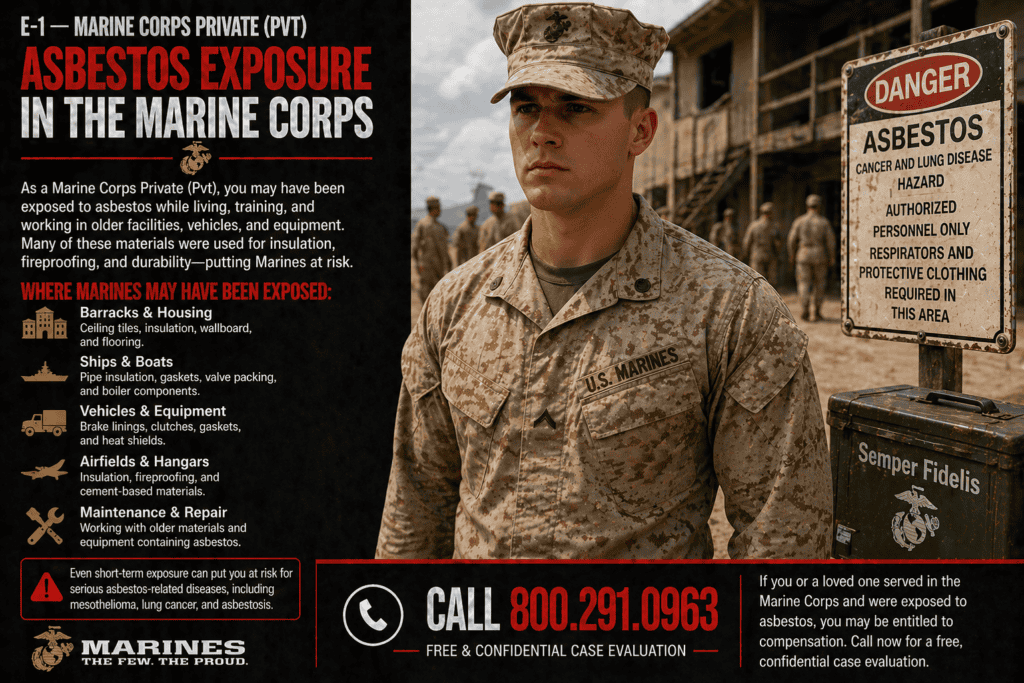
E-1 – Marine Corps Private (Pvt) Asbestos Exposure
⚠️ Asbestos Risks for U.S. Marine Corps Privates (Pvt)
The rank of Private (E-1) is the entry point into the United States Marine Corps. Although Privates have no leadership responsibilities and perform primarily general labor and support tasks, their early service frequently places them inside older barracks, training facilities, vehicle bays, and support buildings constructed at a time when asbestos-containing materials (ACM) were widely used across Marine installations.
From the 1940s through the late 1980s, asbestos was present in:
-
barracks insulation
-
boiler rooms
-
ceiling and floor tiles
-
drywall joint compound
-
older motor pools
-
training facilities
-
base housing
-
mechanical rooms
-
steam lines and heating pipes
Marine Corps bases—including Camp Lejeune, Camp Pendleton, 29 Palms, and Marine Corps Air Stations—used large amounts of asbestos in construction, fireproofing, and mechanical systems. Privates, who are often assigned heavy labor, cleaning tasks, and support roles, were frequently exposed without knowing the dangers.
Because asbestos diseases take 20–50 years to develop, many former Marines are only now discovering the long-term effects of this early-career exposure.
🛠 Typical Duties of a Marine Corps Private (Pvt)
General Labor and Field Support
Privates perform entry-level tasks, including:
-
cleaning barracks and work areas
-
sweeping floors
-
disposing of debris
-
general facility upkeep
-
field preparation
-
carrying equipment
-
supporting training operations
These tasks often stirred up dust from deteriorating insulation, ceiling tiles, and old building materials in pre-1980 structures.
Barracks Cleaning and Daily Occupancy
Most Privates spend long periods inside:
-
recruit depot barracks
-
training barracks
-
temporary base housing
-
aging squad bays
-
shower facilities
-
administrative support buildings
Because many older Marine Corps barracks were built before asbestos restrictions, they contained:
-
asbestos floor tile
-
pipe insulation
-
ceiling tile
-
boiler-room insulation
-
HVAC duct coverings
Even simple tasks like mopping, sweeping, and moving furniture could disturb asbestos fibers.
Training in Older Base Facilities
Pvt-level Marines train inside classrooms, gyms, and older base structures, many containing ACM such as:
-
fireproof wall panels
-
chalky ceiling tile
-
asbestos-backed flooring
-
soundproofing boards
-
mastic adhesives
These materials degrade with age, vibration, humidity, and physical contact—releasing microscopic fibers into the air.
Vehicle and Motor Pool Exposure
Although Privates do not typically perform deep mechanical work, they assist and spend time around:
-
vehicle maintenance bays
-
motor transport facilities
-
armored vehicle staging areas
-
brake and clutch replacement sites
Asbestos was common in:
-
brake pads
-
clutch components
-
gaskets and seals
-
engine insulation
-
pipe wrapping in motor pools
Dust from these areas is a well-documented exposure source.
Field Exercises and Support Areas
Many outdoor and semi-enclosed training locations contain older structures with:
-
asbestos roofing
-
deteriorating siding
-
insulation that breaks down under heat and moisture
Privates cleaning or preparing these areas inhale airborne fibers released from aging materials.
🧱 Asbestos Exposure Risks for Marine Corps Privates
1. Barracks Insulation and Flooring
Many Marine Corps barracks built before 1980 contain asbestos in:
-
insulation
-
linoleum and vinyl floor tile
-
adhesives
-
ceiling panels
-
boiler rooms
-
steam lines
Privates often clean and live in these environments, inhaling fibers from deteriorated materials.
2. Dust From Older Training Buildings
Training facilities—including classrooms, gyms, and admin buildings—frequently had ACM in:
-
ceiling tile
-
drywall joint compound
-
acoustical insulation
-
flooring
-
heating ducts
Marching, sweeping, and general use disturb aging ACM.
3. Vehicle Maintenance Areas
Privates assisting mechanics or working near vehicle bays encounter asbestos from:
-
brake dust
-
clutch fibers
-
gasket removal
-
engine insulation
-
pipe wrap
Even without hands-on repair, dust spreads through shared spaces.
4. Boiler Rooms and Mechanical Spaces
Privates are often tasked with:
-
cleaning mechanical rooms
-
assisting utilities personnel
-
transporting supplies through contaminated spaces
-
working near steam lines and heating equipment
Boiler rooms were among the highest-risk asbestos environments.
5. Environmental Exposure in Aging Facilities
Marine Corps bases contain numerous older structures—some dating back to WWII and the Korean War era.
Environmental exposure happens through:
-
ceiling deterioration
-
floor tile cracking
-
vibration from barracks activities
-
HVAC systems circulating asbestos particles
-
repairs or renovations disturbing ACM
Privates often lack protective equipment or awareness of these hazards.
📊 Why Marine Corps Privates Have Strong Asbestos Claims
✔ Entry-level Marines spent years in old barracks
Recruit training and early service place Privates in facilities built during asbestos-heavy decades.
✔ Exposure did not require hands-on maintenance
Environmental exposure alone is sufficient for compensation.
✔ Recruit depots and training bases used large amounts of ACM
This includes Parris Island, San Diego, Pendleton, and Lejeune.
✔ Privates perform cleaning and support tasks that disturb dust
Sweeping and moving materials can easily release asbestos.
✔ Many Marines lived in these environments 24/7
Long-term exposure, even at “low levels,” leads to cumulative inhalation of fibers.
📂 Evidence That Helps Marine Privates Win Asbestos Claims
📁 Service Assignment Records
Shows where the Marine trained and lived—matching to known ACM buildings.
📄 Base Construction Documents
These identify asbestos in:
-
recruit barracks
-
training buildings
-
boiler rooms
-
motor pools
🛠 Motor Pool & Maintenance Logs
Identify brake and gasket work performed near Pvt-level personnel.
👨✈️ Witness Statements
Fellow Marines can confirm asbestos deterioration or dust conditions.
💼 Example Compensation Outcomes (Comparable Early-Career Cases)
-
$3.2 million — Marine exposed in barracks during recruit training
-
$2.9 million — Pvt-level support worker near vehicle maintenance dust
-
$3.4 million — Entry-level Marine exposed in older field and training buildings
These reflect combined trust fund and legal settlements.
💙 Benefits Available to Marine Corps Privates With Asbestos Illness
💵 Asbestos Trust Funds
More than $30 billion is available nationwide.
⚖ Lawsuits Against Asbestos Product Manufacturers
Claims target the companies that made ACM—not the Marine Corps or federal government.
❤️ VA Disability
Mesothelioma almost always qualifies for 100% VA disability.
👨👩👧 VA DIC Survivor Benefits
Available to spouses and dependents if the Marine has passed away from an asbestos disease.
📞 Free Asbestos Exposure Case Review for Marine Corps Privates (Pvt)
If you or a loved one served as a Marine Corps Private and has been diagnosed with mesothelioma, asbestos lung cancer, or asbestosis, compensation may be available.
📞 Call 800.291.0963 for a free, confidential case review.
You’ll speak with a mesothelioma case specialist who understands Marine Corps training environments and early-career exposure patterns.