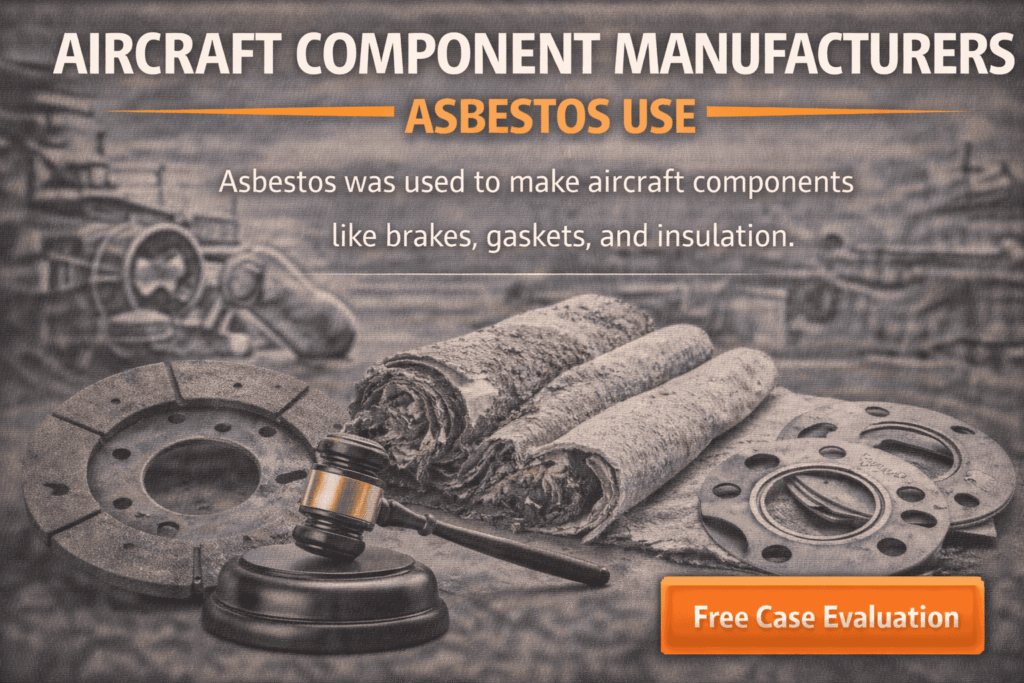
✈️ Aircraft Component Manufacturers Asbestos Use
Aircraft component manufacturers supplied asbestos-containing parts used extensively in military and civilian aircraft, exposing mechanics, ground crews, factory workers, and service members to asbestos fibers during installation, maintenance, repair, and overhaul operations.
For much of the 20th century, asbestos was considered essential to aircraft safety and performance. Its resistance to heat, fire, vibration, and friction made it a common ingredient in aircraft brakes, clutches, gaskets, insulation, wiring, engine components, and heat shields. As a result, aircraft manufacturers and component suppliers incorporated asbestos into thousands of aviation parts used across the U.S. military and commercial fleets.
While asbestos use improved aircraft durability, it created a hidden and long-term health hazard for anyone who worked with or around these components.
🧱 Why Aircraft Manufacturers Used Asbestos
Aircraft operate under extreme conditions, making asbestos attractive for aviation engineering.
Manufacturers used asbestos because it:
-
🔥 Withstood extreme engine and exhaust heat
-
⚙️ Reduced friction in braking and clutch systems
-
🧯 Provided fire protection in confined spaces
-
🌡️ Insulated engines, ducts, and electrical systems
-
✈️ Maintained structural integrity under vibration
-
💲 Reduced manufacturing and maintenance costs
Asbestos became a standard industrial material in aviation manufacturing for decades.
🏭 Aircraft Components That Commonly Contained Asbestos
Thousands of aircraft parts supplied by manufacturers contained asbestos.
🧰 High-risk asbestos-containing aircraft components included:
-
✈️ Aircraft brake linings and pads
-
⚙️ Clutches and friction discs
-
🔥 Engine insulation blankets
-
🌡️ Heat shields and fire barriers
-
🔩 Gaskets, seals, and packing
-
🧱 Electrical wiring insulation
-
🧯 Fireproof panels and bulkheads
-
🧱 Exhaust system insulation
-
🛠️ Valve and pump components
When these parts were installed, removed, sanded, ground, or replaced, asbestos fibers were released into the air.
👷 How Workers Were Exposed to Asbestos Aircraft Components
Exposure occurred throughout the aircraft lifecycle—from manufacturing to disposal.
High-risk exposure activities included:
-
🔧 Installing or replacing aircraft brakes
-
🪚 Grinding or sanding friction materials
-
🔩 Removing old gaskets and seals
-
🧰 Engine tear-downs and overhauls
-
🧹 Cleaning asbestos dust from work areas
-
✈️ Aircraft refurbishment and retrofitting
-
🏭 Manufacturing and assembly line work
Many of these tasks occurred in enclosed hangars or maintenance bays, increasing inhalation risk.
🧑🏭 Workers Most Affected by Aircraft Manufacturer Asbestos Use
Asbestos exposure affected both military and civilian personnel.
High-risk groups include:
-
✈️ Aircraft mechanics and technicians
-
🧰 Engine and powerplant specialists
-
🔧 Sheet metal workers
-
⚡ Aircraft electricians
-
🧑🏭 Aircraft manufacturing plant workers
-
🛩️ Ground support and line crews
-
🧹 Cleanup and maintenance personnel
-
🪖 Military aviation personnel (Air Force, Navy, Marines, Army aviation, National Guard)
Secondary exposure also affected family members through contaminated clothing.
🇺🇸 Military Aircraft and Asbestos-Containing Components
The U.S. military relied heavily on asbestos aircraft components.
Branch-specific exposure examples:
-
✈️ Air Force: Fighter jets, bombers, cargo aircraft, trainers
-
⚓ Navy: Carrier-based aircraft and helicopters
-
🪖 Marine Corps: Amphibious and expeditionary aviation
-
🚁 Army Aviation: Helicopters and rotorcraft
-
🛡️ National Guard: Aircraft maintenance during drills and deployments
Military aircraft were maintained for decades, prolonging asbestos exposure well into the 1980s and beyond.
🫁 Diseases Linked to Aircraft Component Asbestos Exposure
Asbestos diseases often develop 20–50 years after exposure.
Common diagnoses include:
-
Mesothelioma (pleural and peritoneal)
-
Asbestos-related lung cancer
-
Asbestosis
-
Pleural plaques and thickening
Aircraft maintenance workers often experienced repeated, high-intensity exposure, increasing disease severity.
⚠️ Why Aircraft Asbestos Exposure Went Unrecognized
Exposure persisted for decades because:
-
❌ Asbestos was considered a safety material
-
❌ Manufacturers did not provide warnings
-
❌ Dust was viewed as normal aircraft debris
-
❌ Respirators were rarely required
-
❌ Military personnel followed orders without hazard disclosure
Most workers were never informed of the risks until after diagnosis.
⚖️ Legal Responsibility of Aircraft Component Manufacturers
Aircraft manufacturers and suppliers can be held legally accountable.
Key points:
-
⚖️ Claims target manufacturers, not employers or the military
-
🏦 Many suppliers established asbestos trust funds
-
🧾 Product identification can be based on aircraft type and era
-
⏱️ Statutes of limitations usually begin at diagnosis
Multiple manufacturers may be responsible for a single exposure history.
🧑⚖️ How a Lawyer Can Help With Aircraft Asbestos Claims
An experienced asbestos attorney can:
-
🔍 Identify asbestos-containing aircraft components
-
📂 Reconstruct aircraft types, duty stations, and job roles
-
🏭 Match exposure to responsible manufacturers
-
🏦 File multiple asbestos trust fund claims
-
⚖️ File lawsuits in favorable jurisdictions
-
🇺🇸 Coordinate VA benefits for veterans
-
⏱️ Ensure all deadlines are protected
Aircraft cases often qualify for substantial compensation due to product-specific exposure.
❓ Frequently Asked Questions (FAQs)
❓ I worked on aircraft decades ago—can I still file?
Yes. Most asbestos deadlines start at diagnosis, not exposure.
❓ Do civilian aircraft mechanics qualify?
Yes. Civilian and military aircraft exposure both qualify.
❓ What if I don’t remember the manufacturer names?
Lawyers identify products based on aircraft type, era, and job duties.
❓ Can veterans file both VA claims and lawsuits?
Yes. VA benefits and asbestos lawsuits are separate.
❓ Can families file after death?
Yes. Wrongful death and trust fund claims may still be available.
📞 Get Help for Aircraft Component Asbestos Exposure
If you worked with aircraft components supplied by manufacturers that contained asbestos and were later diagnosed with mesothelioma or another asbestos-related disease, financial compensation may still be available—even decades later.
📌 You May Qualify For:
-
Asbestos lawsuits against manufacturers
-
Multiple asbestos trust fund claims
-
VA disability benefits (for veterans)
-
Wrongful death compensation
📞 Call 800-291-0963 for a free, confidential aircraft asbestos exposure review
⏱️ No upfront costs • Nationwide representation • Deadline-protected claims
Aircraft manufacturers built performance into aviation—at the cost of workers’ health. Your case deserves accountability.