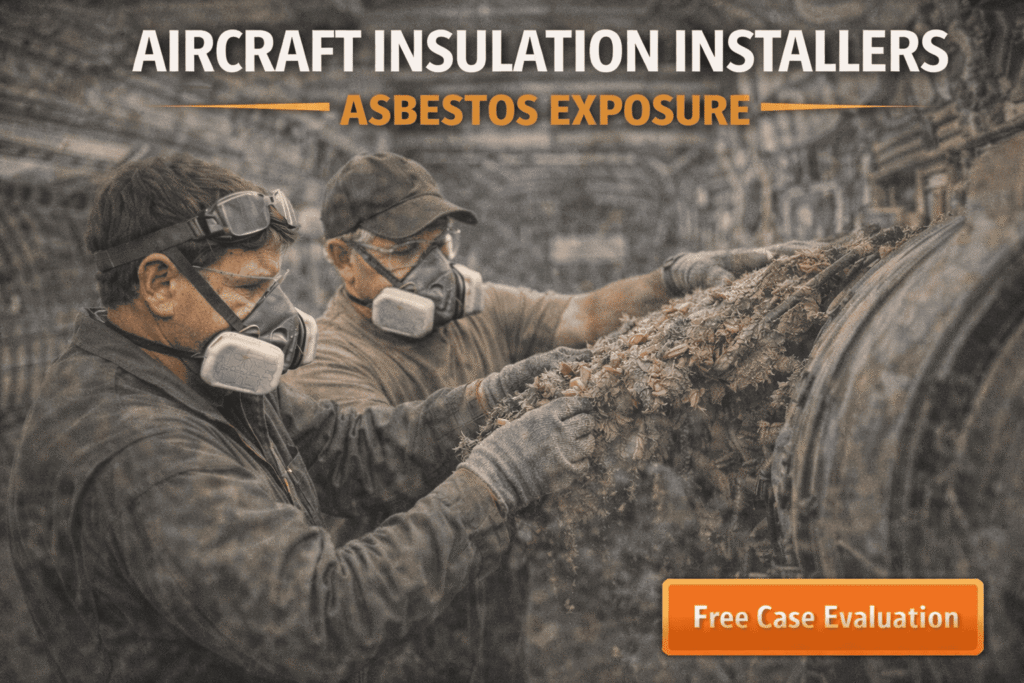
🧱 Aircraft Insulation Installers Asbestos Exposure
Aircraft insulation installers experienced some of the highest asbestos exposure levels in military aviation—handling raw asbestos blankets, wraps, fireproofing, and insulation boards used to protect engines, wiring, fuel systems, and aircraft structures.
Before asbestos was recognized as a health hazard, it was considered an ideal insulation material for military aircraft. It was lightweight, fire-resistant, heat-tolerant, and durable under vibration. As a result, aircraft insulation installers worked directly with asbestos materials—cutting, fitting, drilling, trimming, fastening, and replacing insulation throughout aircraft.
Unlike many other aviation roles, insulation installers handled asbestos in its raw and most friable forms. Dust clouds were common, protective equipment was minimal or nonexistent, and ventilation was poor. Today, many former insulation installers are being diagnosed with mesothelioma, lung cancer, asbestosis, and pleural disease decades after exposure while supporting aviation missions for the United States military.
🧱 Why Asbestos Was Used in Aircraft Insulation
Aircraft insulation had to meet extreme performance demands.
Asbestos was used because it:
-
🔥 Withstood extreme engine and exhaust heat
-
🧯 Provided fireproofing around fuel and wiring
-
⚙️ Absorbed vibration and structural stress
-
🛑 Reduced fire spread during combat damage
-
✈️ Added minimal weight to aircraft
-
💲 Reduced replacement and maintenance costs
These advantages led to widespread asbestos use throughout aircraft insulation systems.
⚙️ Where Aircraft Insulation Contained Asbestos
Insulation installers encountered asbestos across nearly every aircraft area.
Common asbestos insulation locations included:
-
🔥 Engine nacelle insulation blankets
-
🧱 Firewall and bulkhead insulation
-
🛢️ Fuel system heat shields
-
🔌 Electrical wiring and avionics insulation
-
🧠 Cockpit and cabin insulation panels
-
🛫 Wing and fuselage insulation liners
Much of this insulation was soft, fibrous, and easily airborne when handled.
👷 Who Was Exposed as Insulation Installers
Exposure primarily affected workers who installed or replaced insulation.
High-risk roles included:
-
🧱 Aircraft insulation installers
-
🧰 Depot-level modification crews
-
🧑🔧 Structural and retrofit technicians
-
🛠️ Overhaul and rebuild workers
-
🧯 Fireproofing and thermal-protection crews
-
🧪 Inspectors overseeing insulation installation
These workers often handled asbestos daily and directly.
🛠️ Insulation Installation Tasks That Released Asbestos
Insulation work generated heavy airborne fiber exposure.
Common exposure activities included:
-
✂️ Cutting asbestos insulation blankets
-
🔩 Drilling and fastening insulation panels
-
🧱 Trimming insulation to fit tight spaces
-
🧹 Sweeping and cleaning insulation debris
-
🔥 Removing heat-damaged insulation
-
🏗️ Retrofitting aircraft with upgraded insulation
Dust frequently coated clothing, skin, hair, and tools.
✈️ Engine & Exhaust Insulation Exposure
The highest exposure often occurred near engines.
Risk increased when installers:
-
🔥 Wrapped engines and exhaust systems
-
🧱 Installed firewalls and heat shields
-
🛢️ Insulated fuel-adjacent components
-
🧹 Removed brittle, heat-damaged insulation
Engine heat made asbestos insulation especially friable and dusty.
🏢 Hangars & Insulation Shops
Insulation installation often occurred indoors.
Hangars and insulation shops frequently contained:
-
🧱 Asbestos fireproofing on walls and ceilings
-
🪵 Vinyl asbestos floor tiles and mastics
-
🌬️ Poor ventilation trapping fibers
-
🧯 Fire-resistant coatings throughout workspaces
Dust settled and was re-aerosolized during every shift.
⚠️ Why Aircraft Insulation Installers Faced Extreme Exposure
Exposure severity was among the highest because:
-
❌ Installers handled raw asbestos directly
-
❌ Cutting and trimming created heavy dust
-
❌ Work occurred in confined aircraft spaces
-
❌ Protective equipment was rarely used
-
❌ Exposure occurred daily for long periods
Many installers inhaled asbestos at levels far exceeding other aviation roles.
🫁 Diseases Linked to Insulation Installer Asbestos Exposure
Medical research strongly links this exposure to:
-
Mesothelioma (pleural and peritoneal)
-
Asbestos-related lung cancer
-
Asbestosis
-
Pleural plaques and pleural thickening
Insulation workers historically show some of the highest disease rates.
⏳ Long Latency Period in Insulation Cases
Disease progression typically includes:
-
⏱️ Heavy exposure during installation work
-
⏱️ Long symptom-free period
-
⏱️ Progressive lung or tissue damage
-
⏱️ Diagnosis decades later
Many are diagnosed long after retirement.
⚖️ Legal Responsibility for Insulation Asbestos Exposure
Claims do not sue the military or federal government.
Instead, claims focus on:
-
🏭 Insulation product manufacturers
-
🏭 Aircraft and engine manufacturers
-
🏭 Fireproofing and thermal-material suppliers
-
🏭 Companies that failed to warn workers
Many of these companies later established asbestos trust funds.
🧑⚖️ How a Lawyer Can Help Insulation Installers
An experienced asbestos lawyer can:
-
🔍 Identify insulation products used on aircraft
-
📂 Reconstruct installation and overhaul histories
-
🏭 Link exposure to specific manufacturers
-
🏦 File asbestos trust fund claims
-
⚖️ Pursue lawsuits against solvent companies
-
🏛️ Coordinate VA disability benefits
-
👨👩👧 Handle wrongful death claims
You don’t need product labels—aviation asbestos databases already exist.
❓ Frequently Asked Questions (FAQs)
❓ Did insulation installers face higher exposure than mechanics?
Yes. Installers handled raw asbestos directly, often daily.
❓ I worked depot-level retrofits—does that matter?
Yes. Retrofit work involved large-scale insulation removal and replacement.
❓ Can I file a claim decades later?
Yes. Claims usually begin at diagnosis.
❓ Can I receive VA benefits and lawsuits?
Yes. These compensation paths are separate.
❓ Can families file claims?
Yes. Wrongful death claims are available.
📞 Help for Aircraft Insulation Asbestos Exposure Victims
If you worked as an aircraft insulation installer and were later diagnosed with mesothelioma, lung cancer, or another asbestos-related disease, you may still have strong legal options today.
📌 You May Be Eligible For:
-
Asbestos trust fund compensation
-
Product-liability lawsuits
-
VA disability benefits
-
Wrongful death claims for families
📞 Call 800-291-0963 for a free, confidential aircraft insulation asbestos exposure review
⏱️ No upfront costs • Aviation-focused cases • Nationwide representation
Protecting aircraft from fire should never have endangered your life.