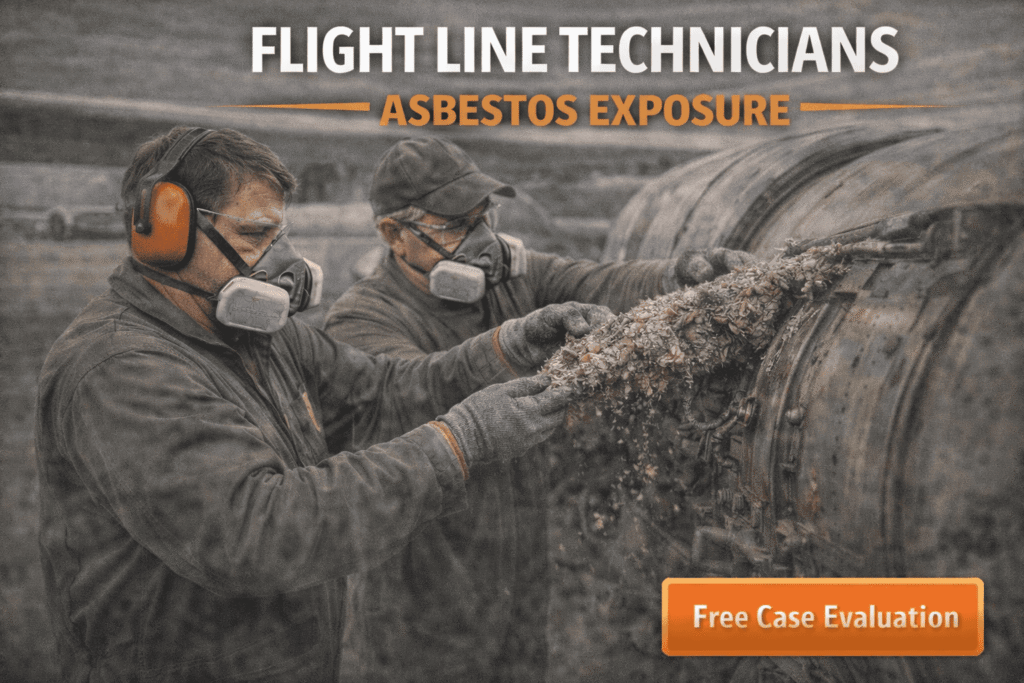
🛬 Flight Line Asbestos Exposure
Flight lines became major asbestos exposure zones as aircraft brakes, engines, insulation, ground equipment, and nearby facilities released asbestos fibers into open air—spread further by jet blast, vehicle movement, and constant operations.
The flight line is the operational heart of military aviation. Aircraft land, refuel, taxi, undergo inspections, and launch again—often within minutes. For decades, many aircraft systems and surrounding facilities relied on asbestos for heat resistance, fireproofing, and durability. As these materials aged, asbestos fibers were released directly onto runways, ramps, and tarmacs, where they were repeatedly disturbed and spread.
Unlike controlled indoor environments, flight lines allowed fibers to circulate widely, exposing anyone working nearby. Many veterans and civilian workers are now being diagnosed with mesothelioma, lung cancer, asbestosis, and pleural disease decades after exposure while supporting aviation missions for the United States military.
🧱 Why Flight Lines Became Asbestos Exposure Hotspots
Multiple asbestos sources converged on flight lines.
Asbestos was present because it was used in:
-
🔥 Aircraft engines, exhaust systems, and heat shields
-
🛑 Aircraft brake systems and landing gear
-
🔌 Electrical wiring and avionics insulation
-
🚜 Ground support equipment brakes and clutches
-
🧱 Hangars, ramps, and adjacent buildings
-
🧯 Fireproofing and safety coatings
When disturbed, these materials released fibers that spread rapidly across open work areas.
⚙️ Primary Asbestos Sources on the Flight Line
Flight line exposure did not come from one single source.
Common asbestos sources included:
-
✈️ Aircraft brake dust during landings and taxiing
-
🔥 Engine and exhaust insulation shedding fibers
-
🔧 Maintenance work performed directly on the ramp
-
🚜 Ground support equipment with asbestos brakes
-
🧱 Nearby hangars releasing fireproofing dust
-
🛢️ Gaskets and seals disturbed during quick repairs
Even brief exposure could occur multiple times per shift.
👷 Who Was Exposed on the Flight Line
Exposure affected a wide range of personnel.
High-risk groups included:
-
🛫 Flight line technicians
-
🧰 Line maintenance and inspection crews
-
⛽ Fueling and defueling personnel
-
🚜 Ground support equipment operators
-
🧯 Fire, safety, and emergency crews
-
🧪 Supervisors and readiness inspectors
Many worked entire shifts directly on contaminated ramps.
🛠️ Flight Line Activities That Released Asbestos
Routine operations disturbed asbestos constantly.
Common exposure activities included:
-
🛑 Brake inspections and wheel servicing
-
🔥 Engine run-ups and exhaust testing
-
🔧 Quick-turn maintenance between flights
-
🚜 Operation of support vehicles
-
🧹 Sweeping and debris removal on ramps
-
🏃 Emergency response and crash recovery
Jet blast and vehicle traffic re-aerosolized settled fibers repeatedly.
✈️ Jet Blast & Wind-Driven Fiber Spread
Jet blast significantly amplified exposure risk.
Exposure increased when:
-
🌬️ Engine exhaust lifted settled asbestos dust
-
🧹 Brake debris was blown across runways
-
🚜 Equipment movement redistributed fibers
-
🧰 Contaminated tools and clothing spread dust
Workers often stood directly in airflow carrying asbestos fibers.
🏢 Adjacent Hangars & Buildings
Flight lines are rarely isolated spaces.
Nearby structures often contributed asbestos exposure:
-
🧱 Hangars with deteriorating fireproofing
-
🪵 Vinyl asbestos floor tiles at entrances
-
🌬️ HVAC exhausts releasing contaminated air
-
🧯 Fire-resistant coatings on steel structures
Fibers moved between outdoor ramps and indoor spaces.
⚠️ Why Flight Line Asbestos Exposure Was Especially Dangerous
Exposure severity was high because:
-
❌ Multiple asbestos sources overlapped
-
❌ Jet blast spread fibers over wide areas
-
❌ Work was fast-paced and continuous
-
❌ Protective equipment was rarely used
-
❌ Exposure occurred daily over long careers
Many workers inhaled asbestos without ever seeing visible dust.
🫁 Diseases Linked to Flight Line Asbestos Exposure
Medical studies link flight line exposure to:
-
Mesothelioma (pleural and peritoneal)
-
Asbestos-related lung cancer
-
Asbestosis
-
Pleural plaques and pleural thickening
Symptoms often appear 20–50 years after exposure.
⏳ Long Latency Period in Flight Line Cases
Typical disease progression includes:
-
⏱️ Exposure during aviation service
-
⏱️ Long symptom-free period
-
⏱️ Progressive lung or tissue damage
-
⏱️ Diagnosis decades later
This latency often prevents early recognition of occupational cause.
⚖️ Legal Responsibility for Flight Line Asbestos Exposure
Claims do not sue the military or federal government.
Instead, claims focus on:
-
🏭 Aircraft manufacturers
-
🏭 Brake and insulation manufacturers
-
🏭 Ground support equipment suppliers
-
🏭 Companies that failed to warn workers
Many responsible companies later established asbestos trust funds.
🧑⚖️ How a Lawyer Can Help Flight Line Exposure Victims
An experienced asbestos lawyer can:
-
🔍 Identify aircraft types and ramp environments
-
📂 Reconstruct duty stations and job roles
-
🏭 Link exposure to specific manufacturers
-
🏦 File asbestos trust fund claims
-
⚖️ Pursue lawsuits against solvent companies
-
🏛️ Coordinate VA disability benefits
-
👨👩👧 Assist families with wrongful death claims
You don’t need aircraft records—aviation asbestos databases already exist.
❓ Frequently Asked Questions (FAQs)
❓ I worked outdoors—was asbestos still dangerous?
Yes. Jet blast and traffic spread airborne asbestos fibers.
❓ I wasn’t a mechanic—does that matter?
No. Proximity to asbestos sources caused exposure.
❓ Can I file a claim decades later?
Yes. Claims usually begin at diagnosis.
❓ Can I receive VA benefits and lawsuit compensation?
Yes. These options are separate.
❓ Can families file claims?
Yes. Wrongful death claims are available.
📞 Help for Flight Line Asbestos Exposure Victims
If you worked on military flight lines and were later diagnosed with mesothelioma, lung cancer, or another asbestos-related disease, you may still have strong legal options today.
📌 You May Be Eligible For:
-
Asbestos trust fund compensation
-
Product-liability lawsuits
-
VA disability benefits
-
Wrongful death claims for families
📞 Call 800-291-0963 for a free, confidential flight line asbestos exposure review
⏱️ No upfront costs • Aviation-focused cases • Nationwide representation
Keeping aircraft moving should never have shortened your life.