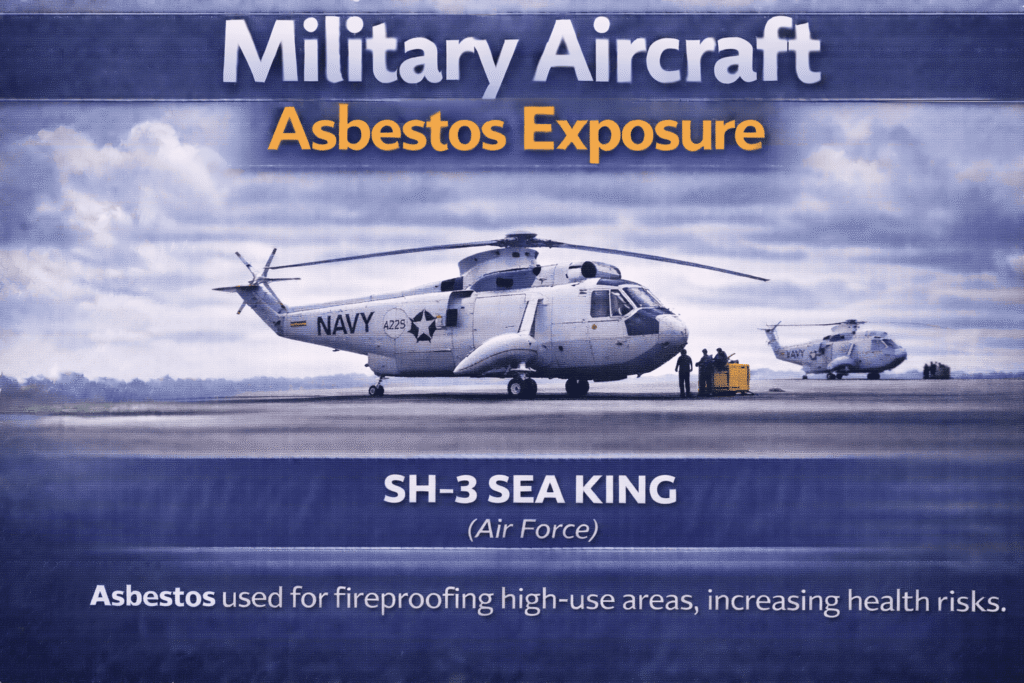
🚁 SH-3 Sea King Asbestos Exposure Lawsuits
The SH-3 Sea King was a twin-engine anti-submarine warfare (ASW) helicopter used by the U.S. Navy from the 1960s through the early 2000s. It played a vital role in search-and-rescue (SAR), anti-submarine patrols, and transport missions from aircraft carriers and naval vessels. Its mission profile required rugged thermal protection—much of which contained asbestos.
Asbestos was used in high-temperature insulation blankets, electrical system fire barriers, and engine exhaust wraps. Operating in salt-heavy marine environments caused these materials to degrade quickly, especially around engine housings and electronics bays. Routine maintenance, part replacement, and avionics checks often disturbed friable asbestos, releasing hazardous fibers. Shipboard mechanics, aircrews, and ground support staff were repeatedly exposed during pre-flight prep, repairs, and overhauls.
Why Asbestos Was Used in the SH-3 Sea King
Designed for extended flight operations over open water, the Sea King needed highly durable fireproofing.
-
Exhaust and engine wraps to contain extreme heat
-
Electrical system insulation in avionics bays
-
Fire barriers in cargo and crew compartments
-
Brake and clutch linings in rotor assemblies
-
Thermal panels along bulkheads and cabin walls
Exposure risk was highest when insulation was removed, replaced, or disturbed during electrical and engine repairs.
Navy Use of the SH-3 Sea King
Used on aircraft carriers, amphibious assault ships, and destroyers, the Sea King was essential to Cold War maritime patrols.
| Deployment Platforms | Primary Use | Common Service Areas |
|---|---|---|
| Aircraft carriers (e.g., USS Nimitz) | Anti-submarine and SAR missions | Flight decks, maintenance bays |
| Destroyers & Amphibious Ships | Reconnaissance and utility support | Shipboard hangars, engine rooms |
| Naval Air Stations (NAS) | Training and operational support | Hangars and avionics shops |
Its deployment across oceanic environments led to more frequent corrosion, requiring regular insulation replacement.
Estimated Number of Navy Personnel Exposed to SH-3 Asbestos
Due to its decades of service and shipboard maintenance demands, the SH-3 exposed thousands of workers.
| Occupation Group | Estimated Number Exposed |
|---|---|
| Navy Helicopter Mechanics | Over 9,500 exposed to insulation and wraps |
| Avionics Technicians | Approx. 4,200 worked near fireproofing panels |
| Flight Crews & Rescue Swimmers | Around 2,800 exposed during onboard missions |
| Shipboard Maintenance Staff | Over 7,000 performed repairs and overhauls |
Total Estimated Exposure: Over 23,500 personnel may have experienced direct or secondary exposure.
Asbestos Exposure Areas on the SH-3 Sea King
Engine Bay & Exhaust
-
Asbestos wraps around turbine and exhaust components
-
High heat, salt, and vibration caused wrap degradation
Electrical and Avionics Bays
-
Fireproof barriers lined sensitive electronics
-
Accessed during avionics upgrades and system repairs
Rotor Assembly
-
Brake systems and clutches used asbestos friction parts
-
Replaced frequently due to constant rotor activity
Cabin & Interior Panels
-
Heat-resistant insulation along bulkheads and access doors
-
Disturbed during rescue gear refits and interior upgrades
SH-3 Sea King Personnel at High Risk of Exposure
| Job Role | Exposure Risk | Details |
|---|---|---|
| Helicopter Mechanics | High | Removed wraps and serviced engines and exhausts |
| Avionics Techs | Moderate | Worked behind asbestos-lined electronic panels |
| Flight Crew Members | Moderate | Entered confined cabins with aging insulation |
| Shipboard Repair Technicians | High | Replaced parts and panels in salt-heavy environments |
Common Asbestos Products Used on the SH-3 Sea King
Engine Exhaust Wraps
-
Wrapped around exhaust manifolds and turbines
-
Frequently removed and replaced during servicing
Thermal Insulation Blankets
-
Found inside bulkheads and near power systems
-
Degraded over time in humid, corrosive conditions
Brake and Rotor Friction Parts
-
Contained asbestos for emergency braking systems
-
Ground down and replaced by rotor maintenance crews
Electrical Barrier Insulation
-
Fireproof panels shielded avionics systems
-
Handled during system updates or troubleshooting
Long-Term Health Risks from SH-3 Asbestos Exposure
-
Mesothelioma – Incurable cancer caused by asbestos fibers
-
Asbestos-Related Lung Cancer – Linked to prolonged exposure
-
Asbestosis – Progressive lung disease from scarring
-
Pleural Disease – Inflammation and thickening of lung lining
Lawsuits Filed by SH-3 Sea King Veterans
-
Navy mechanics diagnosed with mesothelioma years after retirement
-
Flight crew families filed wrongful death claims after diagnosis
-
Avionics technicians exposed during electronics servicing
-
Lawsuits targeted parts manufacturers and defense contractors
Sample SH-3 Sea King Asbestos Settlements
| Settlement Amount | Case Details |
|---|---|
| $3.2 million | Navy aviation mechanic exposed during turbine inspections |
| $2.8 million | Avionics tech diagnosed with mesothelioma |
| $2.1 million | Shipboard repairman exposed in hangar-based refits |
| $1.9 million | Flight crew veteran exposed in cabin and electronics workspaces |
Companies Linked to SH-3 Asbestos Components
-
Sikorsky Aircraft (manufacturer)
-
Raybestos (brake and clutch materials)
-
Johns-Manville (insulation and wraps)
-
Bendix (rotor and engine parts)
-
Owens Corning (cabin insulation panels)
Asbestos Trust Funds for Navy Veterans
-
Over $30 billion remains in asbestos trusts
-
Claims typically pay $300,000 to $600,000+
-
Filing won’t affect your VA disability compensation
-
Claims can be filed even decades after service
VA Benefits for SH-3 Sea King Veterans
-
Up to $3,800/month for 100% disability (mesothelioma)
-
Access to VA cancer care and treatment programs
-
Survivor benefits available through DIC payments
-
Priority health services for service-connected illnesses
Filing a SH-3 Sea King Asbestos Claim
Step 1: Confirm asbestos-related diagnosis
Step 2: Gather service records and flight logs
Step 3: File asbestos trust claims or lawsuit with help from legal experts
Step 4: Receive compensation—often within 6–12 months
Statute of Limitations
-
Personal Injury: 2–3 years after diagnosis
-
Wrongful Death: 2–3 years after passing
-
Trust Claims: Many remain open indefinitely
SH-3 Sea King Asbestos Exposure FAQs
Q: Did all Sea Kings contain asbestos?
Yes. Engine wraps, fire barriers, and panels used asbestos insulation.
Q: Can families file if the veteran passed away?
Yes. Survivors can file wrongful death and trust fund claims.
Q: Is it too late to file?
No. Even decades after discharge, veterans can pursue claims.
Q: Will a claim impact VA benefits?
No. You can receive both VA benefits and lawsuit settlements.
Speak With a Legal Advocate for Navy Veterans
📞 Call 800.291.0963 for a free asbestos exposure case review.
You may qualify for compensation through trust funds or legal action based on your ship, aircraft, and maintenance history.