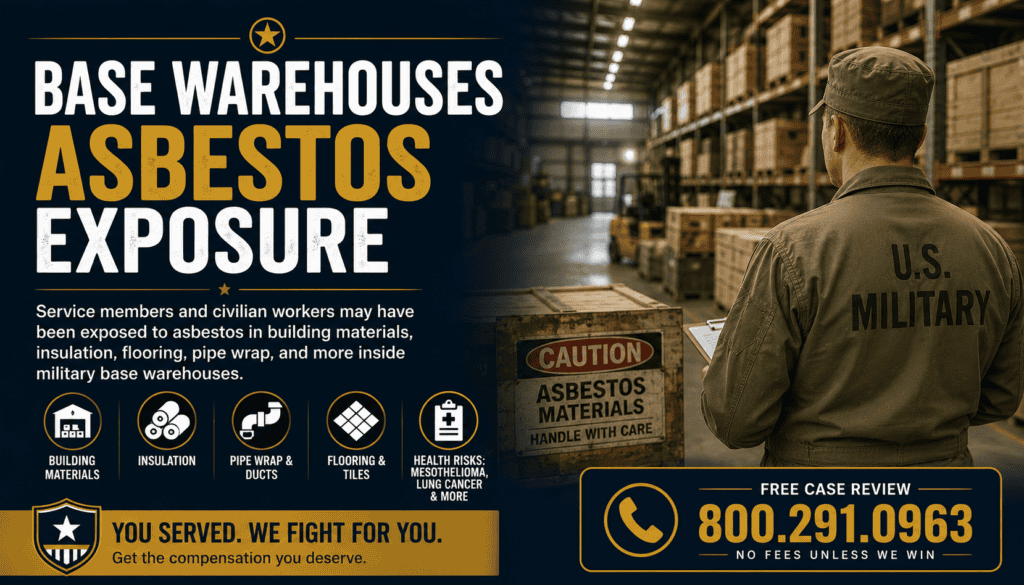
Base Warehouses Asbestos Exposure
Base warehouses asbestos exposure research should focus on the military installation, warehouse or building, service dates, occupation, work areas, maintenance history, renovation projects, and specific materials that may have been disturbed. VA identifies asbestos as a material used in older buildings and recognizes construction, carpentry, insulation work, demolition, flooring, roofing, and related building work as potential military exposure settings.
Veterans can strengthen a warehouse exposure history with personnel records, installation maps, building plans, asbestos surveys, construction specifications, maintenance files, renovation records, work orders, procurement documents, and specific witness information. Working in an older military warehouse alone does not establish asbestos exposure, so building-, material-, project-, task-, and date-specific evidence is important.
Base Warehouses Asbestos Exposure
Military base warehouses may have occupied older buildings constructed, repaired, or renovated when asbestos-containing materials were used in insulation, pipes, flooring, roofing, cement sheet, and other building products. VA identifies older buildings, construction, carpentry, insulation work, demolition, flooring, and roofing as potential military asbestos-exposure settings.
Working in or entering an older military warehouse does not by itself prove asbestos exposure. A stronger history identifies the installation, warehouse or building number, service dates, occupation, work area, maintenance or renovation activity, specific materials, and supporting military, facility, contractor, or procurement records.
Older Military Base Warehouses
Warehouses could include storage bays, offices, loading areas, mechanical rooms, utility spaces, maintenance sections, and other building systems. The age of a warehouse is only a starting point when researching possible asbestos exposure.
Building plans, construction specifications, asbestos surveys, renovation histories, maintenance files, and work orders can help determine what materials were installed and whether they were disturbed during the relevant period.
Warehouse Materials to Investigate
VA identifies historical military asbestos exposure involving flooring, roofing, cement sheet, pipes, and insulation. Warehouse research should focus on documented materials rather than assuming every older storage building contained the same products.
- Pipe and mechanical insulation
- Flooring and associated materials
- Roofing and cement-sheet products
- Insulation around heating and utility systems
- Other building materials supported by surveys, specifications, procurement records, or project files
How Warehouse Materials Could Be Disturbed
VA explains that asbestos becomes a health concern when asbestos-containing material is disturbed or damaged and fibers become airborne. Construction, carpentry, insulation work, renovation, and demolition can disturb older building materials.
- Repairing pipes or mechanical systems
- Removing or replacing flooring and roofing
- Opening walls, ceilings, or utility spaces
- Renovating storage or office areas
- Demolishing older warehouse structures
- Working around damaged or deteriorated materials
Veterans and Warehouse Personnel to Investigate
Potential exposure depends on actual duties and proximity to disturbed material. Maintenance personnel, construction workers, carpenters, pipefitters, insulation workers, renovation crews, and demolition specialists may warrant detailed research when assigned to older military warehouses.
Supply, logistics, loading, storage, and other personnel may also investigate documented disturbance events in their work areas, but warehouse duty alone should not be treated as proof of asbestos exposure.
Warehouse Renovation and Demolition
VA identifies demolition of old buildings and building-related construction work among potential military asbestos-exposure circumstances. Warehouse modernization, utility replacement, roof work, flooring removal, and demolition can therefore be important when reconstructing an exposure history.
Research should identify project dates, building areas affected, materials disturbed, asbestos surveys, abatement records, contractors, military work crews, and whether the veteran was present during or after the work.
Documenting Warehouse Asbestos Exposure
- DD214 and Official Military Personnel File records
- MOS, rating, AFSC, specialty, unit, and duty-station records
- Installation maps and warehouse building numbers
- Facility plans and construction specifications
- Asbestos surveys and abatement records
- Maintenance, renovation, roofing, and demolition files
- Procurement, contractor, and work-order records
- Specific firsthand coworker or witness statements
National Archives states that OMPFs can contain duty stations, assignments, training, qualifications, military specialty, and separation information useful for reconstructing a veteran’s service history.
Mesothelioma and Medical Follow-Up
Veterans concerned about possible warehouse asbestos exposure should tell their health-care provider about the military installation, warehouse or building, service dates, occupation, maintenance or renovation activity, and known disturbed materials. VA notes that asbestos-related symptoms can take 20 to 50 years to appear.
Persistent shortness of breath, coughing, chest pain, unexplained weight loss, or other concerning symptoms should be evaluated by a qualified medical professional. A history of warehouse duty alone cannot diagnose disease.
VA Benefits, Trust Funds and Legal Options
VA states that disability compensation based on asbestos exposure may be available when a veteran has a health condition caused by asbestos and had contact with asbestos during military service. Evidence can include medical records, service records listing the veteran’s job or specialty, and medical evidence connecting military exposure to the condition.
Separate asbestos trust fund or civil claims may involve different requirements concerning products, manufacturers, contractors, exposure evidence, jurisdiction, and filing deadlines.
Frequently Asked Questions
Could older military warehouses contain asbestos?
VA identifies asbestos as a mineral fiber used in older buildings and recognizes flooring, roofing, pipes, insulation, construction, carpentry, and demolition as potential military exposure sources. A specific warehouse should still be researched through facility and project records.
Does working in a military warehouse prove asbestos exposure?
No. Exposure research should identify whether asbestos-containing material was present and disturbed in the veteran’s work area during the relevant period.
Why are renovation and demolition records important?
Repair, renovation, or demolition can disturb older building materials. Project files may identify the warehouse, dates, materials, asbestos surveys, contractors, and work performed.
What records can establish where a veteran served?
National Archives states that OMPFs can document duty stations, assignments, training, qualifications, and military specialty.
How long can asbestos-related symptoms take to appear?
VA states that symptoms associated with asbestos-related diseases often do not appear until 20 to 50 years after exposure.
Confirmed Sources
Review Your Military Warehouse Exposure History
Write down the military base, warehouse or building number, unit, service dates, occupation, storage or work areas, maintenance activity, renovation projects, damaged materials, contractors, and witnesses you remember. Preserve available service, facility, project, procurement, and medical records and clearly distinguish documentation from recollection.
Call 800.291.0963 for a no-obligation case evaluation and to speak with a real person 24/7, 365 days a year. Mesothelioma Help Center is not a law firm or medical provider and does not determine VA eligibility.
Disclaimer: General information only—not legal or medical advice. This website is not a law firm. Exposure, VA eligibility, liability and deadlines vary by case and jurisdiction. Do not disturb suspected asbestos. Past results do not guarantee future outcomes.