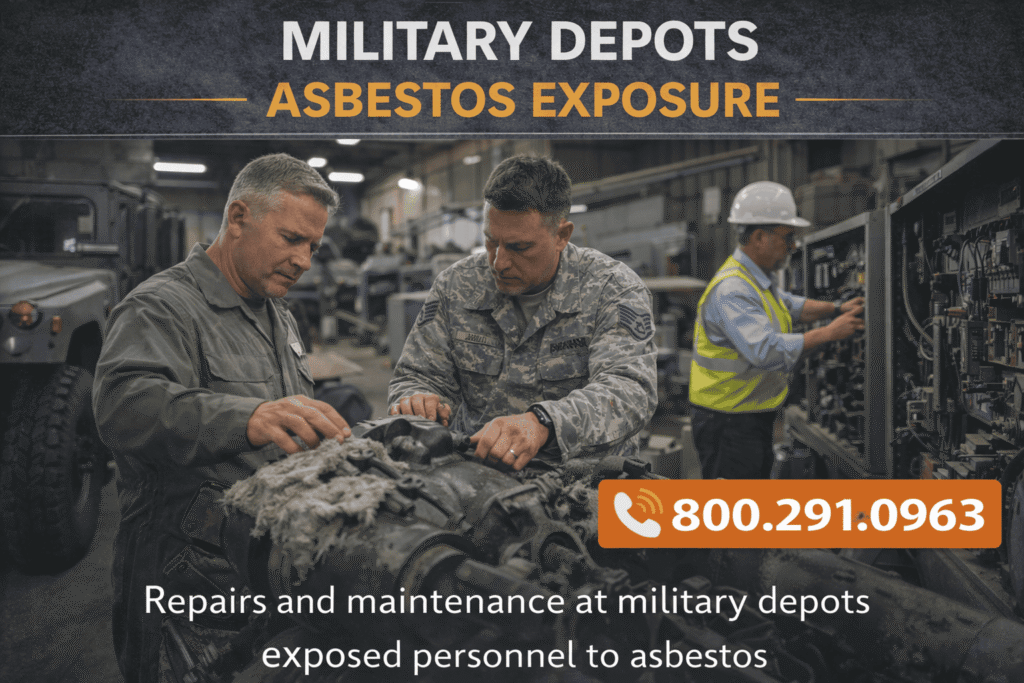
🏗️ Military Depots and Asbestos Exposure
The Hidden Danger in U.S. Military Supply, Repair, and Storage Facilities
⚠️ Overview: Why Military Depots Were High-Risk Sites for Asbestos Exposure
U.S. military depots—spanning from supply warehouses and vehicle maintenance shops to weapons storage and equipment refurbishment centers—were major hubs of asbestos exposure from the 1940s through the 1980s. These facilities frequently used asbestos-containing materials (ACMs) in construction, machinery, repair processes, and protective equipment.
Depot workers, mechanics, and service members were regularly exposed to airborne asbestos fibers during equipment maintenance, insulation work, brake and clutch repair, and construction projects. Today, thousands of veterans and civilian workers who spent time in these depots are being diagnosed with mesothelioma, lung cancer, and asbestosis—sometimes decades after exposure.
🛠️ What Are Military Depots?
Military depots are large-scale facilities used for:
-
Storing weapons, vehicles, and aircraft parts
-
Repairing and overhauling military equipment
-
Packing and shipping materials to bases and combat zones
-
Refurbishing worn-out parts and preparing vehicles for redeployment
Each of these activities involved frequent contact with asbestos-laden components and building materials.
🧱 Asbestos in Military Depot Buildings
| Area | Common Asbestos Materials |
|---|---|
| Roofs & Walls | Asbestos cement shingles, pipe insulation, fireproof panels |
| Floors | Vinyl asbestos tiles, mastic adhesives |
| Ceilings | Spray-on insulation, popcorn ceiling texture |
| Boiler & Furnace Rooms | Pipe wrapping, insulation blankets, gaskets |
| Offices & Admin Areas | Floor tiles, wallboard joint compound, ceiling panels |
Many military depots were built before asbestos regulations took effect in the late 1970s, and they remained in use without proper abatement for years.
🔧 Asbestos Exposure During Equipment Repair
Depot workers were often assigned to repair and overhaul equipment—tasks that released asbestos fibers into the air:
-
Brake pad and clutch replacement on tanks, trucks, and aircraft
-
Refitting gaskets and seals on engines and turbines
-
Working with insulation materials for HVAC and piping systems
-
Welding or grinding near asbestos lagging
-
Cleaning contaminated workspaces without respiratory protection
🧍 Who Was at Risk?
| Occupation | Risk of Asbestos Exposure |
|---|---|
| Depot Mechanics | Frequent contact with asbestos-containing brakes, clutches, gaskets |
| Electricians & Welders | Worked around pipe insulation and fireproofing materials |
| Boiler Operators | Handled insulated valves and fittings in heat systems |
| Warehouse Staff | Worked in deteriorating buildings with friable asbestos |
| Civilian Contractors | Unaware of asbestos risks during construction or repairs |
| Veterans in Training | Exposed during hands-on vehicle and equipment maintenance |
🧾 Notable Military Depots Linked to Asbestos Use
Some of the most well-known depots where asbestos exposure occurred include:
-
Red River Army Depot (Texas) – Vehicle repair, brake work, and engine overhauls
-
Letterkenny Army Depot (Pennsylvania) – Missile and electronics systems with asbestos insulation
-
Anniston Army Depot (Alabama) – Known for vehicle maintenance involving asbestos brake and clutch work
-
Tooele Army Depot (Utah) – Storage and disposal of munitions with asbestos-packaged components
-
Marine Corps Logistics Base Albany (Georgia) – Asbestos use in repair shops and warehouses
-
Hill Air Force Base (Utah) – Aircraft repair and component refurbishment involving asbestos insulation
-
Norfolk Naval Shipyard (Virginia) – Heavy asbestos exposure in ship and depot repair operations
-
ion
🔴 Ammunition Depots
-
Hawthorne Army Depot (Nevada)
-
Used for munitions storage and demilitarization.
-
Asbestos used in bunkers, pipe insulation, and equipment housing explosive materials.
-
-
Pueblo Army Depot (Colorado)
-
Stored chemical and conventional munitions.
-
Asbestos present in warehouses, storage buildings, and HVAC systems.
-
-
Tooele Army Depot (Utah)
-
Major ammunition supply point.
-
ACMs used in storage bunkers, maintenance shops, and boiler rooms.
-
-
Crane Army Ammunition Activity (Indiana)
-
Involved in munitions handling, storage, and renovation.
-
Buildings and equipment contained asbestos insulation and brake linings.
-
🔴 Fuel Depots and POL (Petroleum, Oil, Lubricant) Facilities
-
Defense Fuel Supply Point – Manchester (Washington)
-
Managed Navy and Air Force fuel storage.
-
Underground piping, pump systems, and insulation with asbestos materials.
-
-
San Pedro Fuel Depot (DFSP San Pedro) (California)
-
Fuel storage for Navy operations.
-
Asbestos used in pipe insulation and electrical conduit wrapping.
-
-
Red Hill Bulk Fuel Storage Facility (Hawaii)
-
Massive WWII-era Navy fuel depot.
-
Documented asbestos use in tunnel systems, pipelines, and pump rooms.
-
🔴 Vehicle and Supply Depots
-
Anniston Army Depot (Alabama)
-
Repairs tanks and vehicles.
-
Known asbestos exposure in brake repair shops, insulation, and machinery.
-
-
Letterkenny Army Depot (Pennsylvania)
-
Stores missiles, electronics, and vehicles.
-
Asbestos used in older warehouses, vehicle repair shops, and electrical panels.
-
-
Corpus Christi Army Depot (Texas)
-
Aircraft repair and overhaul.
-
Aircraft brakes, gaskets, insulation, and buildings had asbestos exposure risks.
-
🔴 Marine and Navy Supply Depots
-
Marine Corps Logistics Base Albany (Georgia)
-
Supplies and repairs for Marine operations.
-
Old warehouse buildings and vehicle bays contained ACMs.
-
-
Naval Supply Depot – Mechanicsburg (Pennsylvania)
-
Major Navy logistics hub.
-
Asbestos in steam pipes, storage buildings, and mechanical equipment.
-
-
Norfolk Naval Supply Center (Virginia)
-
Distributed fuel, ammunition, and supplies.
-
Asbestos found in warehouses, insulation, and ship support facilities.
-
🔴 Air Force Supply and Equipment Depots
-
Hill Air Force Base – Ogden Air Logistics Center (Utah)
-
Aircraft maintenance and storage.
-
Brake pads, pipe insulation, and ceiling tiles contained asbestos.
-
-
Tinker Air Force Base – Oklahoma City Air Logistics Complex (Oklahoma)
-
Repairs aircraft engines and electronics.
-
Documented use of asbestos in gaskets, wiring insulation, and ducts.
-
⚠️ Common Areas of Exposure Across All Depots:
-
Boiler rooms and steam pipes
-
Vehicle brake and clutch repair shops
-
Fuel storage tanks and underground pipelines
-
Electrical panels and cable insulation
-
Bunkers and storage buildings insulated with asbestos
Yes, in addition to ammunition and fuel depots, the military has operated many types of depots and logistics hubs, some of which resemble civilian transport infrastructure like bus or railroad depots. Below are common types of military depots that often involved asbestos exposure due to insulation, vehicle maintenance, and building materials:
🔧 1. Vehicle Maintenance Depots
-
Purpose: Repair and overhaul of trucks, jeeps, tanks, buses, and trailers.
-
Asbestos Risks: Brake pads, clutches, insulation, engine gaskets.
-
Example: Anniston Army Depot (Alabama).
🚆 2. Military Rail Depots / Rail Yards
-
Purpose: Transport of heavy equipment, munitions, and supplies via rail.
-
Asbestos Risks: Train brake linings, insulation in railcars, steam heating.
-
Example: Letterkenny Army Depot (PA) had extensive internal rail systems.
🚌 3. Military Bus Depots / Motor Pools
-
Purpose: Storage and dispatch centers for buses, troop carriers, and transport vehicles.
-
Asbestos Risks: Brake and clutch dust in garages, insulation on heaters and exhaust.
-
Example: Every major base had motor pools with bus maintenance facilities.
🚢 4. Naval Ship Supply Depots / Port Depots
-
Purpose: Offloading and storing ship cargo including weapons, food, and fuel.
-
Asbestos Risks: Warehouses, pierside equipment, and insulation for refrigeration units.
-
Example: Norfolk Naval Supply Center (Virginia).
✈️ 5. Aviation Parts & Supply Depots
-
Purpose: Logistics support for aircraft engines, electronics, and airframes.
-
Asbestos Risks: Brake assemblies, cockpit insulation, hangar pipe wraps.
-
Example: Tinker AFB (OK), Hill AFB (UT).
🏭 6. General Supply Depots / Logistics Bases
-
Purpose: Store food, uniforms, ammo, tools, and repair parts.
-
Asbestos Risks: Insulation in warehouses, boiler rooms, and HVAC ductwork.
-
Example: Defense Depot Ogden (Utah) and Defense Supply Center Richmond (VA).
🛢 7. Petroleum, Oil & Lubricants (POL) Depots
-
Purpose: Storage and transport of fuel, lubricants, and oil for military use.
-
Asbestos Risks: Pipe wrapping, pump insulation, underground storage tank seals.
-
Example: Red Hill Fuel Facility (HI).
🔥 8. Ordnance Depots
-
Purpose: Stored, inspected, and issued weapons, bombs, and explosives.
-
Asbestos Risks: Fireproofing in bunkers, weapon-cleaning areas, and insulation near explosives.
-
Example: Blue Grass Army Depot (KY).
🧯 9. Firefighting Equipment Depots
-
Purpose: Stocked hoses, foam agents, and equipment for base fire crews.
-
Asbestos Risks: Fire blankets, pipe wraps, protective gear contained asbestos.
-
Example: Air Force fire training areas often had exposure from burn pits & gear.
🏗 10. Engineering Depots (Combat Engineers)
-
Purpose: Stored construction, bridging, and demolition equipment.
-
Asbestos Risks: Power tools, pipe gaskets, generator insulation, asbestos cement.
-
Example: USACE depots (Army Corps of Engineers).
🧼 11. Quartermaster Depots
-
Purpose: Stored clothing, tents, bedding, cleaning supplies, and gear.
-
Asbestos Risks: Insulated steam laundry rooms, old mops or fabrics with fire retardants.
-
Example: Philadelphia Quartermaster Depot.
🧪 12. Chemical Depots
-
Purpose: Stored and disposed of chemical weapons and materials.
-
Asbestos Risks: Used in air filtration systems, protective barriers, incinerator linings.
-
Example: Deseret Chemical Depot (UT).
🚜 13. Agricultural & Veterinary Depots
-
Purpose: Supplied feed, medicines, and tools for military animals (e.g. WWII & Korea era).
-
Asbestos Risks: Insulation in old barns, storage silos, and vet clinics.
-
Example: Fort Sam Houston Veterinary Depot (historical).
⚡ 14. Signal Corps Depots
-
Purpose: Stored radios, wires, electronics, and communication gear.
-
Asbestos Risks: Wire insulation, radio components, and transformer housing.
-
Example: Signal Depot at Fort Monmouth (NJ).
🏥 15. Medical Supply Depots
-
Purpose: Stored surgical kits, medicines, beds, and hospital equipment.
-
Asbestos Risks: Asbestos used in autoclave insulation, sterilizer pads, and lab tile.
-
Example: Defense Depot Hill (UT) included medical supply units.
🌐 16. Communications/Telecom Depots
-
Purpose: Stored fiber cable, switchboards, relay towers, and telecom gear.
-
Asbestos Risks: Electrical panel insulation, floor tiles, relay room fireproofing.
-
Example: Army Communication-Electronics depots.
⚛️ 17. Nuclear Weapons Depots
-
Purpose: Stored or assembled nuclear warheads and components.
-
Asbestos Risks: Extensive use in insulation, glove boxes, reactor shielding, and turbine rooms.
-
Examples:
-
Kirtland AFB (NM) — nuclear storage bunkers
-
Pantex Plant (TX) — warhead assembly
-
❄️ 18. Cold Storage Depots / Refrigeration Warehouses
-
Purpose: Preserved perishables, medical supplies, and temperature-sensitive materials.
-
Asbestos Risks: Refrigeration piping insulation, walk-in freezer linings, fire doors.
-
Example: Defense Depot Memphis (TN).
🌪 19. Weather Equipment and Meteorological Depots
-
Purpose: Stored and maintained weather balloons, radar, forecasting gear.
-
Asbestos Risks: Radar housing insulation, electrical panels, HVAC systems.
-
Example: Air Weather Service units on USAF bases.
🧰 20. Tool & Machine Depots
-
Purpose: Supplied machining tools, welding gear, generators, etc.
-
Asbestos Risks: Arc chutes, welding blankets, cutting tool insulation.
-
Example: Depot-level maintenance facilities at Hill AFB or Anniston Depot.
🧨 21. Demolition and Explosive Ordnance Disposal (EOD) Supply Points
-
Purpose: Stored blasting caps, demo kits, and handling tools.
-
Asbestos Risks: Fireproof gear, insulation in transport containers, detonation chambers.
-
Example: EOD units at Aberdeen Proving Ground (MD).
🎖 22. Uniform & Textile Depots
-
Purpose: Stored and cleaned military uniforms, bedding, and tents.
-
Asbestos Risks: Fire-retardant uniforms, laundry boilers, and industrial dryers.
-
Example: Philadelphia Quartermaster Depot (PA) had textile operations.
🏛 23. General Services Administration (GSA) Federal Supply Depots
-
Purpose: Supplied both military and federal civilian agencies.
-
Asbestos Risks: Government warehouse construction, heating systems, equipment storage.
-
Example: Defense National Stockpile Center (multiple sites).
🛠 24. Depot-Level Overhaul & Manufacturing Centers
-
Purpose: Major mechanical or electrical rebuilds of tanks, aircraft, ships.
-
Asbestos Risks: Found throughout brake shops, electrical insulation, fireproofing.
-
Examples:
-
Red River Army Depot (TX) — armored vehicle rebuilds
-
Corpus Christi Army Depot (TX) — aircraft maintenance
-
📦 25. Quartermaster Depots
-
Purpose: Managed massive inventories of clothing, food, blankets, tents, and personal gear for all military branches.
-
Asbestos Risks:
-
Boilers in laundry facilities
-
Insulation in warehouse walls and pipes
-
Fire-retardant fabric supplies possibly containing asbestos
-
-
Examples:
-
Philadelphia Quartermaster Depot (PA)
-
Jeffersonville Quartermaster Depot (IN)
-
Ogden Quartermaster Depot (UT)
-
🛏 26. Barracks Supply Depots
-
Purpose: Distributed bunks, mattresses, lockers, and furniture to bases and ships.
-
Asbestos Risks: Insulated steam pipes in storage buildings, mattress fireproofing.
-
Example: Included in Quartermaster operations at many depots.
🏭 27. Industrial Equipment Depots
-
Purpose: Supplied forklifts, generators, compressors, and support gear.
-
Asbestos Risks:
-
Engine gaskets
-
Brake linings
-
Insulated generator housings
-
🧽 28. Cleaning & Sanitation Supply Depots
-
Purpose: Managed disinfectants, mops, solvents, and hygiene items for barracks and field use.
-
Asbestos Risks: Older mop heads and fabrics were sometimes treated with asbestos-based fireproofing.
🎯 29. Target Range Equipment Depots
-
Purpose: Supplied targets, berm materials, safety gear for weapons training ranges.
-
Asbestos Risks:
-
Protective gear
-
Pipe wrap insulation in range buildings
-
Older target casings with ACM materials
-
🧊 30. Ice & Water Purification Supply Depots
-
Purpose: Supplied chillers, water purification systems, and containers for remote bases.
-
Asbestos Risks:
-
Water heater insulation
-
Refrigerant pipes
-
Asbestos seals in older purification units
-
🛑 31. Base Closure and Salvage Depots
-
Purpose: Handled equipment from decommissioned bases—surplus or disposal.
-
Asbestos Risks: High likelihood due to removal and handling of:
-
Asbestos floor tile
-
Pipe coverings
-
Old machinery and parts
-
🔌 32. Electrical Supply Depots
-
Purpose: Stored transformers, wire reels, switchboards, and light systems.
-
Asbestos Risks:
-
Wire insulation
-
Transformer fireproofing
-
Circuit breaker panels
-
🪖 33. Field Kit and Survival Supply Depots
-
Purpose: Stocked cold-weather kits, mess gear, shelters, and personal survival tools.
-
Asbestos Risks:
-
Portable stove insulation
-
Fireproof pouches
-
Treated fabric components
-
🛡 34. Armor Depots
-
Purpose: Stored and repaired tanks, armored personnel carriers, and weaponized vehicles.
-
Asbestos Risks:
-
Brake pads
-
Engine gaskets
-
Vehicle compartment insulation
-
-
Example: Red River Army Depot (TX).
🔋 35. Battery and Power Supply Depots
-
Purpose: Managed electrical batteries and field generators.
-
Asbestos Risks:
-
Thermal insulation in battery compartments
-
Fireproofing in generator enclosures
-
🧨 36. Blasting and Demolition Supply Depots
-
Purpose: Issued demolitions, shape charges, TNT, and safety gear.
-
Asbestos Risks: Fire-resistant gear, wiring, and storage crates.
⚙️ 37. Gear and Equipment Supply Depots
-
Purpose: Stocked combat gear, field packs, belts, helmets, canteens.
-
Asbestos Risks:
-
Equipment cases with asbestos lining
-
Storage rooms with asbestos ceiling or tile
-
📻 38. Radio & Signal Equipment Depots
-
Purpose: Supplied and maintained radios, antennas, switchboards, and radar gear.
-
Asbestos Risks:
-
Radio circuit boards and casings
-
Wire insulation
-
Radar tower panel insulation
-
-
Example: Fort Monmouth Signal Depot (NJ).
🧑🍳 39. Mess Supply Depots
-
Purpose: Stored cooking gear, food containers, ovens, and kitchen equipment.
-
Asbestos Risks:
-
Stove and oven insulation
-
Fire blankets
-
Pipe insulation in mess buildings
-
🎒 40. Field Hospital Supply Depots
-
Purpose: Supplied tents, cots, surgical kits, sterilizers, and medicine for combat zones.
-
Asbestos Risks:
-
Autoclave insulation
-
Fireproof blankets
-
Flooring in portable hospital units
-
🪓 41. Forestry & Logging Equipment Depots
-
Purpose: Provided chainsaws, axes, tents, and gear for military timber ops.
-
Asbestos Risks:
-
Brake linings
-
Saw insulation and housing
-
Insulated tool storage boxes
-
🚧 42. Barrier & Fortification Depots
-
Purpose: Supplied barbed wire, sandbags, fencing, concrete forms, and bunker parts.
-
Asbestos Risks:
-
Cement sheets containing asbestos
-
Reinforced panels or shelters lined with ACMs
-
🔦 43. Lighting & Electrical Systems Depots
-
Purpose: Supplied floodlights, wiring systems, portable lamps, and power poles.
-
Asbestos Risks:
-
Light fixture insulation
-
Wiring jackets
-
Electrical panel boards
-
🏞 44. Base Support & Infrastructure Depots
-
Purpose: Supplied plumbing, fencing, HVAC, and general infrastructure supplies.
-
Asbestos Risks:
-
Asbestos cement pipes
-
HVAC ductwork
-
Pipe wrap and caulking
-
🏭 Companies That Supplied Asbestos to Military Depots
Many asbestos products used in military depots were supplied by large manufacturers who are now part of legal claims:
-
Johns-Manville – Pipe insulation and cement panels
-
Raybestos-Manhattan – Brakes and clutch materials
-
Armstrong World Industries – Asbestos floor tiles
-
General Motors (AC Delco) – Brake parts and engine gaskets
-
W.R. Grace & Co. – Fireproofing sprays and insulation
-
Owens Corning – Building and pipe insulation
These companies supplied materials used in warehouse construction, machinery repair, and vehicle components.
🩺 Long-Term Health Effects
Exposure to asbestos at military depots can result in:
-
Mesothelioma – A rare and deadly cancer of the lining around the lungs or abdomen
-
Asbestosis – Lung scarring that restricts breathing
-
Lung Cancer – Especially among those who smoked or had extended exposure
-
Pleural Conditions – Effusions, plaques, or thickening of the lung lining
Most asbestos diseases have latency periods of 20–50 years, so veterans may only now be showing symptoms of exposure that occurred decades ago.
📞 Support and Help
If you or a loved one worked with or around military depots and were later diagnosed with an asbestos-related disease, free legal and medical support is available. You may be entitled to significant compensation—even decades after exposure.
👨⚖️ How a Mesothelioma Lawyer Can Help
An asbestos attorney can help by:
• Identifying the specific military depot and equipment involved
• Researching depot records and product exposure timelines
• Filing trust fund claims or lawsuits against manufacturers
• Representing surviving family members in wrongful death claims
• Meeting all legal deadlines
• Charging nothing unless you win compensation
⚡ Free Legal Help for Veterans Who Develop Mesothelioma
If you or a loved one served or worked at a military depot and later developed mesothelioma, lung cancer, or asbestosis—you may be entitled to compensation.
📞 Call Now: 800.291.0963
• No upfront costs
• No fees unless we win
• We identify job sites, brands, and exposure sources
• Help for depot workers, veterans, and families
📩 Or request help online 24/7