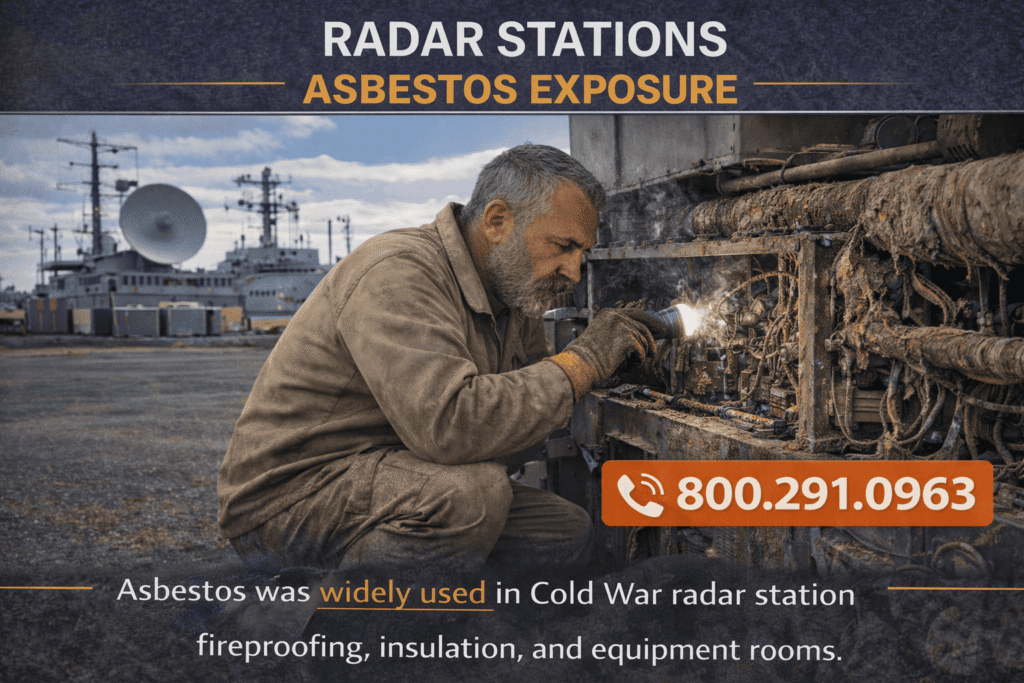
⚠️ Asbestos Use in Military Radar Stations
From the Cold War through the 1980s, military radar stations were critical components of America’s early warning and surveillance systems. Built to detect enemy aircraft and missiles, these facilities were often located in remote, high-security environments and constructed using asbestos-containing materials (ACMs) for fire protection, insulation, and durability.
Radar station personnel—along with electricians, HVAC crews, and communication techs—were routinely exposed to airborne asbestos fibers during daily operations, maintenance, and upgrades. Decades later, many are being diagnosed with mesothelioma, lung cancer, and asbestosis due to this hidden exposure.
🧱 Common Asbestos Materials Used in Radar Stations
| Location or System | Asbestos-Containing Materials |
|---|---|
| Radar Control Rooms | Acoustic panels, flooring, sprayed ceiling insulation |
| Generator & Utility Rooms | Pipe wrap, boiler insulation, gasket seals |
| Communication Equipment | Arc chutes, wire insulation, switchgear panels |
| HVAC Systems | Duct insulation, fire barriers, blower linings |
| Power Backup Systems | Thermal coatings, electrical insulation, engine parts |
| Underground Bunkers | Asbestos cement panels, fireproof wallboard, pipe lagging |
These enclosed environments had limited airflow, increasing the danger of inhaling microscopic asbestos fibers when materials were disturbed.
🛠️ How Asbestos Exposure Occurred in Radar Stations
-
Routine maintenance of heating, ventilation, and electrical systems
-
Upgrades or retrofits involving ceiling panels, walls, or conduits
-
Wiring installation or repairs in confined areas containing ACMs
-
Cleaning or dusting of older, deteriorating insulation and tile
-
Generator room servicing that disturbed asbestos-covered pipes or boilers
Asbestos exposure often occurred without protective gear, and most personnel were unaware of the long-term health risks at the time.
🧍 Who Was at Risk?
| Role | Exposure Risk |
|---|---|
| Radar technicians | Worked long hours in buildings lined with asbestos insulation |
| Electricians & HVAC workers | Repaired ductwork, panels, and wiring surrounded by ACMs |
| Facility maintenance crews | Performed routine upgrades and insulation replacements |
| Base construction workers | Installed asbestos products during original buildouts |
| Military security and operators | Spent years in contaminated radar stations |
| Civilian contractors | Hired for radar site expansion, often unprotected from asbestos dust |
📍 Radar Stations and Facilities with Known or Likely Asbestos Use
-
PAVE PAWS Radar Sites (California, Massachusetts, Alaska) – High-output systems in reinforced buildings
-
SAGE Air Defense Radar Stations – Nationwide Cold War installations with ACM-lined bunkers
-
NORAD Facilities (Cheyenne Mountain, Peterson AFB) – Contained asbestos in walls, ceilings, and pipe insulation
-
DEW Line and Early Warning Sites (Alaska, Canada, Greenland) – Harsh-climate buildings built with asbestos
-
Nike Missile Radar Sites – Operational centers with ACM floor tiles and electrical panels
-
Coastal Surveillance Radar Stations – Contained fireproofing, ceiling panels, and outdated wiring
🏭 Companies That Supplied Asbestos Products to Radar Stations
Many asbestos-containing materials used in radar station construction and equipment came from well-known manufacturers:
-
Johns-Manville – Pipe insulation, ceiling tiles, cement boards
-
General Electric – Arc chutes and switchgear for radar power systems
-
Armstrong World Industries – Floor tiles and ceiling panels
-
Owens Corning – Duct and thermal insulation
-
National Gypsum – Joint compound and wallboard
-
W.R. Grace & Co. – Fireproofing sprays and sealants
-
Raybestos-Manhattan – Brakes and electrical insulation materials in generators
🩺 Health Conditions Caused by Asbestos Exposure in Radar Stations
Personnel exposed to asbestos in radar facilities may later develop:
-
Mesothelioma – A rare, aggressive cancer of the lung or abdominal lining
-
Lung Cancer – Particularly in workers with years of exposure
-
Asbestosis – Progressive and irreversible lung scarring
-
Pleural Thickening and Effusions – Lung membrane damage and fluid buildup
These diseases often appear 20–50 years after exposure, making early legal and medical intervention crucial.
📞 Support and Help
If you or a loved one worked in or around military radar stations and were later diagnosed with an asbestos-related disease, free legal and medical support is available. You may be entitled to significant compensation—even decades after exposure.
👨⚖️ How a Mesothelioma Lawyer Can Help
An asbestos attorney can help by:
• Identifying which radar site(s) and equipment caused exposure
• Researching job records, duty assignments, and facility blueprints
• Filing trust fund claims or lawsuits against manufacturers
• Representing surviving family members in wrongful death claims
• Meeting all legal deadlines
• Charging no fees unless you win compensation
⚡ Free Legal Help for Veterans Who Develop Mesothelioma
If you or a loved one served or worked in a military radar station and later developed mesothelioma, lung cancer, or asbestosis, you may be eligible for compensation.
📞 Call Now: 800.291.0963
• No upfront costs
• No fees unless we win
• We identify asbestos products and responsible parties
• Help for radar techs, veterans, and families
📩 Or request help online 24/7