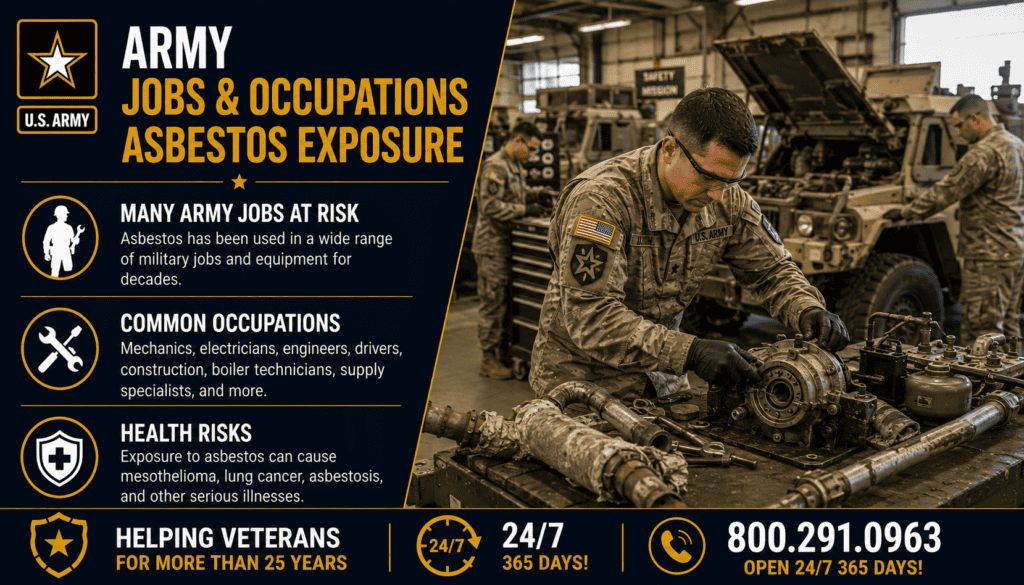
Marine Corps Jobs & Occupations Asbestos Exposure
Marine Corps personnel have served in hundreds of Military Occupational Specialties (MOS), performing missions ranging from aviation maintenance and engineering to logistics, communications, vehicle maintenance, construction, utilities, firefighting, and combat support. Although not every Marine occupation involved direct contact with asbestos, many Marines routinely worked around asbestos-containing equipment, insulation, construction materials, and industrial systems throughout their military careers.
For decades, asbestos was considered an ideal military material because it resisted heat, fire, electricity, chemicals, and friction. It was incorporated into aircraft, military vehicles, boilers, generators, pumps, electrical equipment, HVAC systems, heavy machinery, shipboard systems, and thousands of construction materials found throughout Marine Corps installations.
Mechanics replaced asbestos brake linings and clutches. Engineers renovated buildings insulated with asbestos. Electricians serviced electrical equipment containing asbestos insulation. Aircraft mechanics repaired engines and braking systems. Firefighters entered older structures containing asbestos fireproofing. Maintenance crews repaired boilers, steam systems, pumps, and industrial equipment.
Even Marines whose primary duties were administrative or logistical often worked inside older buildings where asbestos remained in ceilings, flooring, insulation, utility tunnels, and mechanical systems.
If you or a loved one has been diagnosed with mesothelioma, asbestos-related lung cancer, asbestosis, or another asbestos disease following Marine Corps service, your Military Occupational Specialty (MOS) may help identify likely sources of occupational asbestos exposure.
📞 Call 800.291.0963 to discuss Marine Corps occupational asbestos exposure, military records, VA benefits, and potential legal options.
🎯 What You’ll Learn
This guide explains:
- 🪖 Which Marine Corps occupations had the greatest asbestos exposure risk
- 📋 How Military Occupational Specialties (MOS) help document exposure
- ⚙️ Common Marine Corps jobs involving asbestos-containing equipment
- 🏢 Buildings and facilities where occupational exposure occurred
- 🩺 Diseases associated with occupational asbestos exposure
- 📁 Military records that may support a claim
- 🇺🇸 VA benefits
- ⚖️ Legal options available to Marine veterans
🪖 Understanding Marine Corps Military Occupational Specialties (MOS)
Every Marine receives a Military Occupational Specialty (MOS) that defines primary job responsibilities.
Some MOS specialties routinely involved maintaining equipment, repairing vehicles, servicing aircraft, operating industrial machinery, constructing facilities, or maintaining utility systems where asbestos-containing materials were commonly used.
Examples include:
- 🔧 Mechanics
- 👷 Engineers
- ⚡ Electricians
- ✈️ Aircraft mechanics
- 🚒 Firefighters
- 🚜 Heavy equipment operators
- 🏗️ Maintenance crews
- 📦 Supply personnel
- 🌬️ HVAC technicians
- 🔥 Boiler operators
- ⚙️ Utility workers
- 🏥 Medical personnel
Although exposure varied among occupations, MOS history often becomes one of the most important pieces of evidence during asbestos exposure investigations.
⚠️ Why Some Marine Corps Occupations Faced Greater Risk
Not every Marine experienced the same opportunity for asbestos exposure.
Higher-risk occupations generally involved:
- Repairing vehicles
- Maintaining aircraft
- Rebuilding engines
- Replacing brakes
- Repairing generators
- Servicing boilers
- Installing insulation
- Maintaining electrical systems
- Performing construction
- Renovating older buildings
- Repairing HVAC systems
- Operating heavy equipment
Many of these activities disturbed aging asbestos-containing products, releasing microscopic fibers into the air.
🔧 Marine Corps Mechanics
Mechanics historically represented one of the Marine Corps occupations most frequently associated with asbestos exposure.
Typical duties included:
- Brake replacement
- Clutch replacement
- Engine rebuilding
- Transmission repairs
- Cooling system repairs
- Exhaust repairs
- Generator maintenance
- Vehicle overhauls
Potential asbestos-containing products included:
- 🛑 Brake linings
- ⚙️ Clutches
- 🔩 Engine gaskets
- 🔥 Heat shields
- 🚗 Exhaust insulation
- 🪢 Packing materials
Brake repairs and gasket removal frequently generated airborne asbestos dust inside enclosed maintenance facilities.
Related page
➡️ Marine Corps Mechanics Asbestos Exposure
👷 Marine Corps Engineers
Marine engineers built, repaired, renovated, and maintained military facilities around the world.
Typical responsibilities included:
- Construction
- Bridge building
- Utility work
- Demolition
- Renovation
- Concrete work
- Mechanical repairs
- Infrastructure maintenance
Older facilities often contained asbestos in:
- Pipe insulation
- Boilers
- Roofing
- Flooring
- Ceiling systems
- Fireproofing
- Cement products
Construction and demolition frequently disturbed asbestos-containing materials.
Related page
➡️ Marine Corps Engineers Asbestos Exposure
⚡ Marine Corps Electricians
Marine electricians maintained electrical systems supporting bases, airfields, communications facilities, and maintenance buildings.
Typical responsibilities included:
- Electrical panels
- Switchgear
- Transformers
- Generator systems
- Motor repairs
- Wiring
- Communications equipment
Potential asbestos-containing materials included:
- Electrical insulation
- Arc barriers
- Heat-resistant panels
- Generator insulation
- Electrical gaskets
Electrical rooms were often located beside boiler rooms and mechanical spaces containing extensive asbestos insulation.
Related page
➡️ Marine Corps Electricians Asbestos Exposure
✈️ Marine Corps Aircraft Mechanics
Aircraft mechanics maintained Marine Corps helicopters, fixed-wing aircraft, engines, and aviation support equipment.
Typical duties included:
- Engine maintenance
- Brake replacement
- Exhaust repairs
- Hydraulic system maintenance
- Insulation replacement
- Flight-line maintenance
Potential asbestos-containing products included:
- Aircraft brakes
- Engine insulation
- Fire-resistant materials
- Heat shields
- Gaskets
- Packing materials
Aircraft maintenance hangars also contained asbestos in boilers, pipe insulation, electrical equipment, and HVAC systems.
Related page
➡️ Marine Corps Aircraft Mechanics Asbestos Exposure
🚜 Heavy Equipment Operators
Marine heavy equipment operators worked with:
- Bulldozers
- Excavators
- Loaders
- Cranes
- Graders
- Earthmoving equipment
- Engineering vehicles
Maintenance personnel repairing these machines frequently encountered asbestos-containing:
- Brake systems
- Clutches
- Engine gaskets
- Exhaust insulation
- Heat shields
Operators often worked closely with maintenance crews responsible for equipment repairs.
Related page
➡️ Marine Corps Heavy Equipment Operators Asbestos Exposure
🏗️ Maintenance Crews
Marine Corps maintenance personnel repaired nearly every type of military equipment and facility.
Responsibilities included:
- Boiler repairs
- Plumbing
- HVAC systems
- Electrical repairs
- Mechanical systems
- Building renovations
- Utility maintenance
Potential asbestos exposure occurred while servicing:
- Pipe insulation
- Boilers
- Steam systems
- Ceiling materials
- Floor tile
- Roofing
- HVAC equipment
- Mechanical rooms
Maintenance crews often encountered asbestos repeatedly throughout multiple Marine Corps facilities.
Related page
➡️ Marine Corps Maintenance Crews Asbestos Exposure
🏢 Occupational Exposure Occurred Throughout Marine Corps Installations
Marine occupational exposure occurred in many work environments, including:
- Motor pools
- Aircraft maintenance hangars
- Engineering facilities
- Power plants
- Warehouses
- Hospitals
- Barracks
- Communications centers
- Utility buildings
- Training facilities
- Maintenance shops
Many of these facilities remained in operation for decades, meaning successive generations of Marines may have encountered similar asbestos-containing materials.
👷 Marine Corps Occupations Frequently Investigated
When evaluating asbestos exposure, investigators commonly review occupational histories involving:
- 🔧 Mechanics
- 👷 Engineers
- ⚡ Electricians
- ✈️ Aircraft mechanics
- 🚒 Firefighters
- 🚜 Heavy equipment operators
- 🏗️ Maintenance crews
- 📦 Supply personnel
- 🌬️ HVAC technicians
- 🔥 Boiler operators
- ⚙️ Utility workers
- 🏥 Medical personnel
Each occupation presents different exposure pathways depending on the equipment, buildings, and materials involved.
🚒 Marine Corps Firefighters
Marine Corps firefighters protected airfields, maintenance facilities, fuel storage areas, aircraft hangars, motor pools, warehouses, and administrative buildings. Although firefighting itself was not an asbestos-related occupation, firefighters frequently entered older structures where asbestos-containing insulation and fireproofing materials had been damaged by fire, explosions, or building deterioration.
Potential asbestos exposure sources included:
- Fire-damaged insulation
- Boiler rooms
- Pipe insulation
- Ceiling materials
- Floor tile
- Roofing materials
- Fireproof wall systems
- Mechanical equipment
- Electrical rooms
Emergency response after fires, aircraft crashes, or building damage could disturb asbestos-containing materials and release fibers into the air.
Related page
➡️ Marine Corps Firefighters Asbestos Exposure
📦 Marine Corps Supply Personnel
Supply personnel managed military equipment, replacement parts, maintenance inventories, and warehouse operations supporting Marine Corps units.
Typical responsibilities included:
- Receiving equipment
- Storing replacement parts
- Issuing maintenance supplies
- Managing logistics inventories
- Shipping equipment
- Supporting maintenance operations
Potential asbestos-containing products handled by supply personnel included:
- Brake components
- Gaskets
- Packing materials
- Insulation products
- Mechanical repair parts
- HVAC components
- Electrical equipment
Although supply personnel generally experienced lower exposure than mechanics, repeated handling of asbestos-containing replacement parts may have created occupational exposure opportunities.
Related page
➡️ Marine Corps Supply Personnel Asbestos Exposure
🔥 Marine Corps Welders
Marine Corps welders repaired military vehicles, aircraft support equipment, engineering machinery, bridges, pipelines, structural steel, and industrial equipment.
Potential asbestos exposure sources included:
- Welding blankets
- Fire-resistant curtains
- Boiler insulation
- Pipe insulation
- Fireproof barriers
- Gaskets
- Packing materials
- Heat shields
Many welding projects required insulation removal before repairs began, increasing opportunities for asbestos exposure.
Marine welders commonly worked in:
- Maintenance facilities
- Aircraft hangars
- Engineering units
- Machine shops
- Utility buildings
- Expeditionary maintenance areas
Related page
➡️ Marine Corps Welders Asbestos Exposure
🔥 Marine Corps Boiler Operators
Boiler operators maintained steam systems supplying heat and hot water throughout Marine Corps bases.
Typical duties included:
- Boiler inspections
- Steam system maintenance
- Valve replacement
- Pump repairs
- Pressure vessel maintenance
- Pipe repairs
- Insulation replacement
Potential asbestos-containing products included:
- Boiler insulation
- Pipe insulation
- Valve packing
- Gaskets
- Refractory materials
- Expansion joints
Boiler rooms were historically among the highest-risk occupational environments because nearly every major system incorporated asbestos insulation.
Related page
➡️ Marine Corps Boiler Operators Asbestos Exposure
🌬️ Marine Corps HVAC Technicians
Marine Corps HVAC technicians maintained heating, ventilation, and air conditioning systems throughout military installations.
Typical responsibilities included:
- Air handlers
- Heating systems
- Cooling systems
- Mechanical rooms
- Ventilation equipment
- Chillers
- Boilers
- Duct systems
Potential asbestos-containing materials included:
- Pipe insulation
- Duct insulation
- Boiler insulation
- Fire dampers
- Gaskets
- Ceiling materials
- Mechanical insulation
HVAC personnel frequently worked above ceilings and inside mechanical spaces where deteriorating asbestos insulation remained in place.
Related page
➡️ Marine Corps HVAC Technicians Asbestos Exposure
📡 Marine Corps Communications & Electronics Technicians
Communications and electronics personnel maintained mission-critical communication systems used by Marine Corps units worldwide.
Common work locations included:
- Communications centers
- Command facilities
- Radar installations
- Maintenance buildings
- Utility facilities
- Power generation buildings
Potential asbestos-containing products included:
- Electrical insulation
- Switchgear
- Transformers
- Circuit breakers
- Generator insulation
- HVAC systems
Although communications personnel generally experienced lower exposure than mechanics or engineers, they frequently worked inside older facilities where asbestos-containing building materials remained in service.
Related page
➡️ Marine Corps Communications & Electronics Technicians Asbestos Exposure
🏥 Marine Corps Medical Personnel
Marine Corps physicians, nurses, corpsmen assigned to Marine units, laboratory personnel, and hospital staff generally did not work directly with asbestos-containing products.
However, older medical facilities frequently contained asbestos in:
- Boiler systems
- Steam pipes
- Floor tile
- Ceiling systems
- Fireproof doors
- Mechanical rooms
- Utility tunnels
- HVAC equipment
Medical personnel could also encounter asbestos during renovation projects or equipment replacement inside aging hospitals and clinics.
Related page
➡️ Marine Corps Medical Personnel Asbestos Exposure
⚙️ Marine Corps Utility Workers
Marine Corps utility personnel maintained the infrastructure supporting military installations.
Typical responsibilities included:
- Steam systems
- Electrical distribution
- Heating systems
- Fuel systems
- Water systems
- Wastewater treatment
- Mechanical systems
Potential asbestos-containing products included:
- Pipe insulation
- Boilers
- Pumps
- Valves
- Electrical insulation
- Fireproofing
- Cement products
Utility workers routinely entered tunnels, boiler rooms, mechanical spaces, and underground utility corridors where asbestos insulation was commonly installed.
Related page
➡️ Marine Corps Utility Workers Asbestos Exposure
👷 Civilian Contractors Supporting the Marine Corps
Thousands of civilian workers supported Marine Corps operations by constructing buildings, maintaining utilities, repairing equipment, and modernizing military installations.
Common occupations included:
- Construction workers
- Electricians
- Mechanics
- Engineers
- Pipefitters
- Welders
- HVAC technicians
- Maintenance personnel
Because contractors frequently renovated older buildings, they often disturbed asbestos-containing insulation, flooring, roofing, fireproofing, and mechanical systems.
🏆 Marine Corps Occupations With the Greatest Asbestos Exposure Risk
Although asbestos exposure could occur in many Marine Corps occupations, several specialties historically experienced significantly greater opportunities for exposure.
Higher-risk occupations generally included:
- 🔧 Mechanics
- ✈️ Aircraft mechanics
- 👷 Engineers
- ⚡ Electricians
- 🔥 Boiler operators
- 🌬️ HVAC technicians
- 🏗️ Maintenance crews
- 🚜 Heavy equipment operators
- 🔥 Welders
- ⚙️ Utility workers
- 🚒 Firefighters
These occupations often involved direct contact with deteriorating insulation, boilers, generators, pumps, valves, brakes, clutches, gaskets, aircraft components, and industrial equipment containing asbestos.
🩺 Diseases Associated with Occupational Asbestos Exposure
Long-term occupational exposure to airborne asbestos fibers has been associated with several serious diseases.
Mesothelioma
Mesothelioma is a rare cancer affecting the lining of the lungs, abdomen, heart, or testes. Most diagnosed cases are associated with asbestos exposure, and symptoms often appear decades after Marine Corps service.
Asbestos-Related Lung Cancer
Marines with prolonged occupational asbestos exposure may have an increased risk of developing lung cancer. Smoking further increases this risk, although smoking is not considered a cause of mesothelioma.
Asbestosis
Asbestosis is a chronic scarring disease of the lungs caused by inhaling asbestos fibers over many years.
Common symptoms include:
- Shortness of breath
- Persistent cough
- Chest discomfort
- Fatigue
- Reduced exercise tolerance
Pleural Disease
Occupational asbestos exposure may also result in:
- Pleural plaques
- Pleural thickening
- Pleural effusions
These conditions affect the lining surrounding the lungs and may impair normal breathing.
🚨 Symptoms That Should Prompt Medical Evaluation
Marine veterans with a history of occupational asbestos exposure should seek medical evaluation if they experience:
- Shortness of breath
- Persistent cough
- Chest pain
- Fatigue
- Unexplained weight loss
- Fluid around the lungs
- Difficulty swallowing
- Abdominal swelling
- Abdominal pain
Veterans should tell their healthcare provider about:
- Marine Corps service
- Military Occupational Specialty (MOS)
- Aircraft maintenance duties
- Vehicle maintenance
- Engineering assignments
- Boiler work
- Utility maintenance
- Construction projects
- Equipment repairs
A complete occupational history can assist physicians in evaluating potential asbestos-related diseases.
📁 Military Records That Can Help Document Occupational Exposure
A Marine’s Military Occupational Specialty (MOS) often serves as one of the strongest starting points for reconstructing an asbestos exposure history. While many veterans do not remember the manufacturers or products they worked with decades earlier, military records frequently establish where they served, the duties they performed, and the types of equipment and facilities they encountered.
Helpful records include:
- DD Form 214
- Official Military Personnel File (OMPF)
- Military Occupational Specialty (MOS) records
- Unit assignment history
- Permanent Change of Station (PCS) orders
- Deployment records
- Performance evaluations
- Training records
- Engineering assignments
- Maintenance records
- Aircraft maintenance logs
- Equipment repair records
- Military medical records
- VA records
Veterans should also prepare a personal occupational timeline documenting:
- Every Marine Corps installation where they served
- Primary MOS assignments
- Daily work duties
- Aircraft maintenance performed
- Vehicle maintenance
- Engineering projects
- Utility work
- Buildings where they worked
- Equipment maintained
- Deployments
- Temporary duty assignments
These records often help identify likely occupational asbestos exposure.
🪖 How Military Occupational Specialty (MOS) Supports a Claim
The Marine Corps has used hundreds of Military Occupational Specialties throughout its history.
Although an MOS alone does not prove asbestos exposure, it provides valuable evidence regarding the work a Marine routinely performed.
Examples include:
- A mechanic may have regularly replaced asbestos-containing brakes and clutches.
- An aircraft mechanic may have repaired engines, brakes, and insulated components.
- An engineer may have renovated asbestos-containing buildings.
- An electrician may have repaired insulated electrical equipment.
- A boiler operator may have maintained insulated steam systems.
- A maintenance Marine may have serviced boilers, HVAC equipment, generators, and pumps.
When combined with military records and medical documentation, occupational history often helps establish likely asbestos exposure.
🔍 Occupational Exposure Investigations
Marine Corps occupational asbestos investigations typically involve reviewing multiple sources of evidence.
These often include:
- Military personnel records
- MOS history
- Unit assignments
- Duty station history
- Aircraft maintenance records
- Vehicle maintenance records
- Equipment maintenance logs
- Technical manuals
- Engineering documents
- Procurement records
- Historical specifications
- Witness statements
- Medical records
The objective is to determine which asbestos-containing products and equipment were likely present during the veteran’s Marine Corps service.
🇺🇸 VA Benefits for Marine Veterans
Marine veterans diagnosed with mesothelioma or another asbestos-related disease may qualify for Department of Veterans Affairs benefits if medical evidence links the illness to military asbestos exposure.
Potential benefits include:
- VA Disability Compensation
- VA Health Care
- Dependency and Indemnity Compensation (DIC)
- Survivor Benefits
- Special Monthly Compensation
- Aid and Attendance Benefits
Successful VA claims generally require:
- A confirmed asbestos-related diagnosis
- Evidence of asbestos exposure during Marine Corps service
- A medical nexus opinion linking the disease to military service
Marines who served in maintenance, engineering, aviation, utilities, construction, or industrial support occupations often have work histories relevant to these claims.
💰 Asbestos Trust Funds
Many manufacturers that supplied asbestos-containing products to the military later established asbestos bankruptcy trust funds.
Depending upon a Marine’s occupational history, claims may involve products such as:
- Boilers
- Generators
- Pumps
- Valves
- Pipe insulation
- Gaskets
- Packing materials
- Electrical equipment
- HVAC systems
- Vehicle brake components
- Aircraft components
- Construction materials
Trust fund claims are separate from VA disability benefits and generally involve private manufacturers rather than the U.S. Marine Corps.
Eligibility depends on:
- Medical diagnosis
- Occupational history
- Product identification
- Individual trust requirements
⚖️ Legal Options
Marine veterans diagnosed with asbestos-related diseases may have legal claims against companies that manufactured or supplied asbestos-containing products used by the military.
Potential legal claims include:
- Mesothelioma lawsuits
- Lung cancer lawsuits
- Product liability claims
- Asbestos trust fund claims
- Wrongful death lawsuits
Potential compensation may include:
- Medical expenses
- Future medical treatment
- Lost wages
- Loss of earning capacity
- Pain and suffering
- Home healthcare
- Travel expenses
- Funeral expenses
- Family losses
These claims generally involve private asbestos manufacturers—not the U.S. Marine Corps or the federal government.
❓ Frequently Asked Questions
Which Marine Corps occupations experienced the highest asbestos exposure?
Historically, mechanics, aircraft mechanics, engineers, electricians, boiler operators, HVAC technicians, maintenance crews, heavy equipment operators, utility workers, and welders generally experienced the greatest opportunities for asbestos exposure.
Does my MOS automatically prove asbestos exposure?
No.
An MOS does not automatically establish exposure, but it provides valuable evidence regarding the work performed and helps investigators identify likely exposure sources.
Can administrative personnel develop asbestos-related diseases?
Yes.
Administrative personnel generally experienced lower occupational exposure than mechanics or engineers, but many worked inside older Marine Corps buildings containing asbestos insulation, flooring, ceilings, and mechanical systems.
Can I receive VA benefits and pursue legal claims?
In many situations, yes.
VA disability claims and lawsuits against asbestos manufacturers are separate legal processes. Eligible veterans may pursue both.
What if I cannot remember every duty assignment?
This is common.
Military personnel records, unit histories, technical manuals, engineering documents, and historical Marine Corps records often help reconstruct occupational exposure decades after military service.
✅ What You Should Do Next
If you believe your Marine Corps occupation exposed you to asbestos, consider taking the following steps:
- Obtain your DD Form 214 and Official Military Personnel File (OMPF).
- List every Military Occupational Specialty (MOS) you held.
- Create a timeline of duty stations and deployments.
- Record the equipment, aircraft, vehicles, buildings, and facilities where you worked.
- Gather medical records and pathology reports.
- Inform your physician about possible occupational asbestos exposure.
- Review potential VA disability benefits.
- Determine whether asbestos trust fund claims or other legal options may apply.
- Preserve military records, photographs, technical manuals, and witness information whenever possible.
- Document your work history while memories remain fresh.
Even if exposure occurred decades ago, military records and occupational history frequently provide valuable evidence supporting both medical and legal evaluations.
Marine Corps Jobs & Occupations Asbestos Exposure Help
For generations, Marine Corps personnel served in occupations that required maintaining aircraft, repairing vehicles, constructing military facilities, operating engineering equipment, supporting aviation, maintaining utilities, and performing countless other essential missions. Many of these occupations involved asbestos-containing products that were widely used before their health risks became fully understood.
If you or a loved one has been diagnosed with mesothelioma, asbestos-related lung cancer, asbestosis, or another asbestos disease after Marine Corps service, your Military Occupational Specialty (MOS) and occupational history may help identify likely sources of exposure.
We can help review:
- 🪖 Military Occupational Specialty (MOS)
- 📁 Marine Corps service records
- 🏢 Duty assignments
- 🪖 Base assignments
- 👷 Occupational history
- ⚙️ Equipment maintenance history
- 🩺 Medical records
- 🇺🇸 VA benefit options
- 💰 Asbestos trust fund claims
- ⚖️ Mesothelioma legal options
- 👨👩👧 Wrongful death claims
📞 Call 800.291.0963 to discuss Marine Corps occupational asbestos exposure, available records, and potential legal options.