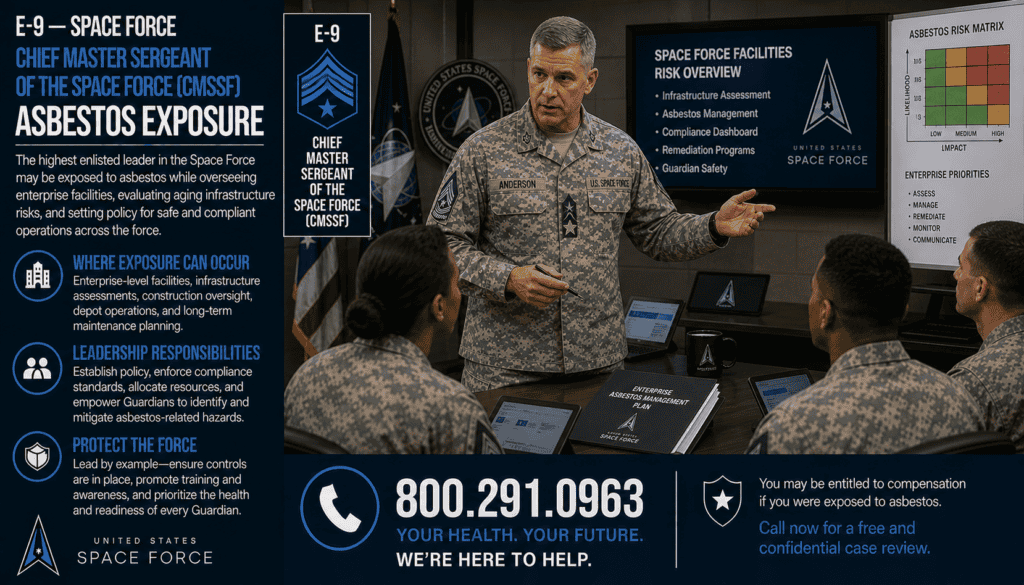
E-9 – Space Force Chief Master Sergeant (CMSgt)
🛠️ Top enlisted advisor at unit/command level
Asbestos Exposure
⚠️ Legacy hangar fireproofing
⚠️ Electrical junction insulation
⚠️ Aged structural ACM in pre-1980 facilities
Asbestos Exposure Risks for Space Force Chief Master Sergeants
A Chief Master Sergeant (CMSgt) in the U.S. Space Force serves as the highest enlisted authority at the unit or command level, providing leadership, policy guidance, and operational oversight across mission areas. CMSgts routinely visit every type of facility—hangars, control centers, mechanical rooms, radar stations, administrative buildings, and secured operations floors. Many of these structures were inherited from the Air Force and contain asbestos in fireproofing materials, insulation, electrical systems, and structural components.
Because CMSgts supervise personnel across all sections, they are exposed to a wider range of asbestos hazards than most enlisted ranks. Their role requires entering numerous spaces where aging ACM materials are deteriorating or disturbed during maintenance and modernization projects.
The Senior Enlisted Leadership Role of a Space Force CMSgt
CMSgts act as the primary enlisted advisor to commanders and oversee the health, welfare, and operational readiness of large units.
Typical Responsibilities of a CMSgt Include:
-
advising commanders on mission execution and workforce readiness
-
overseeing large technical and operational sections
-
conducting inspections across multiple facilities and work centers
-
evaluating work environments and equipment conditions
-
supervising modernization, maintenance, and infrastructure projects
-
entering mechanical spaces, hangars, and secure facilities
-
supporting policy implementation and safety standards
-
interacting with personnel across all mission areas
This broad oversight places CMSgts into several asbestos-containing environments each week.
Why Space Force Chief Master Sergeants Faced Asbestos Exposure
CMSgts face unique exposure risks because they:
-
routinely tour older facilities
-
inspect diverse technical areas
-
supervise personnel in contaminated spaces
-
support renovation projects that disturb ACM
-
move frequently between multiple pre-1980 buildings
Exposure is cumulative and often occurs without direct maintenance duties.
Exposure Source #1: Legacy Hangar Fireproofing
Hangars built before 1980 typically used asbestos-based materials for:
-
fireproof spray coatings
-
insulation blankets
-
structural beam coatings
-
HVAC and electrical insulation
Risks for CMSgts Include:
-
inspecting mission prep operations
-
walking through hangars with deteriorating insulation
-
exposure to airborne fibers released by vibration and airflow
-
overseeing large teams working in contaminated environments
Hangars are among the highest-risk asbestos sites in Space Force installations.
Exposure Source #2: Electrical Junction Insulation
Electrical systems in older Air Force buildings used asbestos in:
-
junction boxes
-
panel backing boards
-
arc chutes
-
wiring insulation
-
breaker housings
How CMSgts Become Exposed
-
conducting facility inspections
-
overseeing repairs and system upgrades
-
entering electrical control rooms
-
exposure to dust from aging components
CMSgts often review areas that junior personnel rarely access.
Exposure Source #3: Aged Structural ACM in Pre-1980 Facilities
Many Space Force operational buildings contain asbestos in:
-
wall panels
-
ceiling tiles
-
pipe wrap
-
flooring
-
HVAC systems
-
structural fireproofing
Risks for CMSgts
-
touring administrative offices, mission control floors, maintenance areas
-
overseeing renovation or modernization projects
-
participating in safety inspections where ACM is exposed
-
entering mechanical rooms with decaying insulation
Because CMSgts supervise at the highest enlisted level, exposure occurs across multiple facilities, compounding risk over decades.
Long-Term Health Risks for CMSgt Personnel
Asbestos diseases develop 20–50 years after exposure.
Major Conditions Include:
-
🫁 Mesothelioma
-
🫀 Asbestos-related lung cancer
-
🌫️ Asbestosis
-
🩻 Pleural plaques and thickening
CMSgts often accumulate more exposure than lower ranks due to broader facility access.
VA Disability Benefits for Space Force CMSgts
VA disability benefits are available for CMSgts diagnosed with asbestos-related illnesses.
Evidence That Strengthens a Claim:
-
service records documenting inspections across older facilities
-
building age information and renovation logs
-
statements from unit personnel or supervisors
-
documented mechanical and hangar inspections
-
medical records linking illness to asbestos exposure
Mesothelioma qualifies automatically for 100% VA disability.
Asbestos Trust Fund & Legal Compensation
Over $30 billion remains in asbestos trust funds for veterans exposed to asbestos products.
Compensation Paths Include:
-
💵 asbestos trust fund claims
-
⚖️ lawsuits against asbestos product manufacturers
-
👨👩👧 survivor benefits for families
-
🎖️ VA disability benefits (processed separately)
CMSgts often qualify for multiple compensation sources due to their broad exposure profile.
📞 Free Case Review for U.S. Space Force Chief Master Sergeants
If you served as a Space Force CMSgt and later developed mesothelioma, asbestos lung cancer, or asbestosis, you may be eligible for substantial compensation.
📞 Call 800.291.0963 today for a free, confidential case review.
A specialist will evaluate your facility access, leadership responsibilities, and exposure history to identify every qualifying compensation program.