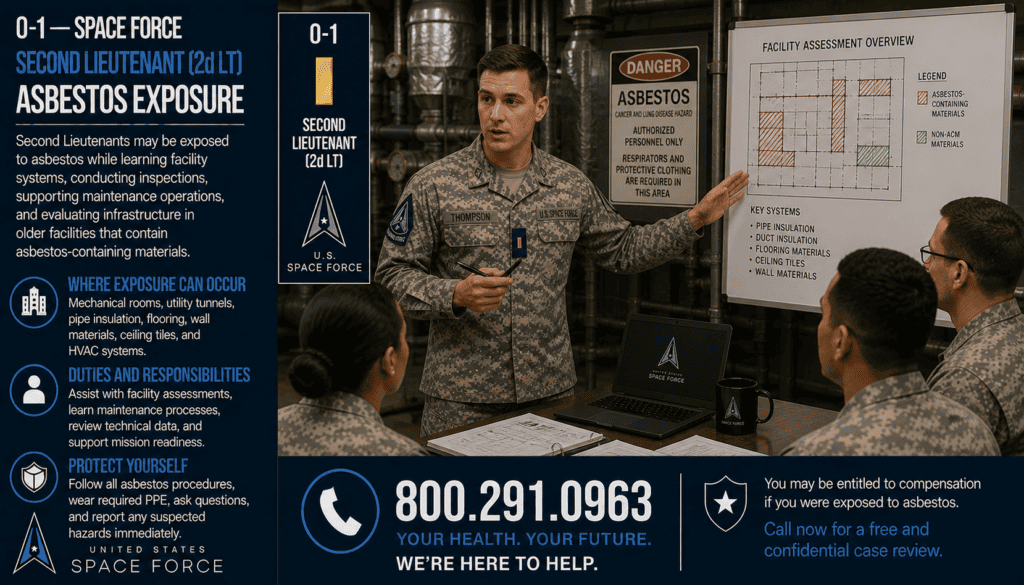
O-1 – Space Force Second Lieutenant (2d Lt)
🛠️ Entry-level officer, space operations and training
Asbestos Exposure
⚠️ Old training facility ACM
⚠️ Dust from aging aerospace buildings
⚠️ Electrical insulation debris
Asbestos Exposure Risks for Space Force Second Lieutenants
A Second Lieutenant (2d Lt) in the U.S. Space Force serves as a newly commissioned officer responsible for basic leadership duties, initial space operations roles, and introductory mission training. Although their primary focus is professional development and skill-building, 2d Lts often train inside legacy Air Force buildings—including classrooms, simulators, aerospace structures, and operational floors—many of which still contain asbestos in insulation, ceiling tile, wiring, and structural components.
Early in their career, 2d Lts participate in facility walk-throughs, mission tours, equipment familiarization sessions, and leadership orientation events inside older environments where aging asbestos-containing materials (ACM) may be present and deteriorating.
The Entry-Level Leadership Role of a Space Force Second Lieutenant
Newly commissioned officers begin developing leadership and operational skills while gaining exposure to the Space Force’s mission environment.
Typical Responsibilities of a 2d Lt Include:
-
participating in space operations training courses
-
rotating through various mission support areas
-
observing technical and maintenance teams
-
touring base facilities and operational buildings
-
assisting senior officers with administrative or mission-related tasks
-
learning system architecture and mission control processes
-
conducting site visits during orientation and initial assignments
These activities place 2d Lts in a wide range of older buildings still containing asbestos from pre-1980 construction eras.
Why Space Force Second Lieutenants Faced Asbestos Exposure
Exposure occurs because 2d Lts:
-
receive training in older Air Force buildings
-
attend briefings inside aging classrooms or simulator rooms
-
tour aerospace facilities with deteriorating insulation
-
are present during equipment demonstrations inside outdated infrastructure
-
may unknowingly disturb ACM dust while moving through high-traffic training spaces
Early-career personnel often lack awareness of environmental hazards, increasing exposure.
Exposure Source #1: Old Training Facility ACM
Training centers built before asbestos restrictions typically contain:
-
ceiling tile
-
drywall compound
-
insulation around HVAC components
-
asbestos-backed flooring materials
Risks for 2d Lts Include:
-
attending classes in buildings with aged ceilings
-
participating in hands-on training around contaminated floors
-
exposure to dust from renovations or aging structures
-
long hours spent indoors in poorly ventilated rooms
Training facilities are among the most frequently used buildings for new officers.
Exposure Source #2: Dust From Aging Aerospace Buildings
Aerospace structures—particularly those inherited from the Air Force—often used asbestos in:
-
wall insulation
-
structural fireproofing
-
technical room linings
-
panel boards
How Exposure Occurs
-
touring operational hangars or labs
-
walking through older corridors where dust accumulates
-
observing equipment demonstrations in legacy structures
-
vibration from machinery releasing fibers into the air
Aerospace buildings are especially prone to long-term ACM deterioration.
Exposure Source #3: Electrical Insulation Debris
Electrical and communications systems in pre-1980 buildings frequently contain asbestos in:
-
wire insulation
-
panel board backing
-
fuse box linings
-
arc barriers
Risks for 2d Lts
-
entering communications or training simulator rooms
-
observing maintenance or equipment demonstrations
-
exposure to dust from deteriorated panels
-
proximity to overheating electrical systems that shed fibers
Even indirect exposure in these areas can be harmful over time.
Long-Term Health Risks for 2d Lt Personnel
Asbestos-related diseases often appear 20–50 years after exposure.
Major Conditions Include:
-
🫁 Mesothelioma
-
🫀 Asbestos-related lung cancer
-
🌫️ Asbestosis
-
🩻 Pleural plaques and fibrosis
Early exposure increases lifetime risk.
VA Disability Benefits for Space Force Second Lieutenants
2d Lts may qualify for VA disability benefits if diagnosed with an asbestos-related illness.
Evidence That Strengthens a Claim:
-
records showing training assignments in older facilities
-
statements from instructors or classmates
-
facility age documentation
-
renovation logs describing asbestos removal
-
medical diagnoses linking illness to service exposure
Mesothelioma qualifies automatically for 100% VA disability.
Asbestos Trust Fund & Legal Compensation
More than $30 billion in asbestos trust funds exists to compensate veterans exposed to harmful ACM products.
Compensation Options Include:
-
💵 asbestos trust fund claims
-
⚖️ lawsuits against asbestos product manufacturers
-
👨👩👧 survivor claims for family members
-
🎖️ VA disability benefits (independent from legal claims)
Training-era exposures are well-documented and often qualify for compensation.
📞 Free Case Review for U.S. Space Force Second Lieutenants
If you served as a Space Force 2d Lt and later developed mesothelioma, asbestos lung cancer, or asbestosis, you may qualify for substantial compensation.
📞 Call 800.291.0963 today for a free, confidential case review.
A specialist will review your training facilities, exposure history, and duty locations to determine every benefit and legal option available.