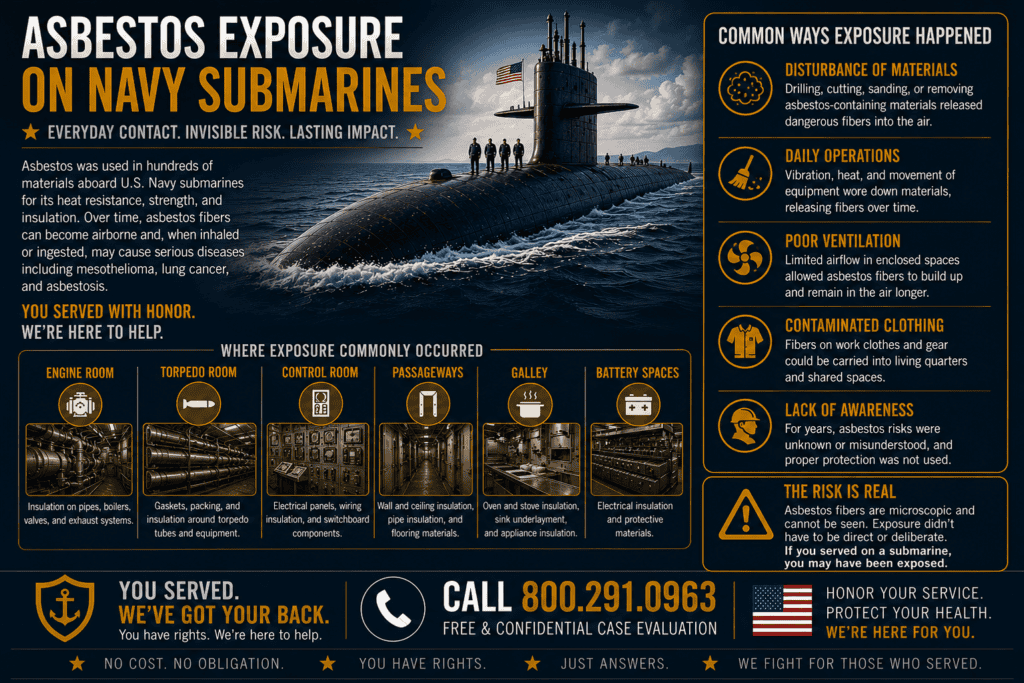
🔹 Asbestos Exposure on Navy Submarines
U.S. Navy submarines were built with asbestos in insulation, fireproofing, wiring, machinery, and structural materials. Because submarines operated in tightly sealed steel environments with extreme heat and fire risk, asbestos was used almost everywhere. Over time, these materials deteriorated and released fibers that sailors inhaled during daily operations, maintenance, and major overhauls.
This article explains how asbestos exposure occurred aboard Navy submarines and why so many submariners later developed asbestos-related diseases.
⚙️ Daily Operations and Routine Work
• Constant vibration – Engines, turbines, and propellers shook asbestos materials loose, releasing fibers into the air.
• Normal aging – Old insulation cracked and flaked during everyday use.
• Ventilation flow – Air systems carried asbestos fibers from machinery spaces to crew areas.
• Cleaning duties – Sweeping and wiping disturbed settled asbestos dust and re-aerosolized it.
Even without repairs, sailors inhaled asbestos during normal submarine life.
🔧 Maintenance and Repair Work
• Insulation handling – Sailors removed and replaced asbestos pipe and boiler insulation, releasing thick dust clouds.
• Valve and gasket replacement – Scraping asbestos gaskets and packing released fibers directly into breathing zones.
• Electrical repairs – Cutting asbestos-coated wiring released fibers during upgrades.
• Machinery servicing – Opening pumps, turbines, and compressors disturbed asbestos parts inside.
Maintenance work created some of the heaviest exposure.
🔥 Boiler and Engine Room Exposure
• Boiler cleaning – Disturbed asbestos lagging around boilers.
• Steam line repairs – Required cutting asbestos cloth and cement.
• Turbine work – Removed asbestos insulation from hot equipment.
• Generator servicing – Opened asbestos-lined housings.
These enclosed spaces trapped asbestos dust.
🔌 Electrical and Wiring Work
• Rewiring systems – Cutting asbestos-coated cables released fibers.
• Switchgear upgrades – Removing asbestos-backed panels created dust.
• Control room repairs – Fireproof asbestos linings were disturbed.
• Radar and electronics work – Wiring ran through asbestos-lined spaces.
Electricians often inhaled fibers at close range.
🏗️ Welding and Structural Repairs
• Welding near asbestos insulation – Heat and vibration loosened asbestos materials.
• Cutting bulkheads and decks – Released asbestos fibers from fireproof panels.
• Structural modifications – Required removing asbestos fireproofing.
• Damage repairs – Accident repairs disturbed asbestos coatings.
Vibration and cutting caused asbestos to crumble.
🛠️ Shipyard Overhauls and Refits
• Large-scale insulation removal – Massive asbestos stripping during refits.
• Machinery replacement – Opened asbestos-lined engines and turbines.
• Electrical modernization – Removed asbestos panels and wiring.
• Structural upgrades – Cut asbestos fireproof walls and ceilings.
Overhauls caused the highest exposure many sailors ever experienced.
🛏️ Living Area Exposure
• Sleeping quarters – Had asbestos behind walls and ceilings.
• Ventilation ducts – Carried fibers into bunks and lockers.
• Bedding and clothing – Trapped asbestos dust from work areas.
• Cleaning chores – Re-aerosolized settled fibers.
Sailors inhaled asbestos even while resting.
🌬️ Ventilation System Spread
• Airflow carried fibers from machinery spaces to all decks.
• Duct insulation deteriorated and released asbestos.
• Shared air spaces spread contamination shipwide.
• Closed compartments trapped dusty air.
Ventilation made exposure unavoidable.
🧠 Why Exposure Was So Common on Submarines
• Asbestos was used in almost every system.
• Many materials were friable and crumbled easily.
• Submarines vibrated constantly.
• Repairs were frequent.
• Protective gear was rarely provided.
• Health risks were hidden or ignored.
Few naval jobs exposed sailors so repeatedly.
🧬 Long-Term Health Effects
Exposure from these activities has been linked to:
• Mesothelioma
• Lung cancer
• Asbestosis
• Pleural disease
Symptoms often appear 20–50 years after service.
❓ Asbestos Exposure on Submarines – FAQs
Was exposure only during repairs?
No. Normal operations also released fibers.
Did short service still cause risk?
Yes. Even limited exposure can be dangerous.
Were sailors warned?
Most were never told about asbestos risks.
Are veterans still being diagnosed?
Yes, because diseases develop decades later.
⚖️ How an Asbestos Lawyer Can Get You Compensation
An asbestos lawyer uses your job duties to prove exposure.
An asbestos lawyer will:
• Review service records
• Identify exposure activities
• Match asbestos products to manufacturers
• Confirm diagnosis with doctors
• File lawsuits and trust fund claims
• Handle all deadlines
📞 Get Help Now
If you served aboard a Navy submarine and later developed mesothelioma, lung cancer, or another asbestos-related disease, you may be entitled to compensation.
You may qualify for:
• Lawsuit settlements or verdicts
• Asbestos trust fund payments
• VA disability and survivor benefits
There is no upfront cost.
📞 Call now for a free, confidential case consultation:
800.291.0963