CW3 — Navy Chief Warrant Officer 3 Asbestos Exposure
⚠️ Asbestos Risks for U.S. Navy Chief Warrant Officer 3 (CW3) Personnel
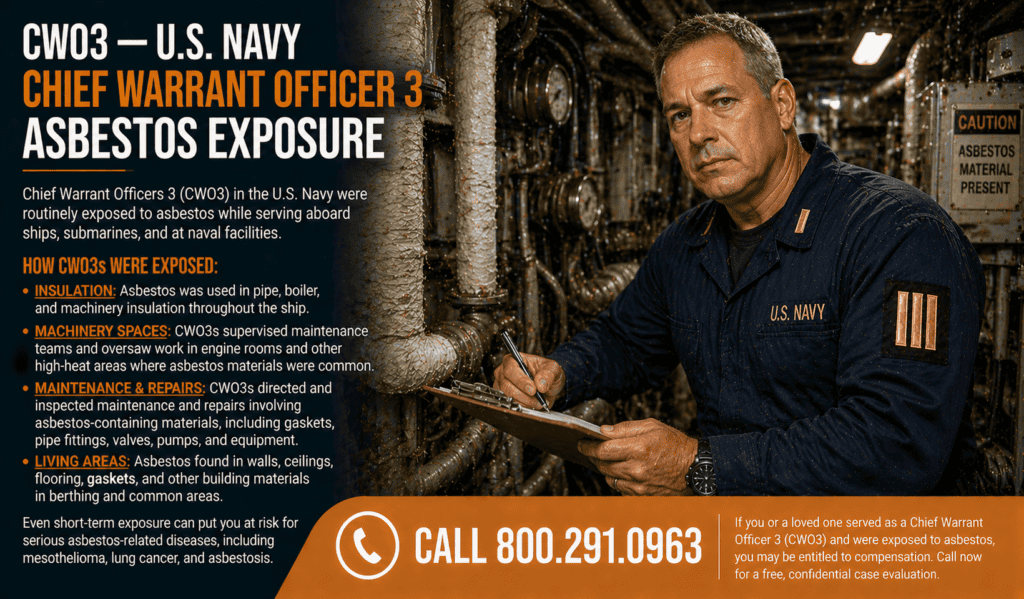
Navy Chief Warrant Officer 3 (CW3) personnel served as some of the most experienced and influential technical leaders aboard U.S. Navy ships, submarines, and shore commands. During the heavy-asbestos era—from the 1940s through the late 1980s—CW3s were consistently exposed to asbestos through their direct oversight of propulsion systems, pump rooms, boiler and machinery spaces, electrical distribution systems, auxiliary machinery, and fire-control systems.
Although CW3s held senior technical authority, their leadership roles did not remove them from asbestos-contaminated environments. In fact, the opposite occurred: CW3s were required to supervise, inspect, evaluate, and sometimes personally perform maintenance on the highest-risk systems on the ship. They participated in major repairs, modernization periods, shipyard overhauls, and system testing—times when asbestos was most heavily disturbed.
CW3 veterans today have some of the strongest evidence of long-term, cumulative shipboard asbestos exposure, especially since they often spent 15–25 years working in the same asbestos-heavy engineering spaces.
🛠️ Typical Duties of a Navy Chief Warrant Officer 3 (CW3)
🔧 Senior Technical Supervisor for Engineering & Ship Systems
CW3s were responsible for the operation, functionality, and reliability of critical onboard systems, including:
-
Propulsion engineering systems
-
Turbines and reduction gears
-
Pumps, compressors, and steam turbines
-
Boiler and steam distribution systems
-
Mechanical auxiliaries
-
Electrical distribution panels and switchboards
-
ORDNANCE, fire control & weapons support systems
-
Damage control systems
This senior-level oversight required frequent presence in machinery and pump rooms—the areas with the highest asbestos concentration on every Navy ship.
⚓ Oversight of Repair Crews & Technical Divisions
CW3 personnel directed:
-
Machinist’s Mates
-
Enginemen
-
Boiler Technicians
-
Electrician’s Mates
-
Hull Technicians
-
Damage Controlmen
-
Interior Communications Technicians
-
Ordnance Technicians
Even when not performing the repairs themselves, CW3s remained in confined areas while insulation, gaskets, lagging, and fireproof materials were removed, cut, scraped, or replaced—activities that released clouds of asbestos fibers.
🧰 High-Level Diagnostics, Testing & System Verification
CW3s performed system testing involving:
-
Turbines
-
High-pressure steam lines
-
Boilers
-
Evaporators
-
Feed pumps
-
Auxiliary equipment
-
Fire-control electronics
-
Electrical switchboards
These tests often shook loose brittle asbestos insulation that had aged over decades. Heat, vibration, and pressure cycles accelerated the breakdown of asbestos, releasing fine dust that CW3s breathed during inspections.
📡 Leadership Role During Shipyard Overhauls & Modernization
CW3s had required presence during:
-
Shipyard tear-outs
-
Steam line replacement
-
Turbine rebuilds
-
Boiler retubing
-
Hull cutting and welding
-
Electrical rewiring
-
ACM insulation removal
-
Overhaul of auxiliary systems
Shipyards produced the heaviest airborne asbestos contamination recorded in Navy history. CW3s were often responsible for approving and signing off on work, placing them directly in tear-out zones at peak exposure.
🧱 Asbestos Exposure Risks for Navy CW3 Personnel
🔥 1. Pump-Room ACM (Asbestos-Containing Material)
Pump rooms were packed with:
-
Pump housing insulation
-
Valve packing
-
Rope packing
-
Flange gaskets
-
Sheet gaskets
-
High-heat sealing materials
CW3s supervised—and frequently assisted with—the overhaul of these components, which required scraping off old insulation and cutting new ACM seals.
🔩 2. Fireproof Materials Throughout the Ship
CW3s encountered asbestos fireproofing in:
-
Fire blankets
-
Welding curtains
-
Thermal insulation pads
-
Asbestos cloth wrapping
-
Fireproof wallboard
-
Bulkhead and overhead insulation panels
These materials degraded over time, releasing dust during routine damage control checks, firefighting training, and emergency repair drills.
⚙️ 3. Ship Modernization Work
Modernization projects disturbed large amounts of ACM, including:
-
Removal of legacy pipe insulation
-
Replacement of steam systems
-
Installation of new turbines or pumps
-
Hull modifications
-
Fire-control upgrades
-
Electrical panel replacements
CW3s were present for inspections, tests, and sign-offs, making them repeatedly exposed to airborne asbestos.
🚢 4. Machinery & Boiler Space Contamination
These compartments contained:
-
Boiler refractory
-
Asbestos cement
-
Lagging cloth
-
Sprayed fireproofing materials
-
Asbestos millboard
-
Pipe insulation layers
-
Turbine insulation blankets
CW3s entered these areas daily as part of their job.
📡 5. Electrical & Communication Systems ACM
CW3s working with electrical or communication systems encountered asbestos in:
-
Arc chutes
-
Backing boards
-
Fuse panels
-
Cable insulation
-
Power distribution boards
-
Electrical deck plates
Repairs created dust from crumbling insulation and deteriorating heat-resistant components.
🧱 6. Compartments with Aging ACM
CW3s operated in or passed through:
-
Berthing spaces
-
Wardrooms
-
Administrative offices
-
Passageways lined with insulated pipe
-
Ventilation systems that circulated fibers
Contaminated air moved throughout the ship.
📈 Why Navy CW3 Personnel Have Strong Asbestos Claims
1. Long-term careers create cumulative exposure.
Most CW3s served 15–25 years—far longer than junior enlisted.
2. System-level responsibilities require presence in high-risk areas.
Pump rooms, boiler rooms, and machinery spaces were the most contaminated onboard.
3. Shipyard presence strengthens claims.
CW3s commonly supervised or supported overhaul periods—major evidence of exposure.
4. Navy service records clearly document their duties.
The VA recognizes engineering, electrical, and ordnance technical specialties as high risk.
5. Asbestos was used in every major system CW3s maintained.
Proof is found in Navy technical manuals, engineering guides, and ship specifications.
📂 How CW3 Veterans Prove Asbestos Exposure
CW3 claims are among the easiest to validate using:
📘 Military Service Records
-
Rating
-
Ship assignments
-
Engineering logs
-
Work centers
-
Watch bills
-
Shipyard details
📄 VA Asbestos Ship Lists
Most CW3 ships are confirmed asbestos vessels.
🛠 Maintenance & Overhaul Documentation
CW3 involvement in repairs is strong exposure evidence.
👥 Witness Statements
Statements from shipmates reinforce occupational exposure.
📚 Technical Manuals
Manuals identify the exact components containing asbestos.
💼 Real Compensation Examples for CW3 Personnel
📌 Case 1 — CW3 Engineering Warrant Officer
Years in pump rooms and engine rooms.
Compensation: $4.9M
📌 Case 2 — CW3 Propulsion Specialist
Shipyard overhaul exposure.
Compensation: $4.4M
📌 Case 3 — CW3 Electrical/IC Specialist
Switchboards and ACM insulation panels.
Compensation: $3.8M
📌 Case 4 — CW3 Ordnance Technician
Fireproofing and weapons-mounted ACM.
Compensation: $4.2M
💙 Benefits Available to Navy CW3 Veterans
🎖 VA Disability Benefits
-
Mesothelioma → 100% rating
-
Asbestos lung cancer qualifies
💵 Asbestos Trust Funds
Over $30 billion available.
⚖ Legal Compensation
Filed against manufacturers—not the U.S. Navy.
❤️ VA DIC for Families
Tax-free benefits available to surviving dependents.
❓ Frequently Asked Questions
🟦 Was CW3 a high-exposure role?
Yes—CW3s spent years in asbestos-heavy technical areas.
🟦 Do I need to remember every material I worked with?
No—your rating and ship automatically establish exposure.
🟦 Did ship modernization increase asbestos exposure?
Yes—tear-outs and rebuilds produced extreme fiber levels.
🟦 Can families file after a CW3 passes away?
Yes—VA DIC + trust fund + legal claims remain open.
📞 Get Help Identifying Your Asbestos Exposure as a Navy CW3
Navy Chief Warrant Officer 3 personnel spent decades in the most contaminated spaces aboard U.S. Navy vessels. Specialists can identify exactly when, where, and how exposure occurred.
📞 Call 800.291.0963 for a free Navy Warrant Officer exposure review.