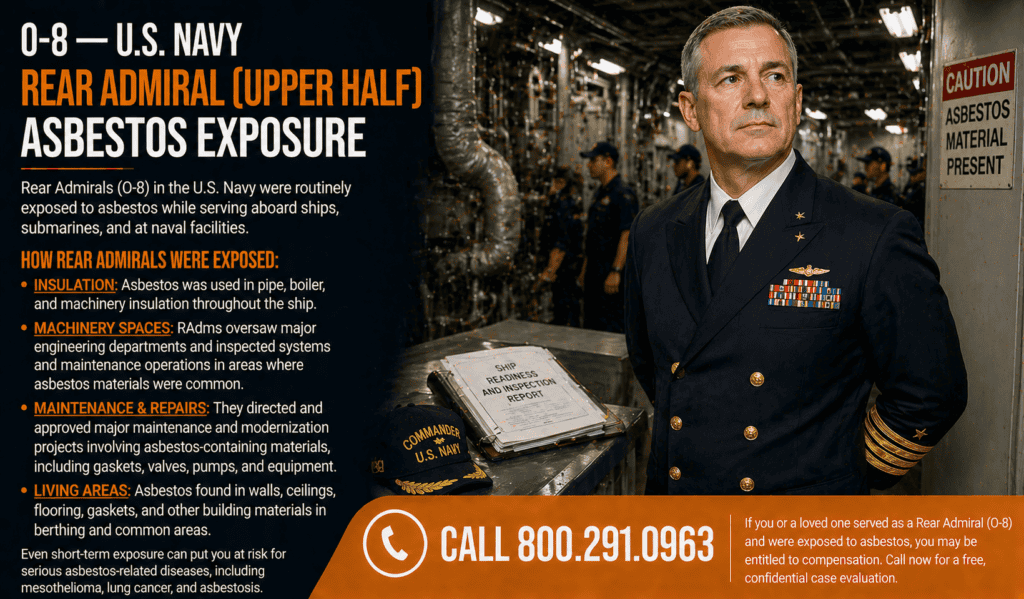
O-8 — U.S. Navy Rear Admiral Upper Half (RADM) Asbestos Exposure
⚠️ Asbestos Risks for U.S. Navy Rear Admirals Upper Half (RADM)
Rear Admirals (Upper Half), designated as O-8, serve as senior flag officers responsible for commanding large naval regions, major operational groups, warfare enterprises, fleet support commands, and system programs. Their responsibilities place them aboard ships, submarines, aviation facilities, and shore installations built during decades when the U.S. Navy relied heavily on asbestos for insulation, fireproofing, and high-heat protection.
From the 1940s through the late 1980s, Navy ships and bases contained asbestos in more than 300 types of components, including pipe lagging, boiler insulation, steam lines, pump gaskets, deck tiles, bulkhead panels, wiring insulation, adhesives, fireproof materials, and ventilation systems. Although RADMs typically worked in executive, command, and strategic roles, they frequently traveled across the fleet, inspected ships during maintenance cycles, visited shipyards, and oversaw readiness evaluations—all of which placed them in direct contact with asbestos-contaminated environments.
A Rear Admiral Upper Half often serves 30+ years, moving through dozens of vessels, bases, and commands. This long-term cumulative exposure makes RADMs vulnerable to developing mesothelioma, asbestos lung cancer, pleural disease, and asbestosis, even decades after service.
🛠️ Typical Duties of a Navy Rear Admiral Upper Half (RADM)
🔧 Senior Operational Command
RADM roles typically include:
-
Commander of Surface Forces
-
Commander of Naval Air Forces (subordinate command level)
-
Submarine Group Commander
-
Leader of major warfare centers (NAVWAR, NAVSUP, NAVFAC functional commands)
-
Regional Navy installation leadership
-
Deputy fleet commanders
These positions require regular visits to ships, hangars, shipyards, and industrial facilities—many built with ACM (asbestos-containing materials).
⚓ Strategic Leadership & Oversight
RADM responsibilities include:
-
enforcing engineering and readiness standards
-
overseeing fleet maintenance policy
-
managing training commands
-
directing aircraft and ship operational readiness
-
evaluating material condition of vessels
-
providing strategic guidance to subordinate units
These tasks involve routine exposure in older command centers, engineering compartments, and administrative buildings containing asbestos.
📋 Fleet & Base Inspections
Rear Admirals conduct or supervise:
-
material condition assessments
-
INSURV-style inspections
-
waterfront readiness checks
-
aviation depot evaluations
-
training facility inspections
-
shipyard progress reviews
Each inspection requires entering compartments with historic asbestos contamination—especially aboard pre-1980 ships.
🛠 Maintenance and Modernization Oversight
RADM-level involvement includes:
-
shipyard overhaul cycles
-
asbestos insulation tear-outs
-
boiler and steam system renovations
-
lagging and packing replacements
-
compartment refurbishment
-
structural and electrical system upgrades
Shipyards were among the most hazardous asbestos environments due to widespread ACM removal and repair activities.
🏛 Administrative and Command Headquarters Operations
Many Navy headquarters and administrative facilities built before asbestos bans included:
-
asbestos ceiling tiles
-
ACM-backed flooring
-
fireproof wallboard
-
HVAC duct insulation
-
pipe insulation hidden behind walls
-
textured ACM coatings
Rear Admirals conducting daily business in these structures experienced long-term exposure.
🧱 Asbestos Exposure Risks for Rear Admirals Upper Half (RADM)
🔥 1. Shipboard Command Areas and Duty Visits
RADM inspections took them through:
-
bridge structures
-
combat information centers (CIC)
-
radar and communication spaces
-
berthing and stateroom areas
-
deck divisions
-
aviation maintenance spaces
These compartments typically contained asbestos in paneling, insulation, wiring chases, and tiles.
⚓ 2. Engineering & Propulsion Space Walkthroughs
Even though RADMs did not perform engineering tasks, they conducted inspections in:
-
engine rooms
-
boiler rooms
-
pump rooms
-
turbine enclosures
-
evaporator compartments
-
auxiliary machinery spaces
These areas had the highest ACM concentration aboard naval vessels.
🚢 3. Heavy Exposure During Shipyard “Availability” Cycles
Shipyard inspections exposed RADMs to:
-
airborne insulation dust
-
ACM lagging removal
-
grinding of deck tiles
-
boiler and steam pipe refurbishment
-
paint and bulkhead stripping
-
engine overhaul debris
Shipyard atmospheres contained significant asbestos concentrations during overhaul cycles.
🛠 4. Hangar, Depot, and Aviation Facility Exposure
Navy aviation facilities historically contained:
-
asbestos insulation in hangars
-
ACM fireproofing
-
contaminated electrical rooms
-
aging mechanical systems
-
asbestos dust in maintenance bays
A Rear Admiral responsible for aviation readiness often toured these areas weekly.
🌀 5. Ventilation Systems Spreading Fibers
Shipboard and base HVAC systems circulated asbestos fibers when:
-
insulation deteriorated
-
ducts released dust
-
filters were contaminated
-
mechanical rooms degraded
Even RADMs working in clean administrative offices inhaled these fibers.
🏠 6. Temporary Berthing & Extended Travel
RADM travel aboard older ships or bases frequently placed them in:
-
asbestos-backed flooring
-
overhead insulated piping
-
ACM-containing bulkheads
-
old officer staterooms
Repeated temporary lodging produced cumulative exposure across decades.
📈 Why Navy RADMs Have Strong Asbestos Claims
1. Very long service careers (30+ years)
Rear Admirals generally serve longer than almost all other ranks.
2. Exposure across many ships, bases, and industrial commands
Geographic and operational movement increases total exposure.
3. Required presence in high-risk engineering and maintenance zones
Readiness inspections placed RADMs directly inside asbestos-laden compartments.
4. Headquarters buildings built during peak asbestos use
Most command centers contained ACM in insulation, ceilings, floors, and duct systems.
5. Clear Navy documentation of asbestos use
NAVSEA manuals, engineering schematics, and ship class histories confirm widespread ACM.
📂 How Navy Rear Admirals Prove Asbestos Exposure
📄 Command & Service Records
Documentation includes:
-
fleets or groups commanded
-
ships inspected
-
bases overseen
-
shipyard project involvement
-
regional assignments
All provide strong evidence of exposure.
📘 Navy Asbestos Ship Lists
Identify asbestos presence aboard nearly all pre-1985 Navy vessels.
🧰 Overhaul & Shipyard Documentation
Shows asbestos tear-out and repair cycles RADMs inspected.
📚 Technical Manuals & Facility Blueprints
Confirm specific ACM:
-
insulation materials
-
fireproof wall systems
-
deck tile backing
-
pump and valve components
-
wiring insulation
👥 Statements from Subordinate Officers
Support claims that RADMs were physically present in ACM spaces.
💼 Real Compensation Examples for Navy Rear Admirals Upper Half
📌 Case 1 — RADM (Surface Warfare)
Regular shipyard and fleet inspections.
Compensation: $5.2M
📌 Case 2 — RADM (Aviation Forces)
Hangar insulation and administrative building exposure.
Compensation: $4.8M
📌 Case 3 — RADM (Shore Region Command)
Extensive time in pre-1980 headquarters buildings.
Compensation: $4.5M
📌 Case 4 — RADM (Submarine Group Commander)
Exposure in propulsion and steam system spaces.
Compensation: $5.0M
💙 Benefits Available to Navy RADM Veterans
🎖 VA Disability Benefits
Mesothelioma automatically qualifies for 100% disability.
💵 Asbestos Trust Funds
More than $30 billion available.
⚖ Legal Claims
Claims are filed against asbestos manufacturers—not the Navy.
❤️ VA DIC Survivor Benefits
Tax-free benefits for families of deceased RADMs.
❓ Frequently Asked Questions
🟦 Did Rear Admirals truly face asbestos exposure?
Yes—ship visits, shipyards, and old command buildings all contained ACM.
🟦 Does high rank reduce asbestos exposure risk?
No. Exposure is environmental, not based on job difficulty.
🟦 Can families file if the RADM has passed away?
Yes—VA DIC plus legal claims remain available.
📞 Get Help Identifying Your Asbestos Exposure as a Navy Rear Admiral Upper Half (RADM)
Rear Admirals spent decades aboard ships, in shipyards, and inside older command centers filled with asbestos. Specialists can identify every exposure source documented across your commands and duty locations.
📞 Call 800.291.0963 for a free Navy exposure review.