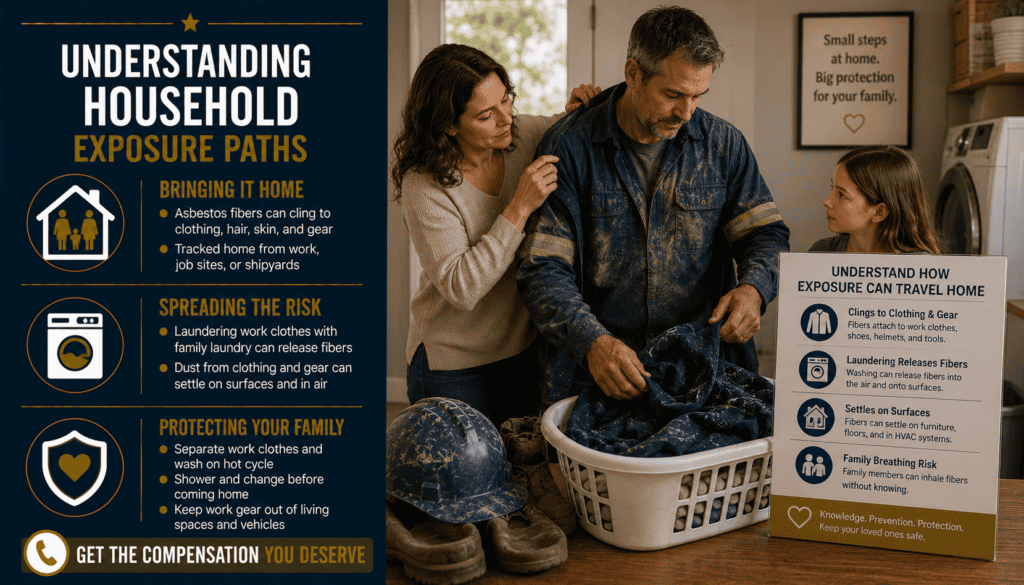
Understanding Household Exposure Paths (Clothing, Shoes, Furniture)
Asbestos exposure doesn’t only occur in factories, shipyards, or construction sites. For decades, microscopic asbestos fibers were unknowingly carried into American homes on clothing, shoes, hair, tools, and personal items. Once inside, these fibers settled onto furniture, carpets, and surfaces, putting entire families at risk.
Understanding exactly how asbestos enters the home, how long it lingers, and what cleaning methods reduce exposure is essential for protecting families—especially those with past or ongoing contact with high-risk occupations.
If you believe asbestos may have been brought into your home, call 800.291.0963 today for screening guidance and prevention support.
🏠 Step 1: How Asbestos Fibers Travel From Job Sites Into Homes
Asbestos fibers are extremely small—up to 700 times thinner than a human hair—and become airborne easily. Once inhaled, they can lodge in the lungs or abdomen and remain for decades.
📌 Ways Fibers Leave the Workplace
-
Sticking to work uniforms
-
Embedding into cloth gloves
-
Settling into boots and shoe treads
-
Clinging to hair and exposed skin
-
Accumulating in tool belts and work bags
-
Spreading inside work trucks or personal vehicles
Workers often carried these fibers home daily without knowing they posed a danger.
👕 Step 2: Clothing Is the #1 Household Exposure Path
Work clothes contaminated with asbestos dust created a direct route for exposure inside the home.
✔ How Clothing Carries Asbestos
-
Dust accumulates on shirts, pants, jackets, and coveralls
-
Fabric traps fibers deep within the weave
-
Movement releases fibers into the air
-
Shaking out clothing before laundry creates a dangerous cloud
-
Washing machines can spread fibers to other clothes
📌 Family Members Most at Risk
-
Spouses who handled laundry
-
Children in close contact with parents after work
-
Infants crawling near laundry baskets
-
Anyone present during laundry sorting or cleaning
Laundry rooms were one of the most common household exposure hotspots.
🥾 Step 3: Shoes and Boots Spread Fibers Throughout the Home
Another major exposure path comes from shoes worn on the job.
🧩 How Shoes Track Asbestos Into Homes
-
Fibers become lodged in boot soles and seams
-
Dust falls off onto carpets and floors
-
Walking spreads particles from room to room
-
Vacuuming without a HEPA filter redistributes fibers into the air
Hotspot Areas Include:
-
Entryways and mudrooms
-
Carpets and rugs
-
Car interiors
-
Staircases
-
Living room floors
Children—who spend more time on the floor—were especially vulnerable.
🛋️ Step 4: Furniture and Upholstery Trap Fibers for Years
Asbestos fibers can settle deep into soft household surfaces.
✔ Furniture at Highest Risk
-
Sofas and recliners
-
Mattresses
-
Cushioned chairs
-
Throw pillows
-
Upholstered benches
-
Car seats
-
Curtains and drapes
📌 Why Furniture Is Dangerous
Fibers trapped in upholstery stay for decades unless removed with proper HEPA equipment.
Sitting down releases them back into the air, where they can be inhaled.
🌬️ Step 5: How Fibers Behave Inside the Home
Understanding fiber movement helps families reduce long-term exposure.
📌 What Happens After Fibers Enter the Home
-
They float in the air for hours after being disturbed
-
They settle onto surfaces, carpets, bedding, and furniture
-
Everyday movement (walking, sitting, cleaning) puts them back in the air
-
They accumulate in ventilation systems and heating ducts
-
They do NOT break down over time — fibers remain indefinitely
The more fibers accumulate, the higher the risk of exposure for everyone in the home.
🧹 Step 6: Cleaning Methods That Increase Exposure Risk
Many common cleaning habits actually make asbestos exposure worse.
⚠️ Risky Cleaning Behaviors
-
Dry sweeping floors
-
Shaking out clothes or rugs
-
Using non-HEPA vacuums
-
Beating dust from furniture or carpets
-
Using compressed air near dusty surfaces
-
Letting children play in dusty areas
-
Not washing hands after cleaning
-
Placing dirty work clothes with regular laundry
These actions can release thousands of fibers into the air.
🧼 Step 7: Safe Cleaning Practices to Reduce Exposure
Proper cleaning can dramatically reduce secondary exposure risks in the home.
🛡️ Best Practices
-
Use a HEPA-filter vacuum on all floors and upholstery
-
Wet-mop hard surfaces to prevent airborne dust
-
Wash work clothes separately (or use employer-provided laundering)
-
Wear gloves and a disposable mask when handling dusty items
-
Use microfiber cloths that trap fibers instead of spreading them
-
Frequently wipe down surfaces near entryways
-
Clean car interiors using HEPA vacuums only
-
Keep dusty boots and tools outside or in sealed bins
✔ You May Also Consider:
-
Replacing heavily contaminated carpets
-
Professionally cleaning HVAC systems
-
Hiring certified asbestos cleaners for older homes
Consistent habits keep fibers from accumulating and spreading.
🚫 Step 8: Preventing Contamination in the First Place
Stopping the spread before asbestos enters the home is the most effective approach.
🧍 Worker Prevention Steps
-
Change into clean clothes before driving home
-
Use on-site showers when available
-
Leave boots and tools at work
-
Keep work gear in sealed containers
-
Never bring work uniforms into bedrooms or living areas
🏠 Household Prevention Steps
-
Create a designated entry area for work clothes
-
Keep children away from any work-related laundry
-
Wash contaminated clothes separately
-
Use washable mats in entryways
-
Clean the car regularly with HEPA tools
Families with ongoing exposure risks benefit greatly from regular cleaning and prevention routines.
🩺 Step 9: Screening Recommendations for Those With Household Exposure
Even if exposure happened decades ago, family members should undergo periodic screening. Mesothelioma and related illnesses appear 20–50 years after exposure.
📌 Recommended Tests
-
Chest X-ray
-
Low-dose CT scan
-
MRI if abnormalities are found
-
PET-CT for metabolic activity
-
Biomarker blood tests (mesothelin, fibulin-3, HMGB1)
Who Should Be Screened?
-
Spouses of high-risk workers
-
Children who grew up in exposed households
-
Anyone who washed work clothes
-
People who lived with workers in the 1960s–1990s
-
Individuals with persistent respiratory symptoms
Early detection dramatically improves treatment options.
📘 Step 10: Legal and Compensation Rights for Household Exposure Victims
People exposed to asbestos through clothing, shoes, or home contamination may qualify for compensation—just like those exposed at job sites.
Victims May Be Eligible For:
-
Asbestos trust fund claims
-
Lawsuits against manufacturers
-
Settlements for medical care
-
VA benefits (if exposure involved a veteran)
-
Compensation for long-term health issues
Exposure doesn’t have to be direct for a legal claim to be valid.
🏥 Where to Get Help
If you suspect household asbestos exposure, we can help you:
-
Identify exposure sources
-
Schedule screening tests
-
Connect with mesothelioma specialists
-
Review imaging results
-
Access compensation and trust funds
-
Protect your family from ongoing risks
-
Build a long-term prevention plan
📞 Call 800.291.0963 today for screening support and household-exposure guidance.
📝 Summary
Asbestos fibers brought home on clothing, shoes, and furniture create hidden exposure risks that can endanger entire families.
Key insights:
-
Clothes, boots, and furniture trap fibers for decades
-
Common cleaning habits can make exposure worse
-
HEPA cleaning and prevention routines reduce risks
-
Early screening is critical for previously exposed family members
-
Legal options are available for victims of household exposure
Protect your home and loved ones today.
📞 Call 800.291.0963 for expert support and prevention planning.