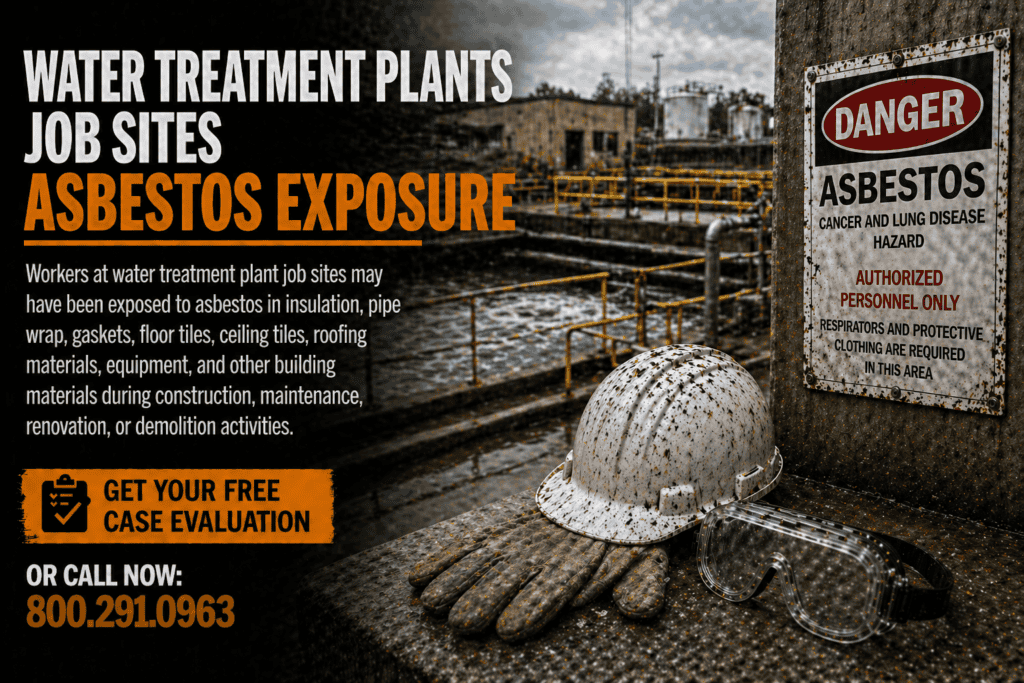
Water Treatment Plants Asbestos Exposure
Water treatment plants across the United States used asbestos-containing materials for decades in piping systems, valves, pump insulation, and control panels. Because these systems handled high heat and pressure, asbestos was used to insulate components and reduce fire risk—but it exposed countless workers to deadly airborne fibers.
Employees who maintained, repaired, or installed systems in these facilities often disturbed asbestos insulation wrapped around pipes, pumps, tanks, and fittings. This released toxic dust into the air—especially during valve changes, pump overhauls, or joint repairs.
🚰 Water Treatment Plant Job Sites – What You’ll Learn From This Page:
💧 Water treatment plants used asbestos-wrapped pipes and pump insulation, especially in pre-1980 systems.
🔧 System repairs, valve replacements, and excavations disturbed asbestos around aging components.
🛠️ Workers in filter rooms, tunnels, or control areas faced chronic exposure during maintenance.
🌫️ Tight, enclosed utility areas lacked airflow, allowing dust to circulate during retrofits or leaks.
💰 Treatment plant employees diagnosed with mesothelioma may qualify for trust or legal compensation.
Read More Articles About Water Treatment Plant Asbestos Exposure
Number of People Exposed to Asbestos in Water Treatment Plants in the U.S.
Municipal and industrial water systems widely used asbestos in their infrastructure.
| Exposure Category | Estimated Number of People Exposed |
|---|---|
| Occupational Exposure (Operators, technicians, maintenance) | Approximately 430,000 workers exposed |
| Secondary Exposure (Family via gear/tools) | Estimated 65,000 exposed |
| Environmental Exposure (Pumps, valve chambers) | Around 105,000 people exposed |
👉 Total Estimated Exposure:
Over 600,000 people in the U.S. were exposed at water treatment job sites.
🧰 Facts About Water Treatment Workers
• More than 120,000 Americans currently work in water and wastewater treatment operations. Thousands more worked in plants built from the 1940s–1980s.
• Asbestos Exposure: Widespread from 1940s to 1990s, especially during mechanical and valve servicing.
• Asbestos-Related Disease Risk: High due to enclosed areas, old infrastructure, and routine maintenance needs.
• Studies link water plant work to elevated risks of mesothelioma and other asbestos-related cancers.
• Similar Occupations: Pump operators, valve mechanics, pipefitters, HVAC techs, electricians
🏭 History of Asbestos Use on Job Sites
Asbestos was commonly used in water treatment plant systems due to its resistance to heat, pressure, and corrosion. Pipes, gaskets, boilers, control panels, and tanks were often wrapped or sealed with asbestos insulation.
Unfortunately, repairs on these systems often disturbed fragile or deteriorated insulation. Airborne fibers collected in tight work areas, and many workers unknowingly inhaled dangerous dust daily without protection.
⚠️ Mesothelioma Risk for Water Treatment Plant Workers
Numerous health studies have confirmed an increased risk of asbestos-related diseases among water and wastewater treatment workers:
• A CDC review found pump and valve maintenance workers had higher incidences of mesothelioma and lung fibrosis.
• U.S. and European studies linked plumbing and wastewater trades to elevated rates of asbestos-related cancers.
• Exposure was common during shutdowns, gasket changes, and emergency piping repairs in confined areas.
Symptoms often do not appear for decades after initial exposure—leaving many workers vulnerable long after retirement.
🔩 Asbestos Products Used in Water Treatment Plants
Water treatment facilities relied on a wide range of asbestos materials to protect infrastructure and manage heat. Many of these materials released fibers when disturbed during upgrades or servicing.
🔥 Boiler and Pump Insulation
Lined steam systems and pumps; exposure occurred during cleaning, repairs, or valve maintenance.
🚿 Pipe Wraps and Lagging
Wrapped around high-pressure water and steam pipes; disturbed during cutting and replacement.
🧱 Refractory Coatings
Used inside heating units and tank linings; cracked or degraded with age and wear.
🧰 Gaskets and Valve Packing
Used in pumps, flange joints, and control valves; released fibers during scraping or replacement.
🧤 Protective Clothing
Asbestos gloves, aprons, and sleeves worn by operators; shed fibers with repeated use.
🚿 Spray-On Fireproofing
Applied to ceilings and equipment rooms; broken material released fibers during maintenance.
⚡ Electrical Insulation Panels
Used in breaker boxes and pump control cabinets; dust released during rewiring or drilling.
♨️ Tank and Vessel Insulation
Covered storage and chemical dosing tanks; disturbance released asbestos during repairs.
🧵 Thermal Tape and Seals
Wrapped around pipe joints and fittings; fraying tape produced fiber clouds during removal.
🚜 Brake Pads on Plant Vehicles
Used asbestos linings in service carts and loaders; fibers released during repairs or braking.
🩹 Sealing Compounds and Adhesives
Used around equipment flanges; aging or sanding released dangerous airborne particles.
🧱 Wall Panels and Ceiling Boards
Fire-resistant boards in pump and filter rooms; drilling or vibration dislodged embedded asbestos.
🛠️ How Water Treatment Workers Were Exposed
Asbestos exposure in treatment plants happened during pipefitting, pump work, repairs, and even basic inspections. Small fibers collected in work zones with poor airflow and no protective barriers.
🔧 Pump Mechanics and Operators
Replaced and serviced asbestos-lined pumps; disturbed insulation during disassembly and testing.
♨️ Boiler Room Technicians
Maintained systems lined with asbestos padding; exposure occurred during cleanouts and burner repair.
🛠️ Maintenance and Utility Workers
Performed daily valve, pipe, and gasket work; fibers released during standard system upkeep.
🔩 Pipefitters and Valve Specialists
Cut and installed asbestos-wrapped piping; joint sealing and removal released dust into the air.
🏗️ HVAC and Mechanical Technicians
Serviced air systems wrapped in asbestos tape; exposure occurred while sealing and inspecting.
⚡ Electricians
Worked on asbestos-backed control panels; rewiring released fibers near breathing zones.
🌀 Instrument Technicians
Installed and calibrated sensors on insulated lines; routine jobs stirred settled asbestos fibers.
🔥 Emergency Repair Crews
Faced heavy exposure during breakages and leaks; insulation disturbed quickly in urgent work zones.
⚙️ Water System Engineers
Oversaw system layouts involving asbestos materials; secondhand exposure common during walk-throughs.
🌬️ Ventilation and Airflow Workers
Handled asbestos-lined ducts; cleaning and sealing joints released airborne fibers.
🧍 Supervisors and Site Managers
Inspected job zones during high-exposure tasks; often worked without respiratory protection.
📦 Janitors and Cleaners
Swept and cleaned around broken insulation; unknowingly handled materials with asbestos content.
🚰 Types of Water Treatment Plants With Asbestos Exposure
💧 Municipal Water Treatment Plants
Filtered and disinfected drinking water for cities. Asbestos lined pumps, pipes, and tanks; workers were exposed during valve changes, maintenance, and insulation repairs.
🔥 Boiler-Based Heating Plants
Used in colder regions to heat water for distribution. Boilers and steam lines were asbestos-insulated; exposure occurred during inspections, relining, or emergency fixes.
⚙️ Wastewater Treatment Facilities
Processed sewage through multiple stages. Asbestos was present in piping, gaskets, and drying equipment—disturbed during unclogging, motor servicing, and control system upgrades.
🏗️ Pump Stations
Moved water through treatment systems and communities. Asbestos-wrapped piping and valve systems exposed workers during repairs, gasket replacements, or pump overhauls in confined areas.
🔩 Industrial Water Systems
Treated water for factories and power plants. Asbestos-based insulation surrounded large tanks and chemical lines; exposure occurred during maintenance shutdowns and filter replacements.
🧰 Desalination Plants
Converted seawater into drinking water. Asbestos was found in older evaporators and high-pressure piping; airborne fibers released during part changes and corrosion repairs.
🔌 Filtration Plants
Removed sediment and contaminants using sand or carbon filters. Piping, pumps, and housing units were wrapped in asbestos; exposure occurred during routine access and upgrades.
🧯 Sludge Processing Units
Dried and compacted waste materials. Asbestos-coated drying systems and mechanical presses exposed maintenance staff when filters were replaced or units were cleaned.
🧪 Chemical Injection Stations
Added chlorine or other treatments to water. Mixing tanks, feeders, and enclosures used asbestos insulation; exposure occurred during tank cleaning or part swaps.
🏠 Rural Well Systems
Used in small towns and farms. Older pump houses and distribution sheds contained asbestos siding and pipe insulation—disturbed during upkeep and renovations.
❓ Common Questions About Water Treatment Asbestos Claims
Can I still file if the plant closed?
✅ Yes — claims are filed against asbestos manufacturers, not the facility itself.
What if I was exposed years ago?
✅ Most states allow 1–3 years to file after diagnosis, regardless of when exposure happened.
Do I need to name specific products?
✅ No — legal teams use facility records and maintenance logs to identify asbestos sources.
What if I worked part-time or as a contractor?
✅ You may still qualify for a claim if you worked near asbestos materials.
How much compensation can I receive?
✅ Many asbestos cases result in six-figure settlements or trust payouts.
Can my family file if I passed away?
✅ Yes — relatives can file a wrongful death or asbestos trust claim on your behalf.
⚖️ How a Mesothelioma Attorney Can Help Water Treatment Workers
Asbestos claims can be complicated, but a qualified mesothelioma attorney can guide you by:
• Reviewing your job role and identifying exposure sources
• Gathering employment records and medical documentation
• Filing lawsuits or asbestos trust fund claims
• Meeting strict state deadlines for compensation
• Assisting family members with wrongful death filings
• Ensuring all eligible avenues are explored
Most asbestos attorneys charge no fees unless your case wins compensation.
📞 Free Legal Help for Water Treatment Workers & Families
If you or a loved one worked in a water treatment plant and now face a diagnosis of mesothelioma, lung cancer, or asbestosis—you may be entitled to significant financial compensation. Whether you were a pipefitter, mechanic, or operator, we can help.
Call Now: 800.291.0963
• No upfront costs
• No fees unless we win
• Exposure source investigation included
• Claims filed with asbestos trust funds & lawsuits
• Help available for families, retirees, and surviving spouses
Or request help online 24/7