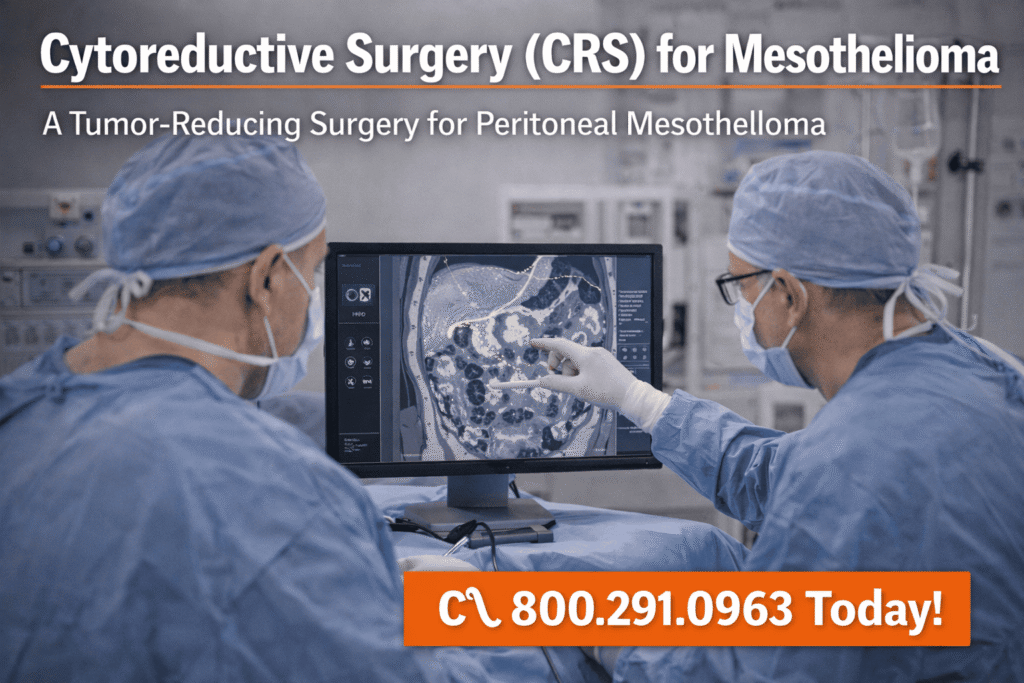
🩺 What Is Cytoreductive Surgery (CRS) for Mesothelioma?
A Tumor-Reducing Surgery for Peritoneal Mesothelioma
Cytoreductive surgery (CRS) is a major operation used to treat peritoneal mesothelioma, which affects the lining of the abdomen (peritoneum). The procedure aims to remove all visible tumors and reduce cancer load before applying additional treatment, usually HIPEC (Heated Intraperitoneal Chemotherapy).
This combination offers the best chance of long-term survival in selected patients and is considered the standard of care for peritoneal mesothelioma.
Source: National Cancer Institute
🧪 What Happens During CRS?
CRS is complex and often takes 8–12 hours. It involves:
-
Exploration of the abdominal cavity
Surgeons assess how far mesothelioma has spread. -
Peritonectomy procedures
Removal of cancerous portions of the peritoneum, often including:-
Abdominal lining (peritoneum)
-
Parts of the diaphragm
-
Omentum (fatty tissue covering abdominal organs)
-
Affected sections of organs (spleen, colon, ovaries)
-
-
Tumor debulking
Removal of all visible tumor masses across organs and tissues. -
Immediate HIPEC treatment
Warmed chemotherapy is circulated inside the abdominal cavity for 60–90 minutes after tumor removal.
👥 Who Is a Candidate for CRS?
CRS is best for patients who meet these criteria:
-
Diagnosed with peritoneal mesothelioma
-
Localized tumors without distant spread
-
Good performance status and organ function
-
No extensive involvement of the small intestine
-
Younger patients with epithelioid cell type
Pre-surgical imaging and blood tests help assess eligibility.
✅ Benefits of CRS with HIPEC
This combination treatment offers several advantages:
-
Removes tumor bulk, relieving pressure and pain
-
Delivers direct chemo to the abdomen with fewer systemic side effects
-
Improves overall survival significantly in eligible patients
-
Preserves organs when possible
-
Reduces recurrence in the abdominal cavity
CRS with HIPEC is often the most effective approach for peritoneal mesothelioma.
⚠️ Risks and Recovery
CRS is a demanding procedure with potential complications:
-
Infection or bleeding
-
Damage to organs
-
Digestive complications
-
Fluid imbalance
-
Recovery time: 6–12 weeks or more
Hospital stay often lasts 10–14 days, followed by extended rest, monitoring, and nutritional support.
📈 Survival After CRS and HIPEC
Outcomes vary by stage and tumor type:
-
Median survival: 3–5 years with full CRS + HIPEC
-
5-year survival: Over 50% in some cases
-
Best results in epithelioid cell type and complete tumor removal
-
Patients with partial resection or sarcomatoid type may have lower outcomes
Source: Annals of Surgical Oncology
🔬 CRS in Research and Clinical Trials
Ongoing studies are refining CRS outcomes:
-
CRS + Immunotherapy or gene therapy
-
Repeat CRS in recurrence cases
-
Improved chemo delivery systems (HIPEC variants)
-
Perioperative biomarkers to predict outcomes
Visit ClinicalTrials.gov for active studies.
💵 Cost and Compensation Options
CRS with HIPEC may cost $100,000–$250,000+ including:
-
Surgery and hospital care
-
Chemotherapy, scans, and anesthesia
-
Nutrition and recovery support
-
Travel or lodging if out-of-state care is needed
Legal claims can help offset these expenses.
👨⚖️ How a Mesothelioma Lawyer Can Help
A skilled asbestos lawyer can:
-
Identify the likely job sites or products of exposure
-
Secure trust fund or settlement compensation
-
Help cover surgical and out-of-pocket costs
-
Assist with VA or SSDI benefits
-
Work on a contingency basis (no fee unless you win)
📞 Free Legal Help for CRS Patients
If you or a loved one are planning or recovering from cytoreductive surgery for mesothelioma, legal help may be available.
Call Now: 800.291.0963
• No upfront cost
• No legal fee unless you win
• Full medical and exposure history included
• Support for families, veterans, and patients nationwide
Or request help online 24/7