🧬 What Are Mesothelioma Cell Types?
Understanding Cell Structure: Why Cell Type Matters in Mesothelioma
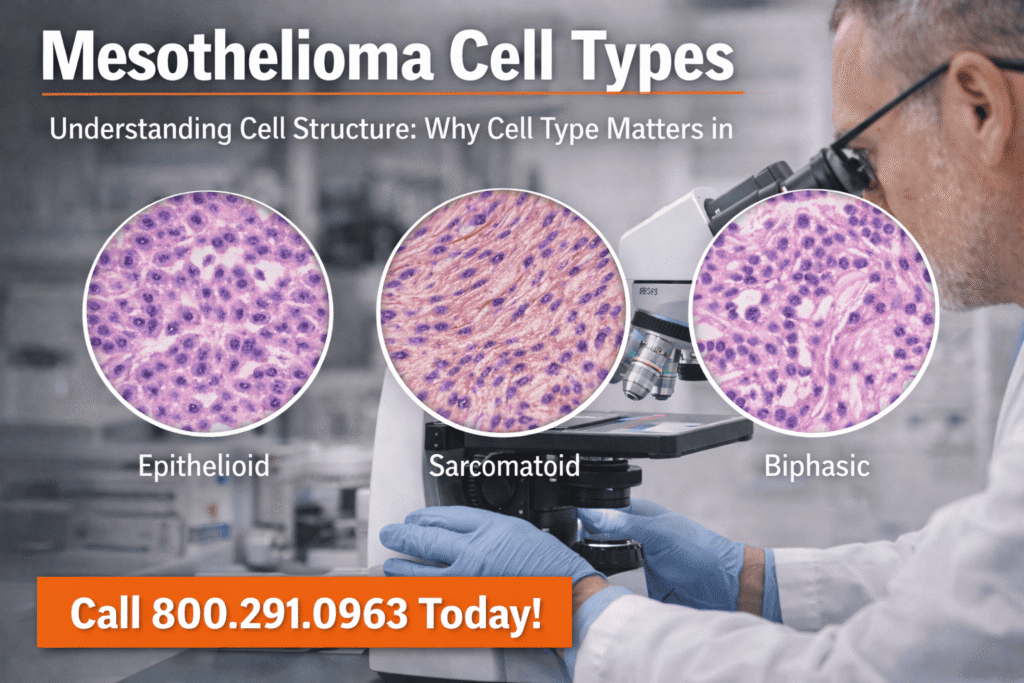
Mesothelioma cell type refers to the specific makeup of the cancer cells found in a tumor. Knowing the cell type helps doctors predict how aggressive the disease may be and determine which treatments may work best. The three primary mesothelioma cell types are epithelioid, sarcomatoid, and biphasic — each with its own characteristics, prognosis, and response to treatment.
Some rare cell patterns — like small cell or desmoplastic variants — may affect how doctors manage the disease.
Source: American Cancer Society
🔍 Why Cell Type Is Important
-
Helps determine treatment strategy
-
Affects prognosis and survival rates
-
Determines whether surgery is a good option
-
Guides eligibility for clinical trials
-
Often identified during biopsy and pathology review
Doctors use immunohistochemistry to examine cell patterns under a microscope.
🟦 Epithelioid Mesothelioma (Most Common)
-
Percentage of cases: ~70%
-
Cell shape: Uniform, organized, cube-shaped
-
Behavior: Spreads slower, responds better to treatment
-
Treatment: Often eligible for surgery and multimodal therapy
-
Prognosis: Best among all cell types
Symptoms: Chest or abdominal pain, fatigue, breathlessness
🟥 Sarcomatoid Mesothelioma (Most Aggressive)
-
Percentage of cases: 10–20%
-
Cell shape: Spindle-shaped, irregular, disorganized
-
Behavior: Rapid spread, resistant to most treatments
-
Treatment: Typically managed with palliative chemotherapy or clinical trials
-
Prognosis: Poorest survival rate
Symptoms: Intense pain, shortness of breath, fast-growing tumors
🟨 Biphasic Mesothelioma (Mixed Type)
-
Percentage of cases: 20–30%
-
Cell shape: Combination of epithelioid and sarcomatoid cells
-
Behavior: Depends on which cell type is dominant
-
Treatment: Varies case-by-case
-
Prognosis: Between epithelioid and sarcomatoid
Symptoms: Blended symptoms — pain, fluid buildup, weight loss
🟫 Rare Mesothelioma Cell Types
Uncommon mesothelioma cell types can complicate diagnosis and treatment decisions. These rare subtypes are often identified through advanced pathology testing and may influence prognosis, eligibility for treatment trials, or even the accuracy of an initial diagnosis. Some are classified based on how the cells appear under a microscope, while others resemble subtypes typically associated with lung cancer.
🔹 Small Cell Mesothelioma
-
Appearance: Small, round, densely packed cells resembling small cell lung cancer.
-
Behavior: Extremely aggressive and fast-growing.
-
Treatment: Difficult to treat with standard mesothelioma protocols; may require experimental therapies.
-
Prognosis: Very poor due to rapid progression and limited treatment response.
🔹 Non-Small Cell Mesothelioma
-
Appearance: Resembles non-small cell lung cancer in structure.
-
Behavior: Slower-growing than small cell variants, but still aggressive over time.
-
Treatment: May respond better to traditional mesothelioma chemotherapy and radiation.
-
Note: Sometimes misdiagnosed as lung cancer—accurate pathology is crucial.
🔹 Desmoplastic Mesothelioma
-
Subtype: Sarcomatoid variant with dense, fibrous tissue.
-
Behavior: Cells grow in tight bundles with collagen, making them harder to detect.
-
Treatment: Rarely responds to surgery or chemotherapy.
-
Diagnostic Challenge: Often mistaken for benign fibrous tumors.
🔹 Lymphohistiocytoid Mesothelioma
-
Appearance: Contains inflammatory immune-like cells (lymphocytes and histiocytes).
-
Behavior: Can appear alongside other cell types like epithelioid.
-
Treatment: Outcomes vary; depends on how early it is caught.
-
Rarity: Seen in fewer than 1% of mesothelioma cases.
🔹 Adenomatoid Mesothelioma
-
Structure: Shows gland-like or duct-like patterns.
-
Location: Usually seen in peritoneal or tunica vaginalis mesothelioma.
-
Diagnosis: Requires immunohistochemical testing to avoid confusion with adenocarcinomas.
-
Prognosis: Unclear due to the small number of reported cases.
These rare mesothelioma cell types often require second opinions, immunohistochemistry, or molecular profiling for confirmation. Because of their unique appearance and behavior, they can impact treatment options and long-term survival. Some patients may be eligible for specialized clinical trials or targeted therapies based on these subtypes.
🧠 How Doctors Identify Cell Type
Cell type is diagnosed through a combination of:
-
Biopsy & Microscopy
A pathologist examines stained tissue samples. -
Immunohistochemistry (IHC)
Uses antibodies to detect specific cancer markers in cells. -
Molecular Testing
May analyze gene expression to confirm diagnosis. -
Clinical Staging & Imaging
Helps correlate behavior with cell appearance.
🚀 Latest Advances in Cell Type Research
-
Targeted Therapy Trials
Some new drugs are designed for epithelioid-specific markers. -
Cell Line Databases
Help researchers understand how each cell type responds to different treatments. -
AI-Based Pathology Tools
Improving accuracy and speed of diagnosis using machine learning. -
Gene Expression Panels
Reveal underlying tumor biology for personalized treatment.
💰 Legal and Financial Options
Cell type often determines eligibility for advanced therapies and legal compensation:
-
Rare cell types may require expensive treatments
-
Financial aid can help cover off-label drugs and clinical trials
-
Trust fund or lawsuit compensation may offset diagnostic costs
👨⚖️ How a Mesothelioma Lawyer Can Help
A skilled attorney can:
-
Link asbestos exposure to the diagnosed cell type
-
File claims with asbestos trust funds or manufacturers
-
Help cover costs of rare cell-type treatment or research-based care
-
Assist with VA benefits if diagnosed as a veteran
-
File wrongful death claims for families
-
Only charge a fee if your case is successful
📞 Free Legal Help for Mesothelioma Patients
If you or a loved one has been diagnosed with any mesothelioma cell type, financial relief is available to help with diagnosis, treatment, and recovery.
Call Now: 800.291.0963
• No upfront cost
• No fee unless your case wins
• Full job site and exposure product research
• Support for families, veterans, and workers
Or request help online 24/7